





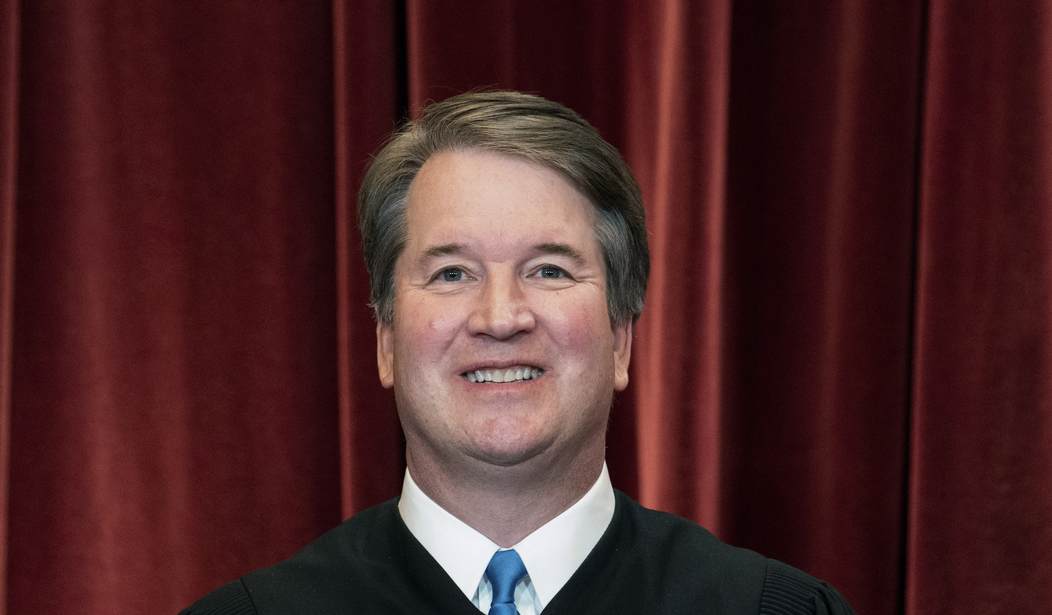
Despite Tuesday's disappointing ruling on birthright citizenship, one of the conservative justices outlined a potential path forward that could address concerns such as birth tourism and the automatic granting of citizenship to the children of illegal immigrants.
Justice Brett Kavanaugh joined the majority in striking down President Trump's executive order but wrote separately in partial dissent. He concluded the order conflicted with existing federal law, not that it was unconstitutional. In his opinion, he also outlined a framework for addressing concerns surrounding birthright citizenship through legislation, making clear that any path to lasting change would likely require an act of Congress.
Justice Kavanaugh sides with the majority in Trump v. Barbara -- but only on the Trump EO's statutory validity. On the 14A question, he says there is room for additional exceptions to birthright citizenship not found in U.S. v. Wong Kim Ark (circa 1898)
— Breitbart News (@BreitbartNews) June 30, 2026
"significant illegal… pic.twitter.com/7nTxDLCmPs
"Significant illegal immigration into the United States is a new circumstance that was largely unknown as of 1868 and that the Framers of the Fourteenth Amendment could not have fully anticipated," Justice Kavanaugh wrote. "And the Framers likely would not have anticipated (and presumably would not have intended) the odd result of granting a substantial birthright citizenship benefit to (i) those foreign citizens who violate U. S. immigration law and illegally enter or overstay and then have children in the United States over (ii) those foreign citizens who follow U. S. immigration law and have children in their home countries while seeking to lawfully immigrate to the United States. Nor presumably would they have wanted to grant constitutional birthright citizenship to children of foreign citizens unlawfully in the country while simultaneously denying constitutional birthright citizenship to children of tribal American Indians."
"Consistent with the Fourteenth Amendment, Congress could amend §1401(a) or otherwise enact new legislation establishing exceptions to birthright citizenship for children born to foreign citizens unlawfully or temporarily in the country," he added. "But Congress has not yet done so."
The likelihood of Congress taking up the issue remains slim, making Kavanaugh's proposed path a difficult one. More importantly for the Trump administration, the Court did not merely hold that birthright citizenship is a matter for Congress to regulate. The majority reaffirmed that the Citizenship Clause applies to the children of individuals in the country illegally or on temporary visas, while noting that only narrow exceptions were historically recognized, including the children of foreign diplomats.
Even if Congress were to pass legislation altering the rules surrounding birthright citizenship, the law would almost certainly face immediate legal challenges before making its way back to the Supreme Court. It remains unclear whether Justices Amy Coney Barrett or Chief Justice John Roberts would alter their positions, though there is little indication they would. If not, the Court's majority would likely continue to uphold its current interpretation of birthright citizenship.
Editor's Note: Do you enjoy Townhall's conservative reporting that takes on the radical Left and woke media? Support our work so that we can continue to bring you the truth.
Join Townhall VIP and use promo code FIGHT to receive 60% off your membership.



Join the Conversation
VIP members get the ability to comment on articles.