





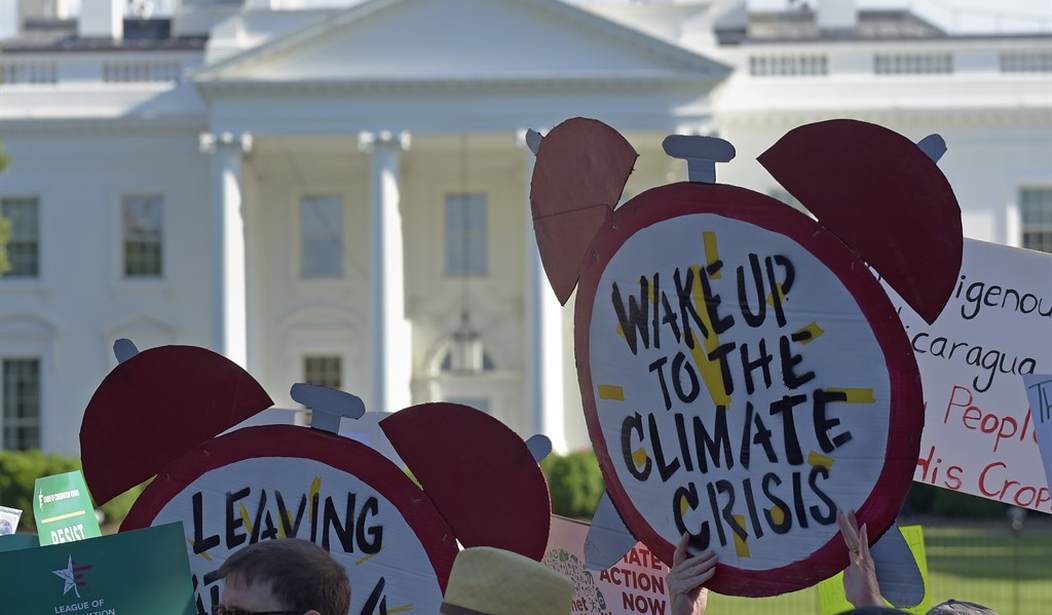
A widely cited 2024 study, claiming to forecast climate change’s dire economic impact globally, was retracted on Wednesday.
The withdrawal came far too late as the paper had already shaped analysis by the U.S. Congressional Budget Office, influenced policy work at the World Bank, and been adopted by the Network for Greening the Financial System, a global coalition of central banks, as a key tool for stress-testing financial portfolios under European climate-risk rules.
Climate Study Widely Used by Central Banks Retracted Over Errors
— LNG Investor (@LNG_Investor_) December 3, 2025
“Scientists from the Potsdam Institute for Climate Impact Research took down the paper - published in April 2024 in Nature - citing "substantial" issues” pic.twitter.com/lHKGHiF6Ku
The study claimed that global economic output would plunge by 62 percent by 2100 if high carbon emissions continued.
More from the Wall Street Journal:
The study examined historical data from some 1,600 regions worldwide over the past four decades to project how changes in temperature and precipitation would affect economic growth, including factors like agricultural yields, labor productivity and infrastructure.
However, after the study was published, other researchers found that economic data from one country—Uzbekistan—during a short time from 1995 to 1999 had skewed the results. Without Uzbekistan, the 2100 damage forecast fell to 23%, not 62%. The researchers published their critique in Nature in August.
“We broadly agree with the issues raised, and have made corrections to the underlying economic data and to our methodology to address them,” the study's author Leonie Wenz said. “These changes are too substantial for a correction of the original article in Nature.”

Significant damage may already have been done, with major financial institutions relying on the study to assess climate-related risks. According to Ely Sandler, a researcher at the Harvard Kennedy School, the study might have pressured government regulators to require big banks to stash away extra reserves as a safety net, slowing economic growth in the process. That tied-up money could have otherwise been used to issue loans and expand the economy.
Editor’s Note: Thanks to President Trump’s leadership and bold policies, America’s economy is back on track.
Help us continue to report on the president’s economic successes and combat the lies of the Democrats. Join Townhall VIP and use promo code FIGHT to get 60% off your membership.









Join the conversation as a VIP Member