





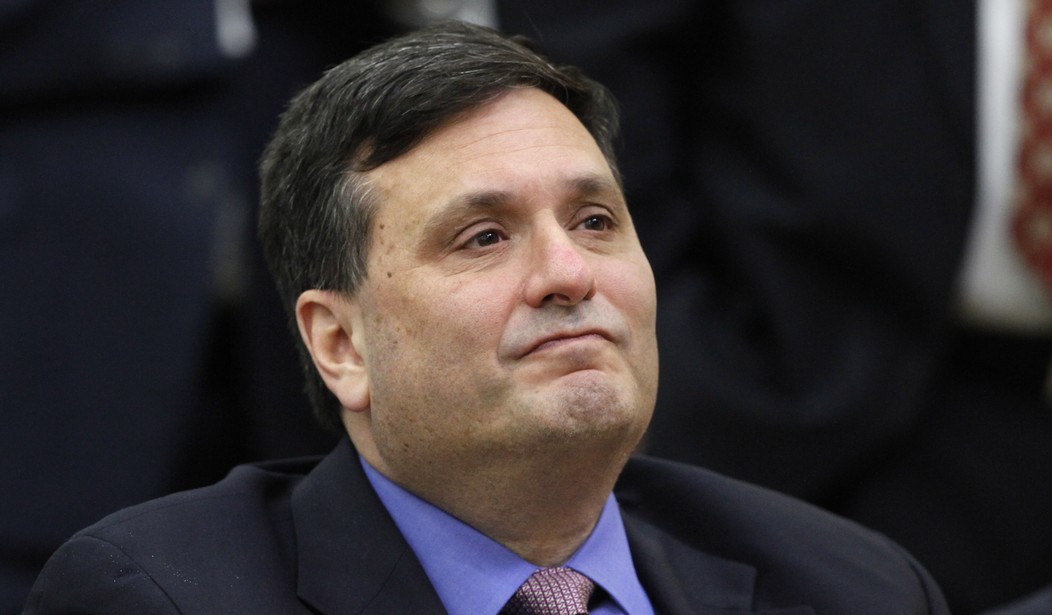
Throughout the course of the 2020 presidential election, we continually heard then-candidate Joe Biden talk about how America needed to ramp up its approach to the Wuhan coronavirus pandemic, particularly when it comes to the COVID vaccine rollout. Now that he's officially president, the Biden administration is looking at ways to accelerate the number of people who are vaccinated.
White House Chief of Staff Ronald Klain blamed the roll out on a "bottleneck" that's taking place between the states and the number of people who are receiving the injection.
"The process to distribute the vaccine, particularly outside of nursing homes and hospitals, out into the community as a whole, did not really exist when we came into the White House," Klain told NBC's Chuck Todd. "As everyone in America has seen, the way in which people get vaccines is chaotic, is very limited. We've seen this factor all over the country, where millions of doses have been distributed, about half of that has been given out. So the process of getting the vaccine into arms, that's the hard process, that's where we're behind as a country and that's where we're focused in the Biden administration on getting that ramped up."
"We have a 20 million dose gap of what's been distributed and what's gotten into people's arms. Where is the hold ups? Is this on the states and how they've been distributing?" Todd asked. "... what is this gap, this hold up? Where is this bottleneck?"
"I think it's many bottlenecks. It's a complex processes. This is a very complex process that needs help on all fronts," Klain replied. "We need more vaccine. We need more vaccinators. We need more vaccination sites."
WATCH: @WHCOS Ron Klain says vaccine distribution plan “did not really exist when we came into the White House.” #MTP
— Meet the Press (@MeetThePress) January 24, 2021
Klain: “The fundamental difference between the Biden approach and the Trump approach is that we are going to take responsibility at the federal govt." pic.twitter.com/ZBjPcqNkHk
There's just one problem with Klain's assessment: he's not taking into account people's attitudes towards the COVID-19 vaccine. Many Americans have said they would hold off on getting the vaccine until they felt more confident (basically, until they see others get it and come out without side effects or allergic reactions). A recent study found that 47 percent of Americans are still hesitant to get the vaccine. In Pennsylvania, the number of blacks who are hesitant is even higher. The state has vaccinated 1.2 percent of its 12.8 million person population. Of that 1.2 percent who have been vaccinated, only 0.3 percent are black. And blacks make up 12 percent of the population in the Keystone State.
This isn't a supply and demand issue. This is a confidence issue. Pfizer and Moderna and those other vaccines that are in the works can keep creating vaccines but until more people actually want the shot, this won't change. It's something that can only get better with time.


Join the Conversation
VIP members get the ability to comment on articles.