





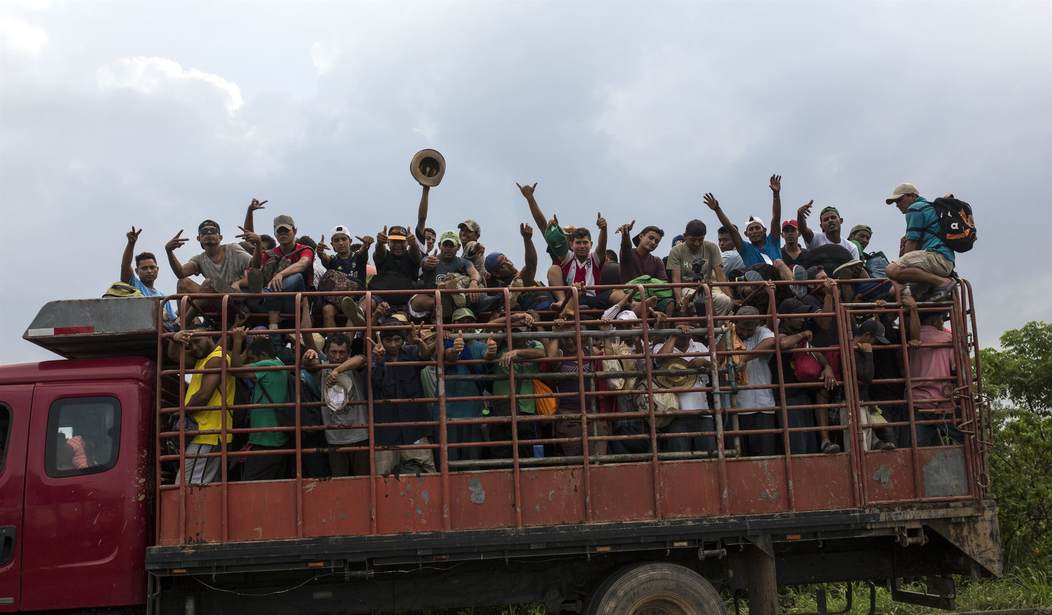
The Trump administration kept track of activists, journalists, and social media influencers tied to the Central American caravans in a secret database, documents obtained by KNSD-TV revealed.
Journalists who covered the caravans and activists said they felt they were undergoing intense inspections and scrutiny by border officials.
From KNSD:
One photojournalist said she was pulled into secondary inspections three times and asked questions about who she saw and photographed in Tijuana shelters. Another photojournalist said she spent 13 hours detained by Mexican authorities when she tried to cross the border into Mexico City. Eventually, she was denied entry into Mexico and sent back to the U.S.
These American photojournalists and attorneys said they suspected the U.S. government was monitoring them closely but until now, they couldn’t prove it.
Now, documents leaked to NBC 7 Investigates show their fears weren’t baseless. In fact, their own government had listed their names in a secret database of targets, where agents collected information on them. Some had alerts placed on their passports, keeping at least three photojournalists and an attorney from entering Mexico to work.
According to the source who spoke with KNSD, the intelligence gathering effort was dubbed “Operation Secure Line" and designated to monitor the caravans. Government officials from Customs and Border Protection (CBP) Immigration and Customs Enforcement (ICE), the U.S. Border Patrol, Homeland Security Investigations and some agents from the San Diego sector of the Federal Bureau of Investigations (FBI) used a data sharing application that held documents and screenshots.
People on the monitoring list included:
• 10 journalists, seven of which were U.S. citizens.
• A U.S. attorney.
• 47 people from the U.S. and other countries, labeled as organizers, instigators or their roles “unknown.”
Some of the people in the third category were from organizations like Border Angels and Pueblo Sin Fronteras, which help facilitate these caravans.
Freelance photojournalist Ariana Drehsler, who covered the caravans for BuzzFeed News and United Press International, was one of the journalists included in the database. She said she crossed the border dozens of times to cover the caravans in Tijuana.
“I'm interested in covering social and political issues,” Drehsler said. “I was very transparent about what I was doing. Sometimes you would see me carrying a camera and if I was asked by an agent what was I doing, I would tell them I was photographing the shelters.”
Here's Drehsler's personal experience:
But on December 30, 2018, when Drehsler was crossing back into the United States, she was pulled into secondary inspection and questioned by border agents.
“Two people in plainclothes came down and took me to another room,” Drehsler said. “They questioned me in a small room, asking me questions about the shelter, what was I seeing there, who was I working for.”
“They said that I was on the ground and they’re not, which I thought was really interesting.”
After about an hour, Drehsler said she was allowed to leave but agents warned her that an alert had been placed on her passport and that she would be pulled into a secondary screening again if she crossed the border. The agents told her to plan accordingly, given the screenings could last an hour or more. When she asked why this alert was placed on her passport, agents told her they had no idea.
Drehsler said she was pulled into secondary screenings two more times while crossing the border. Each time she said she was questioned by the same agents in plainclothes. The second time was on Jan. 2, 2019, and the third time was on Jan. 4, 2019.
On the third occasion, Drehsler said she was told to leave her gear, including her camera and cell phone, on a table outside of the interview room. When she returned, she said it didn’t appear to her that the gear had been looked through. Agents asked Drehsler if she could show them the photos she had taken but she said she declined.
Some of the questions agents asked Drehsler on the third screening struck her as odd.
“They asked about the new caravan and if word had gotten out about how difficult it is to seek asylum in the U.S.,” Drehsler said. “Then before I left, the female agent asked if I rented or owned my home.”
Other journalists shared similar stories with KNSD, saying immigration officers were particularly interested in what they were covering and how work was being funded.
This is what a Customs and Border Protection spokesperson had to say about the documents:
It is protocol following these incidents to collect evidence that might be needed for future legal actions and to determine if the event was orchestrated,” the statement read. “CBP and our law enforcement partners evaluate these incidents, follow all leads garnered from information collected, conduct interviews and investigations, in preparation for, and often to prevent future incidents that could cause further harm to the public, our agents, and our economy.


Join the Conversation
VIP members get the ability to comment on articles.