That training was a three-day course, spread over six weeks. The course was run by several people, including four white women.
Despite knowing he was a terrorist, German authorities dealt with Abdul Ballout, the Berlin Pride killer, by sending him on a three-day (spread over six weeks from mid June) 'violence prevention' course.
Hard to imagine why an Islamic terrorist wasn't transformed into an upstanding citizen by them.
Berlin Pride said they didn't want this attack to be politicized, and another activist said she had hoped the attacker was a white Christian. But German authorities might have finally learned that you cannot coexist with Islamists, and the nation is considering banning terrorists from getting suspended sentences following the Berlin Pride attack.
Germany is considering banning terrorists from receiving suspended sentences after the Berlin Pride attacker avoided jail despite trying to join the Islamic State
Germany is considering banning terrorists from receiving suspended sentences after the Berlin Pride attacker avoided jail despite trying to join the Islamic State.
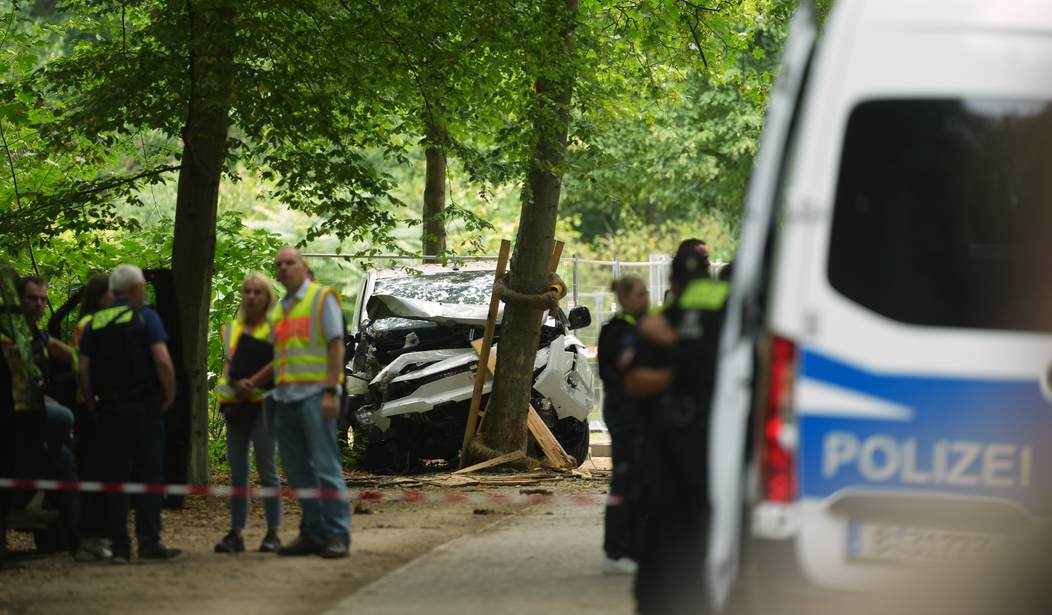
Abdul Ballout, 21, drove a van into the Christopher Street Day Pride Parade in Berlin, killing one woman and injuring 29 others in what was described as an “Islamist” act of terror.
It has since emerged that he was convicted of terror offences in May, but did not spend any time in prison, because his 22-month sentence was suspended.
Now, ministers have ordered a review of how and to whom suspended sentences are handed out. Early suggestions include exempting anyone convicted of terror-related offences.
“It is certainly incomprehensible that, given the level of danger involved in this case, a suspended sentence was imposed,” said Alexander Dobrindt, Germany’s interior minister.
Friedrich Merz, the German chancellor, also criticised his country’s security services.
“I cannot understand how I can track my mobile phone from anywhere in the world – or even use it to determine the location of my iPad, for instance – yet it is supposedly impossible, or technically unfeasible, for security authorities in Germany to determine the whereabouts of individuals classified as security threats to that same extent,” he said on Monday.








Join the Conversation
VIP members get the ability to comment on articles.