I don't envy the rough weekend that The New York Times' journalist Peter Baker is going to have. Yesterday, Baker shared an article about Darializa Avila Chevalier, the Democratic Socialist who won the primary in NY-13, and her radical social media posts.
Who is Darializa Avila Chevalier? She has called Biden a "rapist," said "f**k Kamala Harris," seemed to justify Russia's invasion of Ukraine, denigrated interracial relationships and supported abolishing police, borders and prisons. @clairemfahy https://t.co/UnFAFb2TKH
— Peter Baker (@peterbakernyt) June 26, 2026
For this, Baker is being dragged. Why didn't he, or The New York Times, report on Chevalier's radicalism before the primary?
Really great of you guys to not report this stuff until after the primary.
— Bonchie (@bonchieredstate) June 27, 2026
Bang up journalisming. https://t.co/ZUPG3gNwYP
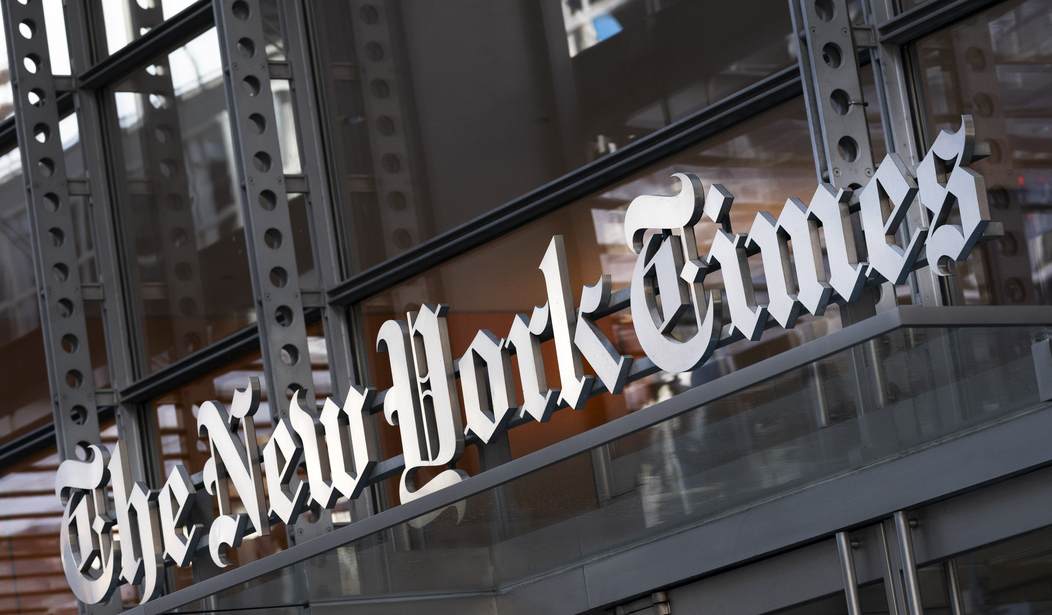
It turns out The New York Times had already published a full story on Chevalier's posts nine days before the election.
On June 15, Sally Goldenberg posted the story to X.
“As the digital generation comes of age, the typical baggage is being replaced by a lifetime of tweets and TikToks that are proving to be their own problem.”@jplupo on @DarializaforNY tweets being resurfaced as she challenges @RepEspaillathttps://t.co/LJKQOfLSZE via @NYTimes
— Sally Goldenberg (@SallyGold) June 15, 2026
But the story only became a national story worth Baker's attention after Chevalier won the primary, making her the next Congresswoman for NY-13. Baker is a veteran national reporter and White House correspondent, so his post-win amplification of these posts makes the story noteworthy.
And the difference in the two stories is noticeable. The June 14 piece, which clearly few people knew about, comes it at 1,666 words. The follow-up piece posted by Baker, on the other hand, has about half the word count and treats the social media posts as a bullet point rather than the focus of the story.
If these posts are disqualifying and problematic, why wasn't the media coverage more aggressive before the election? We all know why. The media have long been propagandists and stenographers for the Democratic Party. That party is now being taken over and worn as a skin suit by the Democratic Socialists of America (DSA).
They're not hiding it, either. DSA co-chair Gustavo Gordillo said as much in an interview, as I wrote about yesterday:
"Our candidates run as Democrats. We're on the Democratic Party ballot line. We contest the primaries," said Gustavo Gordillo. "And when they're in the legislature, they're part of the Democratic Party caucus."
"But we don't agree with the way the Democratic Party establishment organizes or runs its party apparatus, so we try to build independence by focusing on volunteer-led movement," Gordillo continued, "we think that everyone should be able to be trained and to become someone who can participate in the political process and we don't really think that the Democratic Party campaigns and the establishment are run that way. And we think, you know, you really see that difference in the races we are having tonight."
Why wouldn't the media follow suit? Their ultimate goal is to elevate Democrats and resist Trump, and it doesn't matter who they nominate to do that. But given what Chevalier said about Joe Biden, Kamala Harris — and coupled with a bunch of White socialists chanting 'You're next!' to Hakeem Jeffries — The New York Times would do well to realize the DSA are not their friends or allies.
They'll simply be put in front of the wall last.
The June 14 piece had a very clear tone that Chevalier's posts were merely becoming an issue of how evolving technology in the campaign, how politicians who came of age in the social media era can have old posts come back to haunt them, rather than rightly portraying her remarks as extremist and disqualifying before voters went to the polls — something they'd do for a conservative candidate who had once written 'f**k Donald Trump.'
It was more of a lifestyle piece than a report on the problematic things Chevalier has said. Even 50 years ago, opposing interracial marriage would have been socially unacceptable. But to say it in the late 2010s and early 2020s? Yikes.
Even the headline tap dances around Chevalier's radicalism.
The New York Times clearly had this information and the platform to make Chevalier's social media posts and her stances on issues a dominant story pre-primary. Instead of focusing on that, they chose to paint it as campaign drama. Now, a Democratic Socialist who wants to abolish the police, abolish prisons, open our borders, nationalize the airline industry, and hates interracial marriage is the Democratic nominee in a safe blue seat.
This also means Mamdani, who backed Chevalier and other DSA candidates, is using her win as proof that her movement has both momentum and popular support.
But this isn't about one candidate and one race. It is part of a pattern of progressive radical candidates winning with little to no resistance or reporting by legacy media, which are often quick to jump on past statements and highlight the radicalism of conservative candidates.
The New York Times and Peter Baker had the receipts on Darializa Avila Chevalier long before voters handed her the Democratic nomination in NY-13. They chose to treat her radicalism as mere “campaign drama” rather than the disqualifying extremism it clearly is. Only after the primary did a veteran national reporter like Baker step in to amplify what should have been front-page scrutiny weeks earlier.
This isn’t journalism. It’s narrative management. Legacy media outlets like The New York Times have spent years positioning themselves as guardians of democracy while functioning as reliable allies and stenographers for the Democratic Party. Now that party is being hollowed out and remade from within by the DSA, who run as Democrats, caucus as Democrats, and then work to dismantle the very institutions and norms the establishment claims to defend.
Avila Chevalier’s victory — and Mamdani’s growing influence — should serve as a loud warning. When the media downplays calls to abolish police and borders, profane attacks on their own party’s leaders, and fringe positions on everything from interracial relationships to national sovereignty, they aren’t protecting democracy. They’re enabling its dangerous and radical transformation.
Come November, voters outside deep-blue enclaves like NY-13 will get a clear choice. The question is whether The New York Times and its fellow travelers will finally acknowledge the monster they helped create, or if they’ll keep pretending the wall is only for their political opponents — until it’s their turn.