




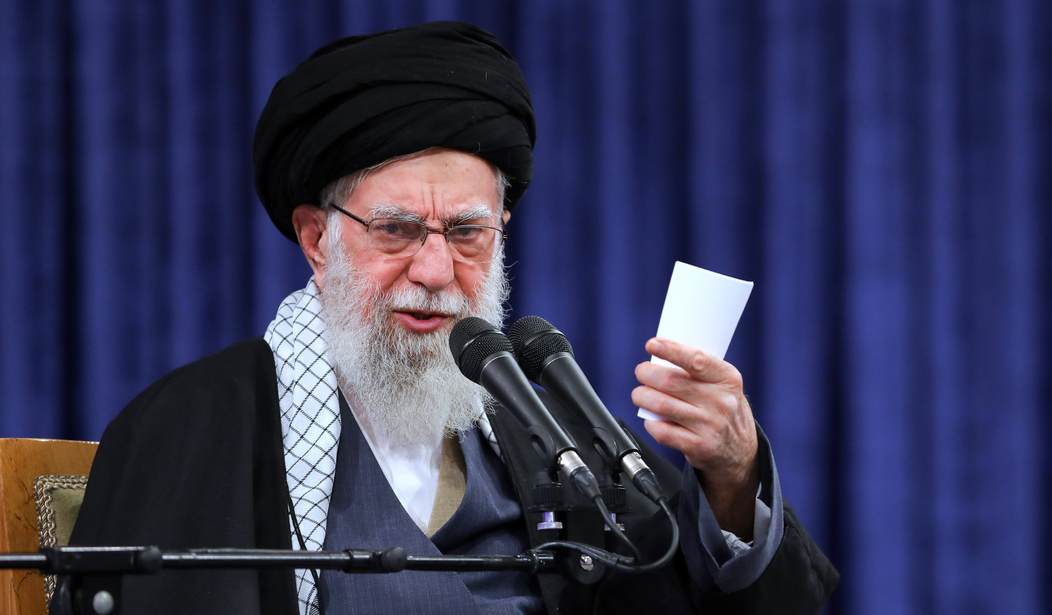
Yesterday, Townhall reported that Iran and the U.S. failed to reach a deal over the Islamic nation's nuclear program. According to The Wall Street Journal, Iran rejected all U.S. demands in the last round of nuclear talks, while President Trump said the regime has "spread nothing but terrorism and death and hate."
President Trump has pushed for peace, but as Iran continues to defy the world over its nuclear program and violently suppresses protest movements that seek to overthrow the regime and replace the Ayatollah, the president realizes peace may only come through a show of force.
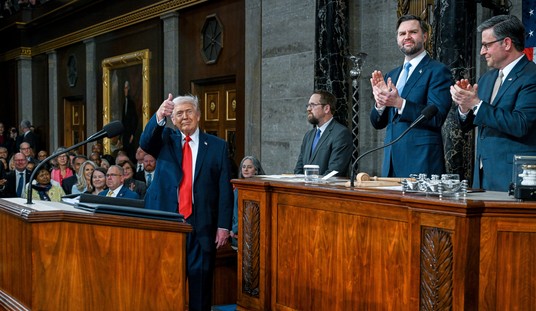
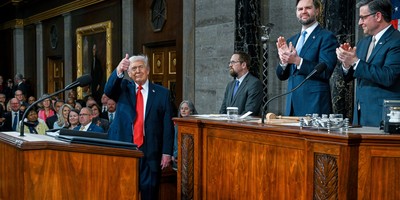
"As president, I will make peace wherever I can, but I will never hesitate to confront threats to America wherever we must," President Trump said in the State of the Union. "That's why in a breakthrough operation last June, the United States military obliterated Iran's nuclear weapons program with an attack on Iranian soil known as Operation Midnight Hammer. For decades, it has been the policy of the United States never to allow Iran to obtain a nuclear weapon."
As the U.S. inches closer to military intervention in Iran, here's a history of Iranian protests and the regime's response to them. From 2009 to 2026, we see not only a change in the protesters' messaging, including "death to the dictator" and "death to Khamenei" to "woman, life, freedom," but we also see a marked shift in tone. In 2009, protests were targeted at reform and legitimacy; by 2026, that tone shifted to one critical of the regime and looking for change.
Green Movement (2009)
In the spring of 2009, following the presidential election, large protests erupted across the country over allegations that the election was rigged. These were the largest protests since the 1979 Iranian Revolution, and while the largest groups protested in Tehran, protests popped up in several cities across the country.
Recommended
The Green Movement was born of that opposition, hoping to be "seen as a new non-violent, non-utopian and populist paradigm of revolution that infused twenty-first century Internet technology with people street power." A documentary about the Green Movement and the uprising is available on YouTube.
Iranian security forces suppressed the protests through arrests and the use of force, including the house arrest of opposition leaders and media restrictions.
Dey Protests (2017-2018)
Faced with rising food prices and skyrocketing costs of living, protesters again took to the streets in dozens of locations across Iran in December 2017. They sought economic relief, lower living costs, jobs, and action against corruption. These protests also marked a shift in the rhetoric from a focus on reform to direct criticism of the ruling regime. "Down with Dictator!" was a popular slogan heard in many videos about the protest.
At least ten protesters were killed, according to NPR reporting at the time, and — much like the Green Movement — were ended by force, including mass arrests, security crackdowns, and heavy messaging. Hundreds, if not thousands, of protesters were arrested in addition to those who were killed.
Thousands of Iranians have taken to the streets in recent days, with many protesters calling for the removal of Iran's supreme leader, Ayatollah Ali Khamenei.
The government warned on Sunday that protesters would suffer severe consequences if demonstrations continued and 10 protesters were reported killed, according to the Associated Press and Reuters.
"Those who damage public property, violate law and order and create unrest are responsible for their actions and should pay the price," Interior Minister Abdolreza Rahmani Fazli told Iranian state media, according to Reuters.
In one Associated Press report, "The public discontent has been fanned by messages sent on the Telegram messaging app, which Iranian authorities blocked Sunday along with the photo-sharing app Instagram, which is owned by tech giant Facebook."
A video titled "Iran's Year of Uprising" is available on YouTube.
Fuel Protests (2019)
Less than two years after the Dey Protests, Iran was once again in turmoil after a sudden and sharp increase in fuel prices. The government, in an effort to quell the protests early, issued a near-total shutdown of the Internet for five days, from November 15 to 19. In some locations, fuel prices jumped by more than 200 percent.
The protests spread nationwide, across multiple cities, and were once again squashed by a rapid and forceful crackdown by security forces. The Supreme Leader ordered those forces to "do whatever it takes" to end the protests.
Per Reuters, about 1,500 people were killed, including 17 teenagers and 400 women.
Almost a year later, Human Rights Watch said the Iranian regime had not taken accountability for its bloody response to the protests:
Iranian authorities have failed to provide any real measure of accountability for the violent crackdown against widespread protests that began a year ago, Human Rights Watch said today.
The protests, which began over an abrupt fuel price increase on November 15, 2019 and lasted for a week, transformed into a broader expression of popular discontent with the government’s repression and perceived corruption. The government imposed a near-total internet shutdown from November 15 to 19 and embarked on the most brutal crackdown against protesters in decades.
“One year after the November crackdown, Iranian authorities have avoided any measure of accountability and continue to harass the families of those killed during the protest,” said Tara Sepehri Far, Iran researcher at Human Rights Watch. “Families of hundreds of victims, most of them from the more vulnerable segments of Iranian society, deserve to see those responsible for the serious rights violations held accountable.”
There were never any negotiations over Iranian fuel policy.
"Woman, Life, Freedom" Protests (2022-2023)
Masha Amini was detained by the Iranian morality police for alleged hijab violations. She later died, and her death was attributed to brutality at the hands of those morality police. The protests began at Amini's funeral in the Kurdistan Province and spread across Iran. Protesters demanded an end to mandatory hijab enforcement, accountability for Amini's death, and broader civil and political freedoms for women, including bodily autonomy, as well as "systemic political change." These protests occurred in almost all of Iran's 31 provinces.
Artists created works to commemorate Amini and other protesters, and Princeton University created a digital collection of artwork about the protests. The European Union posthumously awarded Amini the Sakharov Rights Prize. Like previous protests, the crackdown on the protests lasted months, including mass arrests, executions, and increased surveillance. More than 500 people were killed.
These protests drew an international spotlight to the treatment of women under Iran's "morality laws," including a 2023 law titled "Law on Protecting the Family by Promoting the Culture of Chastity and Hijab" that would impose severe penalties (flogging, fines, imprisonment, and death) on women and girls who violated hijab rules.
In 2024, authorities shot Arezu Badri for supposedly violating the hijab law. She was left paralyzed with spinal injuries following that shooting.
All told, some 618 women have been arrested under Iran's "Noor Plan," which is linked to hijab enforcement and protest suppression.
2025 Protests
The most recent round of protests began in December, again rooted in economic concerns. Iran's rial collapsed to historic lows, driven by hyperinflation, economic sanctions, shortages of energy and water, and government mismanagement. All of this fell against a backdrop of ongoing political repression.
BREAKING: Despite an internet blackout and major delays, new videos are emerging from Iran.
— Eyal Yakoby (@EYakoby) January 23, 2026
Footage shows a massive rally in Tehran’s Chitgar Park on January 18 — thousands of vehicles flashing lights as crowds chant: “Woman, Life, Freedom.”
pic.twitter.com/cieMO0pzn3
This movement is largely student-led and spread across multiple provinces in Iran. Videos showed students chanting "death to the dictator" at a school in northeastern Iran.
Students at a school in northeastern Iran chanted “Death to the dictator” during a protest gathering on Tuesday. pic.twitter.com/qNsBZ7S4SJ
— Iran International English (@IranIntl_En) February 24, 2026
In addition to economic concerns, they demanded an end to the mandatory hijab, accountability for human rights abuses, a change to theocracy, and an end to recent killings. The regime continued its escalated response to protests, cracking down on this wave with violent force. Thousands have been killed, and there are reports that Iranian security forces were traveling to hospitals to execute the wounded.
Throughout the years, there have been countless examples of oppression by the Iranian regime, including Internet blackouts, which started with the 2019 protests and persist until today, although Starlink is providing some Internet coverage to Iran. The regime has also arrested tens of thousands over the years, including ~4,000 in 2009, to ~22,000 in 2022-2023, and "tens of thousands" in the most recent iteration of these protests. There has also been the use of force, including live ammunition, metal pellets, and tear gas, going back to 2022. The Iranian regime also uses public executions as deterrents, including the hangings of Mohsen Shekari, Majidreza Rhanavard, and Seyed Mohammad Hosseini in connection with the 2022 protests. In September of last year, Mehran Bahramian was hanged for allegedly participating in an "armed attack" back in 2022. The regime also cracks down on journalists, arresting dozens over the years, including at least seven since December 2025.
Iran's Basij militia, a volunteer paramilitary force controlled by the Islamic Revolutionary Guard Corps (IRGC), has been used to repress protests. The IRGC has also participated in protest suppression, according to Amnesty International and Human Rights Watch.
Seventeen years of uprisings tell a clear story. The slogans have changed, the protesters have grown younger and bolder, and the demands have shifted from reform to outright rejection of the regime itself. But one thing has remained constant: the Islamic Republic answers dissent with bullets, blackouts, prisons, and gallows. As Washington and Tehran struggle to strike a nuclear deal, and President Trump has kept military deterrence on the table, it's worth remembering that the regime the world negotiates with is the same one that has repeatedly turned its weapons on its own people. The question is no longer whether the Iranian people want change — they've made that unmistakably clear. The question is whether the regime will ever allow it without being forced to.








Join the conversation as a VIP Member