





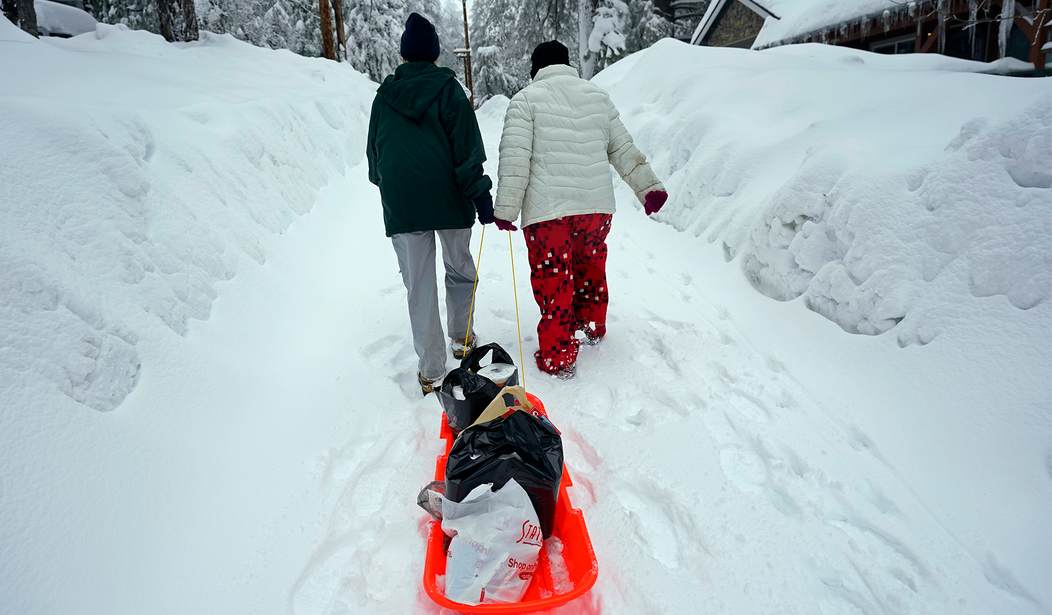
A vast swath of the country is being hit with some brutal winter weather this weekend. From the bitter cold in the northern Midwest to ice storms in the South, to a snowstorm that's threatening to bury the Carolinas and Virginia, winter is here and it's here to stay for a while.
That means the demand for heating our homes will go up as Americans brace for the cold, snowy weather.
Most people seem to understand that. But not the folks at The Wall Street Journal, who seem surprised that natural gas prices are climbing in response to the wintry forecasts.
Natural-gas prices have jumped this week in response to forecasts calling for some of the coldest, snowiest weather in years to freeze the country from the West Texas desert to the Great Lakes https://t.co/cJ6BeLfmaq
— The Wall Street Journal (@WSJ) January 23, 2026
Natural-gas prices have jumped 63% this week in response to forecasts calling for some of the coldest, snowiest weather in years to freeze the country from the West Texas desert to the Great Lakes.
The forecasts have stoked fears of a repeat of the deadly winter storm that froze Texas in 2021 and left millions of people without electricity for days. Energy producers and utilities are preparing for the worst. The Energy Department late Thursday ordered grid operators to be prepared to take extraordinary steps to tap in to backup power generation.
This is supply and demand in a nutshell. When demand goes up, so do prices. When supply goes down, prices go up. It's not hard to grasp.
Recommended

Yes, supply and demand in a nutshell.
— Stacey-AA7YA 🇺🇸🎙️ 📻🎧 (@AA7YA) January 23, 2026
It's a textbook example of this very basic economic principle.
If the Wall Street Journal doesn't understand supply and demand we are far worse off than we can possibly imagine.
— Elections Have Consequences (@PaulGaier1) January 23, 2026
It's not that they don't understand, it's that they don't want to understand.
Cold, snowy conditions spike demand for heating. Natural gas is the primary fuel for winter heating in much of the U.S., so even a short-term forecast of extreme weather pushes prices up sharply.
— PLANET (@_theonlyplanet) January 23, 2026
This isn't hard.
Unexpectedly https://t.co/kiE2xytsPX
— SoothingDave (@SoothingDave) January 23, 2026
That's their favorite buzzword.
When demand decreases, prices will likely decrease, too.













Join the conversation as a VIP Member