





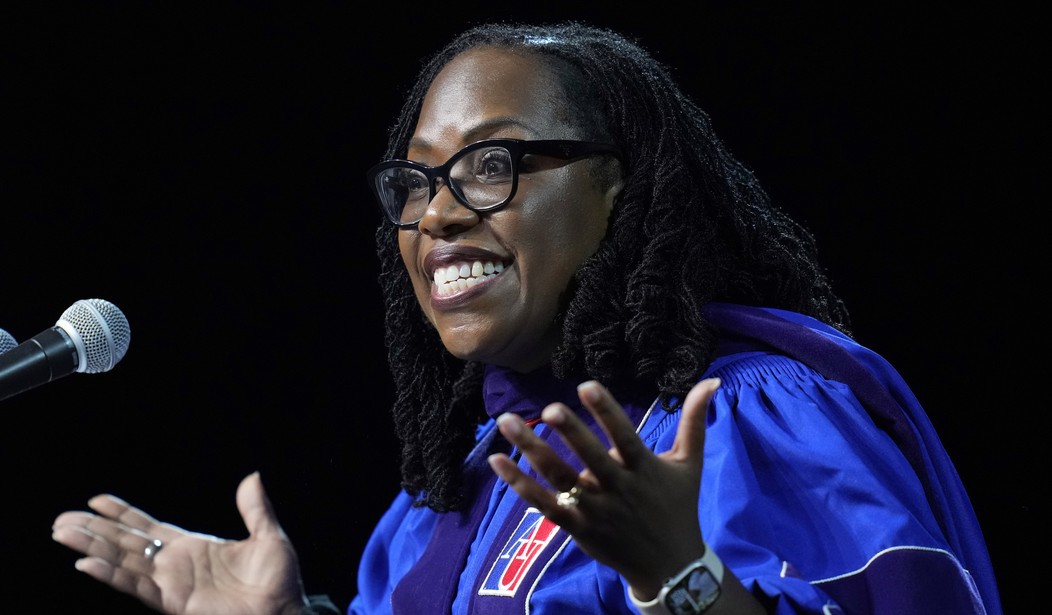
The Supreme Court heard oral arguments today in Wolford v. Lopez, a Second Amendment case challenging Hawaii's law criminalizing carrying a handgun on private property open to the public (e.g., stores, parking lots) unless the owner has explicitly authorized carrying weapons. Challengers to the law say it makes public carry almost impossible because so much day-to-day activity takes place on private property open to the public.
Reuters reported that the Court's conservative Justices seemed skeptical of Hawaii's laws:
Conservative U.S. Supreme Court justices signaled skepticism on Tuesday toward a Hawaii law restricting carrying of handguns on private property that is open to the public, such as most businesses, without the owner's permission.
The court, which has a 6-3 conservative majority, heard arguments in a challenge to Hawaii's law.
Three Hawaii residents with concealed-carry licenses and a Honolulu-based gun rights advocacy group appealed a lower court's ruling that Hawaii's measure likely complies with the U.S. Constitution's Second Amendment right to keep and bear arms. The challengers are being backed by President Donald Trump's administration.
Hawaii's law requires "express authorization" to bring a handgun onto private property open to the public, either as verbal or written authorization, including "clear and conspicuous signage." Four other U.S. states have similar laws.
Neal Katyal, the lawyer who argued on behalf of Hawaii, told the justices that the state's law strikes a proper balance between the right to bear arms and a property owner's right to choose whether to permit someone to bring a gun onto their property.
"The Constitution protects the right to keep and bear arms," Katyal said. "It doesn't create implied consent to bring those arms onto another's property."
Justice Gorsuch asked Principal Deputy Solicitor General Sarah Harris about the Black Codes, which — among many other things — limited how Black Americans in the post-Civil War South could own and bear firearms.
Principal Deputy Solicitor General Sarah Harris’s response to Justice Gorsuch’s question on the relevance of the Black Codes was spot on:
— Carrie Severino (@JCNSeverino) January 20, 2026
“It is 2026, and it is somewhat astonishing that Black Codes, which are unconstitutional, are being offered as evidence of what our tradition… pic.twitter.com/Xt9Bg7HY0K
"There's been some discussion about the Black Codes. And maybe they should be relevant, and maybe we really should consider them as significant here. In fact, they're a dead-ringer. Thoughts?" Gorsuch asked.
"It is 2026, and it is somewhat astonishing that Black Codes, which are unconstitutional, are being offered as evidence of what our tradition of constitutionally permissible firearm regulation looks like," Harris replied. "Those laws are dead-ringers only in the sense that this law too is an unconstitutional pretext. The Black Codes were enacted by states before their readmission to the Union, as you mentioned. It is not an indictment of the Bruen framework to say that unconstitutional laws do not count in illuminating a valid tradition."
The Bruen framework is a Supreme Court standard for Second Amendment gun cases, requiring that gun regulations must be consistent with the nation's historical tradition of firearm regulation.
Justice Ketanji Brown Jackson, as always, didn't understand Harris' very clear answer and actually defended the Black Codes as a precedent for what we should consider constitutional.
Things I didn’t have on my bingo card today: Justice Jackson defending the racist Black Codes as precedent for what we should consider constitutional. pic.twitter.com/I9yxcMsDrf
— Carrie Severino (@JCNSeverino) January 20, 2026
"So I guess I really don't understand your response to Justice Gorsuch," Justice Brown Jackson said, "on the Black Codes. I mean, I thought the Black Codes were being offered here under the Bruen test to determine the constitutionality of this regulation. And it's because we have a test that asks us to look at the history and tradition. The fact that the Black Codes were at some later point determined themselves to be unconstitutional doesn't seem to me to be relevant to the assessment that Bruen is asking us to make."
Not understanding things is a pattern with Justice Brown Jackson. But holy cow. She just said the incredibly racist Black Codes should be considered as constitutional.
"So can you say more about that?" Brown Jackson asks Harris.
"Absolutely," Harris replied. "Black Codes were unconstitutional from the moment of their inception because they are pretextual laws that are designed to ensure that newly freed slaves were returned to a condition of sharecropping."
"Okay. Let me stop you there," Brown Jackson said. "They were not deemed unconstitutional at the time that they were enacted. They were part of the history and tradition of the country and when we have a test now that's asking us to look at what people were doing back then, I don't understand why they should be excluded."
"Because they are outliers," Harris said. "They are by definition unconstitutional..."
"Found later. Afterwards," Brown Jackson interrupted. "Not at the time, and if the test says what's happening at the time, tells us what's constitutional for this purpose, why aren't they in?"
"Respectfully," Harris replied," a law is always unconstitutional when...from its inception —"
Brown Jackson interrupted her again. "So the history doesn't matter? We shouldn't care about the history then."
"We should deeply care about the history," Harris replied. "But the whole point of the Bruen framework is as follows: the history and tradition of the Second Amendment are particularly important because it is codifying a preexisting right. To figure out, in a sort of common law fashion, what the national history and tradition are, you throw out outliers. And i can think of no greater outlier than blatantly unconstitutional laws that flipped what had been the tradition in states like Louisiana and during the period before those states were readmitted to the union, for the purpose of trying to reduce newly freed slaves back to conditions of servitude, made it a new crime, a new trespass in order to go about armed on private property. Those are obvious outliers. And should not count under the whole point of Bruen."
President Biden didn't choose Brown Jackson for her keen jurisprudence, and it shows.
Editor’s Note: The radical left will stop at nothing to enact their radical gun control agenda and strip us of our Second Amendment rights.
Help us continue to report on and expose the Democrats’ gun control policies and schemes. Join Townhall VIP and use promo code FIGHT to receive 60% off your membership.

Join the Conversation
VIP members get the ability to comment on articles.