



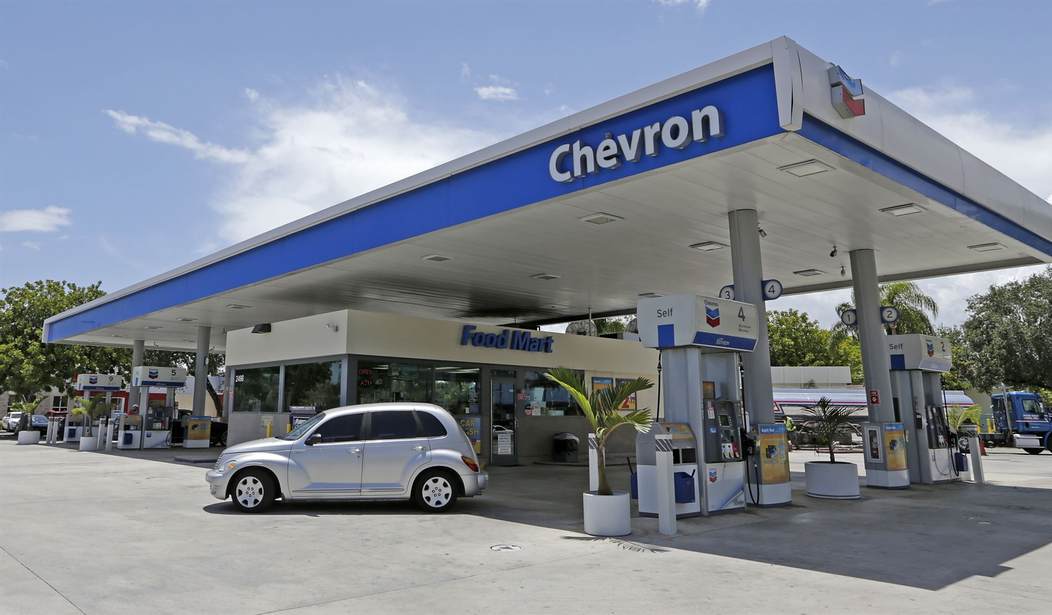
The Supreme Court today heard oral arguments in Chevron v. Plaquemines Parish, a case that will test not just the relationship between federal and state courts, but also impact the ongoing war against the energy sector.
Louisiana Attorney General Liz Murrill has insisted her ongoing suits are "firmly aligned with conservative principles and Trump’s energy agenda," while Sen. Mike Lee says the ruling would rein in rogue courts.
Lee and his colleagues even filed a friend-of-the-court brief in the case, noting that "Congress has spoken clearly: Cases involving federal duties belong in federal court. Federal judges and juries, not partisan local officials, should decide them."
Must Read: @SenMikeLee explains why he and his colleagues filed a friend-of-the-court brief in Chevron USA v. Plaquemines Parish, before the Court this morning:
— Carrie Severino (@JCNSeverino) January 12, 2026
“Congress has spoken clearly: Cases involving federal duties belong in federal court. Federal judges and juries, not… pic.twitter.com/EX9MJRqAyz
Carrie Severino, President of the Judicial Network (JCN), said the case "is part of a blitz of lawsuits transparently designed to reap billions of dollars in damages from oil companies in friendly state courts that are too often beholden to the plaintiffs’ bar."
On Monday, the Supreme Court will hear oral argument in Chevron USA v. Plaquemines Parish, which will consider whether oil companies sued in state court for their work to meet their obligations under federal oil-refinement contracts can remove the cases to federal court. A… pic.twitter.com/3QLvMlFamo
— Carrie Severino (@JCNSeverino) January 8, 2026
Recommended

In her NRO piece, Severino wrote:
This case emerges from a wave of more than forty lawsuits filed by Louisiana parishes against oil and gas companies, seeking billions in damages for environmental harm alleged to have resulted from their production of crude oil along the coast that dates as far back as World War II. The claims were asserted in state court under Louisiana permitting requirements for exploration and production of oil, gas, and other minerals in designated coastal zones that took effect in 1980. The controlling statute’s grandfather clause stated that coastal use permits were not required for “[i]ndividual specific uses legally commenced or established prior to the effective date of the coastal use permit program,” which should conclusively resolve these cases as the challenged drilling was from before 1980. But intrepid trial lawyers have tried to evade this bar on retroactivity with the stunning argument that drilling in support of contracts with the U.S. government during World War II was not “legally commenced” because the wartime efforts involved faster than normal oil extraction.
This would retroactively for work they did "helping the Allied Forces during World War II" based on permit requirements enacted decades later.
Townhall spoke with Severino about the oral arguments today. She says this is both a technical removal-jurisdiction case and a proxy fight over climate lawsuits targeting energy companies.
"It's not an either-or," Severino said. "It's a case that turns on the technical question, but I think especially in an era where people have seen lawfare at work, where they have seen how courts can be weaponized."
In the past, Severino notes, federal courts have used the grandfather clause to rule in favor of places like Chevron, which isn't the only oil and gas entity sued in state court. But that's not the question before the Supreme Court today.
"The court isn't considering whether the grandfather clause covers this," Severino said. "The question really is can this be removed to federal court. We don't know how the federal court is going to decide the issue."
Severino was also asked about whether a ruling in favor of the Louisiana parishes would encourage more forum-shopping for these politically-motivated lawsuits.
"That's exactly what's happening here," she said. "They're choosing to bring lawsuits in these counties and fighting so hard to keep them in these counties. They know a lot turns on having local courts hear the case."
As mentioned above, Louisiana AG Lizz Murrill said her lawsuits align with conservative principles. Severino disagrees. "I don’t think they’ve thought through the implications of these cases. Particularly, someone like President Trump is vulnerable to having unfriendly state and local entities trying to attack organizations, companies, people, and government contractors on issues they don’t like," she said. She mentioned ICE and the hotels in Minneapolis refusing service as an example of this.
"[The issue is] to what extent are we going to allow local governments to try and stymie federal objectives," Severino said. "Not preserving the federal forum for such cases really increases the potential for mischief and lawfare."
"The biggest argument has to do with amendments that Congress made in 2011 to this law [the officer removal statute], precisely because they saw the laws being used in ways they didn't like," she said.
"One of the benefits of a statute question versus a constitutional one, Congress can go amend a statute, but amending the Constitution is much higher bar – for a good reason," Severino added.
Severino said she is optimistic the court will rule in Chevron's favor. "I anticipate Chevron will prevail here, but that’s all guesses," she said.
We do not know exactly when the Supreme Court will issue its ruling on the case, but it's likely we'll get a decision before the end of the term in June.
Editor’s Note: Thanks to President Trump’s leadership and bold policies, America’s economy is back on track.
Help us continue to report on the president’s economic successes and combat the lies of the Democrats. Join Townhall VIP and use promo code FIGHT to receive 60% off your membership.






Join the conversation as a VIP Member