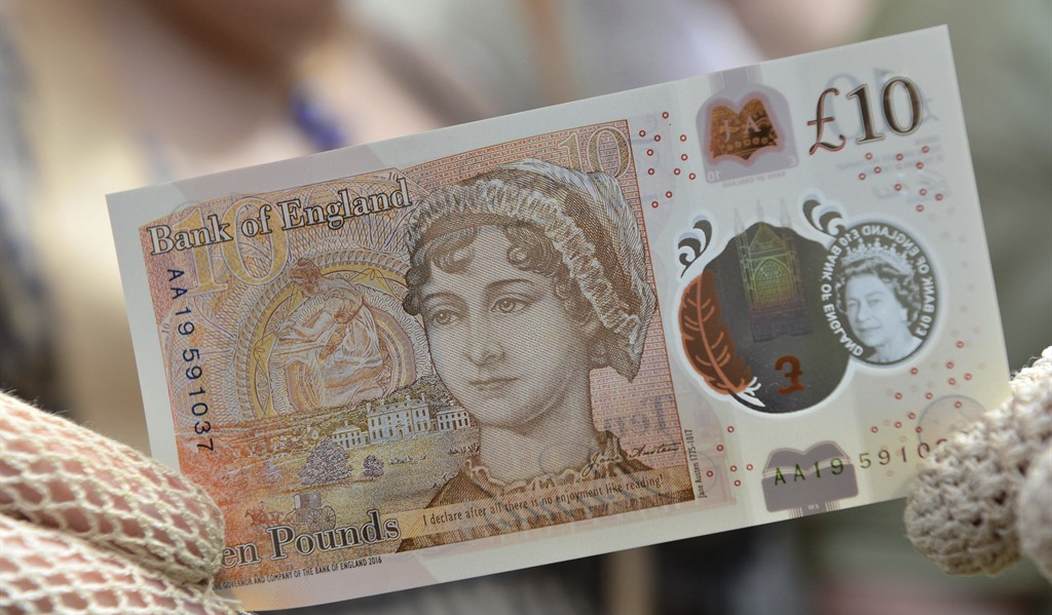
Jane Austen is one of my favorite authors, and the 1995 Emma Thompson-written adaptation of Austen's "Sense & Sensibility" is my favorite movie of all time. What Austen did, and did very well, was capture the social structure and mores of Regency England in ways that impressed historians and scholars.
Yes, romance was a big part of her work and — let's be honest — many a woman has swooned over Mr. Darcy or Colonel Brandon (including yours truly). But Austen wasn’t just writing escapist romance. She was documenting the economic, social, and moral realities of her era with an almost surgical precision — a world where marriage was survival, manners were currency, and women navigated power through judgment rather than rebellion.
We see that in heroines like Elizabeth Bennet, who uses her intelligence and wit to navigate the social structure in which she lives, rather than overthrow it.
But that's not enough for "modern audiences," who demand excess and explicitness in everything. This is why The New York Times paid homage to Austen on what would have been her 250th birthday by including a nod to X-rated fan send-ups of her work.
Get this: in a piece commemorating Jane Austen’s 250th birthday, the @nytimes chose to include (with approbatory amusement) pornographic parody and kink culture in an article explicitly asking how to capture her life and legacy.
— Mark E. Joubert (@mark_joubert) December 16, 2025
In an article asking, “How to capture this brief…
"In an article asking, 'How to capture this brief life, and the blazing impact that has spread across the globe in her wake?' the editors made the odd choice to include 'XXX Austen' kink culture and 'amateur porn.' This is shameless impropriety masquerading as cultural commentary. Jane Austen was a Christian woman. This represents a gross editorial failure. They should pull or revise the article," Joubert wrote.

I agree with him.
Here's what NYT wrote about "XXX Austen" (emphasis added):
The rumors are true: XXX Austen is a thing. “Jane Austen Kama Sutra,” “Pride and Promiscuity: The Lost Sex Scenes of Jane Austen” and enough slash fic and amateur porn to fill Bath’s Assembly Rooms are just the start. Purists may never recover.
Ah. So it's not about how to "capture this brief life and the blazing impact" of Austen's work after all. It's about sticking a thumb in the eye of "purists" like me.
Salon praised "Pride and Promiscuity" for building on Austen's "prim reputation" (as if that's a bad thing), writing, "If Jane Austen were alive today, someone might well suggest to her that she desperately needs a brand manager. Her image is so conflict-ridden, so confused, that you can’t tell what she’s supposed to stand for anymore. She’s some sort of secret radical, but she’s also the doyenne of the alt-right. She’s our upright moral traditionalist, a vanilla marriage endorser, and the inspirer of Christian dating guides. But hold the phone! She’s also a snarky feminist satirist, the Notorious Jenny-A, whose hunky heroes get us hot and bothered. She’s Prim Austen and Porn Austen."
In Regency England, Austen occupied a world where sexual behavior had enormous consequences, especially for women. In "Pride & Prejudice," young Lydia Bennet's "elopement" with Mr. Wickham tarnished not only her reputation, but that of her sisters' as well. This meant damaging future marriage prospects at a time when marriage often meant economic survival for women. In fact, prudish clergyman Mr. Collins says of Lydia that it would be better for her to be dead than to live with the "grievous affliction" of her elopement and perceived promiscuity. The desire in her works is so powerful precisely because it was constrained. Any attempt to cram sex into Austen's works isn't revealing Austen's "true self" — it's ignoring and erasing the world in which she lived.
Austen feels timeless to us because she wrote not about ideologies, but about human behavior under constraint, including pride, vanity, security, desire, deception (both of self and of others), and social pressure. These things transcend any time period.
And Austen doesn't need to be improved or celebrated by making her cruder. The premise of "lost sex scenes" of Austen treats her work and restraint as a flaw to be corrected and a setup for shock value.
Turning Austen into a pornographic joke doesn’t expose hidden truths about her work; it exposes a modern inability to take restraint seriously. The joke isn’t on Austen—it’s on the reader who can’t imagine desire without explicitness.
And that's not the purists.