
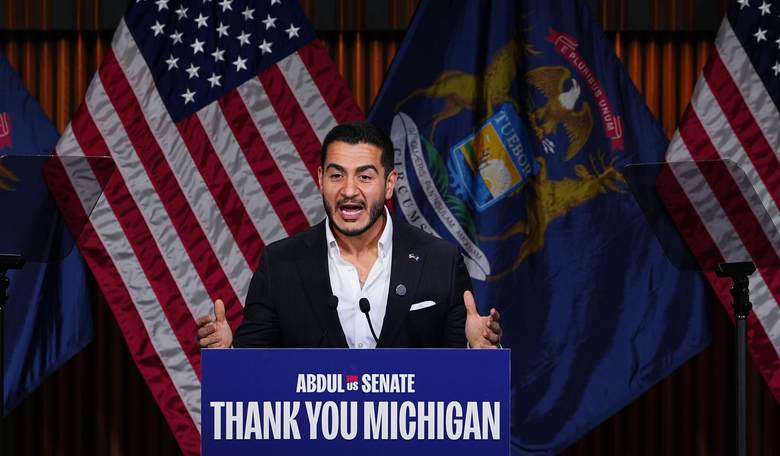
Michigan Sen.-elect Abdul El-Sayed posted on social media on Wednesday, promoting a struggling community co-op in Detroit.
El-Sayed said the co-op is expanding access to healthy food in Detroit, but the business is bleeding cash. In September, it posted a GoFundMe seeking to raise $20,000.
Owned by the community, for the community. The Detroit People's Food Co-Op is expanding access to healthy food and giving Detroiters a say in their local food system. Stop by, shop, become a member-owner, and be part of something that strengthens our city. https://t.co/qrWY2A76pD
— Dr. Abdul El-Sayed (@AbdulElSayed) November 25, 2026
The Detroit People’s Food Co-op opened in May 2024 and has discovered that running a grocery store is incredibly hard.
The co-op’s GoFundMe said the goal was “To support Detroit People's Food Co-op's urgent and immediate cashflow needs and to build the community support needed for the Co-op to survive and thrive, the DPFC Board of Directors has launched the Mframadan ("a house built to withstand windy and treacherous conditions) Campaign. We encourage you to support this important model of cooperation and community self-determination by donating generously. The Mframadan Campaign runs from September 8 - November 30, 2026.”
You'll be shocked to learn that this grocery store -- led by a guy who refers to "food apartheid" -- already has a $20k weekly cash shortfall. They had to do a GoFundMe in September to meet "urgent and immediate cash flow needs." https://t.co/4Y1olbf2UA https://t.co/8MsvzokeBh
— Chuck Ross (@ChuckRossDC) November 25, 2026
The co-op started a fundraising campaign and is seeking to add members, the Detroit Metro Times reported in September.
Detroit People’s Food Co-op is asking the community for help. The Black-led, community-owned grocery store has launched a fundraising campaign, is pushing to add members, & is making operational changes as it confronts cash-flow problems & rising costs. https://t.co/EMcmlo6ZD1
— Steve Neavling (@MCmuckraker) September 29, 2026
A beloved community-owned grocery store in Detroit is facing some hard times. They say the challenges keep mounting. The Detroit People’s Food Co-op is a staple around here. But like many in the food industry, they’re facing some challenges. https://t.co/UCRmpIc2Cm https://t.co/8C3xROBeGa
— FOX 2 Detroit (@FOX2News) October 1, 2026
Grocery stores typically run on profit margins between 1 and 3 percent, and many fail.
Although the Detroit People’s Food Co-op is marketed as community-owned, it was subsidized by taxpayers.
The project received a $1.5 million Community Revitalization Program grant, and the Michigan Strategic Fund approved $509,634.
In 2023, the Co-op won a $100,000 prize funded by America Rescue Plan Act funds.
.@AbdulElSayed When politicians promote "food sovereignty" and community-owned markets like the Detroit People’s Food Co-op, they leave out the most important detail: these projects rely heavily on taxpayer money and outside bailouts just to keep the doors open. Even though the Detroit co-op is technically member-owned, the overall development took millions in public grants and government-backed financing just to get built. Despite that head start, the store has been losing thousands of dollars a week, struggling to keep shelves stocked, and launching emergency fundraising pleas to survive. It is the exact same story wherever government-backed or publicly subsidized grocery stores are tried across the country: In Missouri, Kansas City's city-backed Sun Fresh Market burned through over seventeen million taxpayer dollars in renovations and bailouts before shutting down permanently with empty shelves. In Kansas, the town of Erie bought its local grocery store to keep it afloat, only to watch it drain municipal funds so quickly the city had to liquidate the inventory and lease the building back to a private company. In Florida, the town of Baldwin took over its local market and put the workers on the municipal payroll, shutting the doors after years of continuous financial losses. In Illinois, the taxpayer-backed Prairie Food Co-op in Lombard closed abruptly just sixteen months after opening after ending its first year three-quarters of a million dollars in the red, while Chicago abandoned its own municipal grocery plan after spending millions on planning alone. Even in states like California and Nebraska that pour millions into state-level food access grants and rural grocery subsidies, publicly backed markets repeatedly fold once the initial government cash dries up. Politicians love the photo ops and progressive buzzwords, but basic economics does not care about political slogans. A grocery store that cannot survive on actual customer sales is not sustainable—it is just another endless bill handed to the taxpayer.
— Iníon Dé (@SteadfastBlvr) November 25, 2026