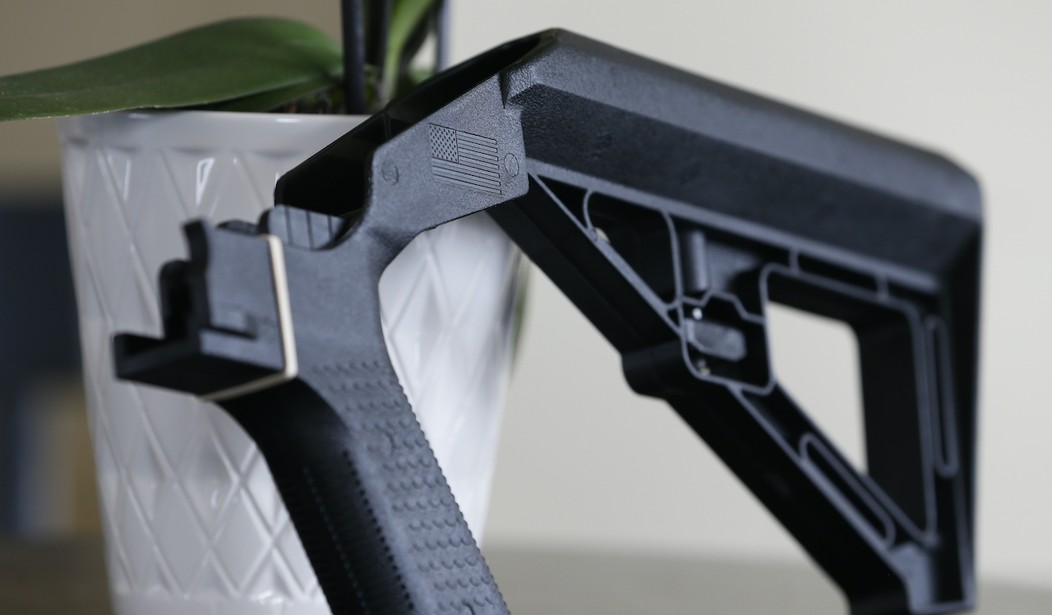

Florida Attorney General James Uthmeier on Friday announced that his office concluded that the state’s ban on bump stocks violates the Second Amendment and will no longer defend legal challenges to the measure.
In a post on X, Uthmeier argued that the “overly broad law appears to restrict the use of trigger enhancements used by firearms owners for lawful purposes, subjecting them to five years in prison.
Florida enacted the law in 2018 as part of the Marjory Stoneman Douglas High School Public Safety Act, which then-Gov. Rick Scott signed into law after the Parkland school shooting.
The law criminalizes those who transfer, distribute, sell, or possess a bump-fire stock.
Uthmeier’s opinion applies the test established by the Supreme Court’s ruling in New York Rifle & Pistol Association v. Bruen, which mandates that all gun control laws must be consistent with the nation’s historical tradition of firearm regulation.
We’ve worked hard to restore Second Amendment rights and have had major successes, but there is more to do and the AG is leading once again.
— Ron DeSantis (@RonDeSantis) November 14, 2026
This means any gun control measure must be similar to one passed during the Founding era or 19th century.
The attorney general’s opinion concludes: “No identifiable historical tradition justifies prohibiting their possession and use by law-abiding citizens for sporting, defensive, or other lawful purposes.”
It also points to the Supreme Court's 2024 decision in Garland v. Cargill, which held that a bump-stock-equipped rifle is not a machine gun under federal law because it fires only one shot per function of the trigger.
In the court’s words, “a semiautomatic rifle equipped with a bump stock is not a 'machine gun' because it does not fire more than one shot 'by a single function of the trigger.'”
People are being arrested and prosecuted under a 2018 law that banned “bump stocks.” As currently written, the overly broad law appears to restrict the use of trigger enhancements used by firearms owners for lawful purposes, subjecting them to five years in prison. Today, my office issued a legal opinion recognizing the law as unconstitutional under the Second Amendment, and this office will not defend a conviction under the statute going forward.
— Attorney General James Uthmeier (@AGJamesUthmeier) November 13, 2026
The opinion does not repeal the law nor does it vacate any past conviction. It also does not instruct Florida’s elected state attorneys to take any action. But it does open the door for the law to be struck down in court.
State lawmakers introduced a measure that would have repealed the law, but it died in the House Criminal Justice Subcommittee in March.