
Is it time to resume testing nuclear weapons?
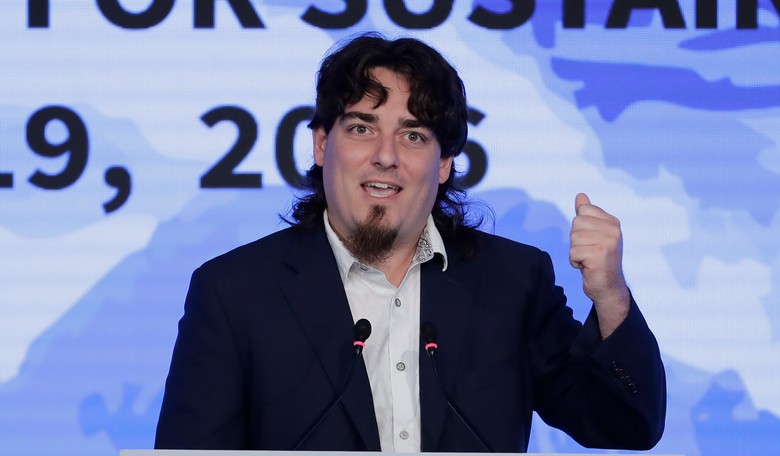
Palmer Luckey, the founder of the defense company Anduril, made the case at The New York Times’ DealBook Summit on Wednesday, arguing that nuclear tests were never just about watching bombs go off. They were also a way to study how military and civilian equipment, electronics, and infrastructure held up under a nuclear blast: what kept working, what failed, and how contingency plans needed to change.
By ending those tests, Luckey argued, we stopped testing more than the weapons themselves. We stopped testing our ability to withstand them, leaving a gap in our preparedness that a foreign power could easily exploit, a scenario he warned is more plausible than we might think.
Watch Luckey on testing nuclear weapons: It's important to know their effects on the technology that powers our society, he says https://t.co/bE41TaaQiq
— DealBook (@dealbook) November 18, 2026
"In the 60s, the 70s, the 80s, the early 90s, we weren't just blowing up nukes to watch what they did. In almost every test, we were lining up rows of civilian pickup trucks, military radios, washing machines, respirators, ventilators, everything you need to run, hospitals, power plants, substations, oil refineries. And we were watching not just what the blast and temperature effects had on them, but also the electronic effects," Luckey explained.
"What is an electromagnetic pulse?...What does that do? Which things survive? Which shut down but that are able to be restarted? Which of them are completely fried and will never operate again? We learned a lot from that. And we spent a lot of money hardening military infrastructure and critical infrastructure and power structure and hospital infrastructure."
Modern hospitals, Luckey explained, are built with protections against the effects of a nuclear weapon detonated above the continental United States. But as technology has advanced without further nuclear testing, he argued, a gap has opened in our preparedness: we no longer know how today’s equipment would hold up.
"The models that we use to simulate the effects of nuclear weapons on electronics, they were for transistors that were literally thousands of times larger than the ones in this phone," he explained. "We don't actually know what will happen to our phones, to our critical infrastructure, to our military."
So why aren’t simulations good enough? As Luckey explained, they are built on data from past tests and shaped by the assumptions that go into them. Warfare is not bound by those assumptions. The point of a real-world experiment is to put them to the test, to find out what the models miss, where their predictions break down, and whether what we expect to happen actually does.
Luckey went on to illustrate how our gap in preparedness could play out in a realistic scenario.
"I'll paint a picture for you," he said. "China decides that they're going to test a nuclear weapon in space, not on the ground. 'Oh, no. The yield was larger than we expected and the side lobes hit the whole Korean peninsula.' At the same time, coincidentally and surely with no warning, South Korea is invaded by North Korea, decided to use their conventional weapons, which were not affected, their massive artillery all in the mountains to take advantage of this situation. And the U.S. can't do anything about it and neither can South Korea because they bought all of America's weapons."
"All of this, all that possibility space is downstream of us not testing in any way the impacts of nuclear weapons on modern technology and electronics," Luckey added. "And that is why I'm an advocate because I am not confident my stuff can survive even when I follow the rules and the rad-hardening guidelines that, again, were designed for ancient technology. They were designed for the type of cell phone that Abraham Lincoln would have used."
Nuclear testing remains unpopular, and any return to it would have to contend with treaty restrictions. But President Trump has called for renewed testing to keep pace with other countries. Luckey adds to that case. Nuclear weapons testing isn’t just a source of leverage or a show of force. We also need to know which parts of our military and civilian infrastructure would still function after a nuclear blast, and prepare well before that situation ever arises.