







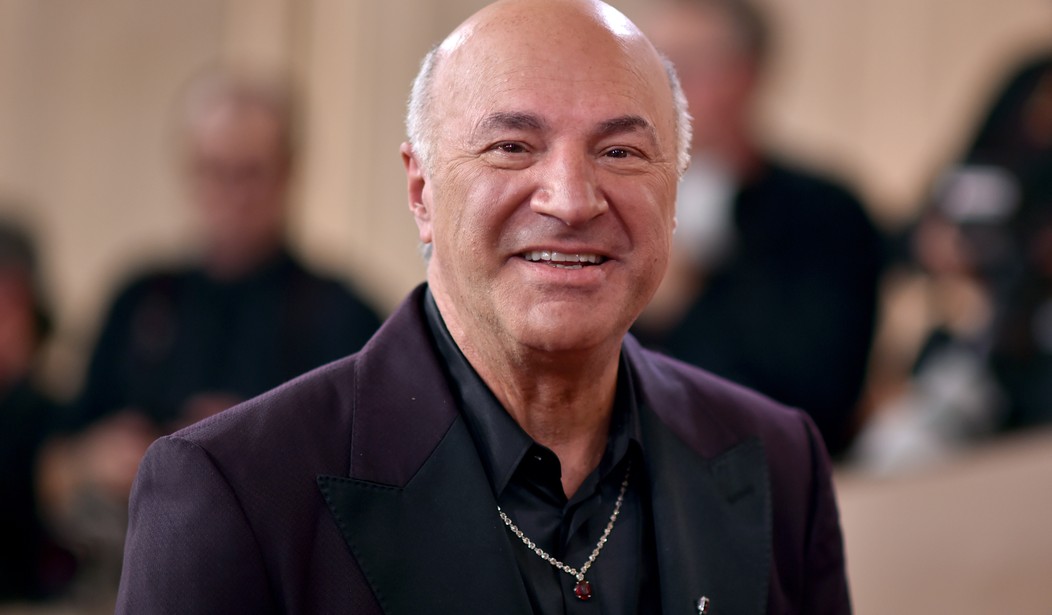
Over the weekend, Jubilee released the latest episode of its “Surrounded” series, pitting Canadian entrepreneur Kevin O’Leary against 20 Gen Z workers to debate affordability and whether young Americans can still get ahead.
In one widely circulated clip, a young worker accused O’Leary of getting rich without doing anything of value, then using his position at the top of the economic ladder to decide which entrepreneurs and businesses deserve funding. Allocating money, he argued, is something ChatGPT could do just as well. To him, the economy is “broken” because investors like O’Leary “control all the money,” leaving workers to do nothing but compete for their own share.
Gen Z worker GOES OFF on Kevin O'Leary questioning what he actually contributes as an investor and says he would never go on Shark Tank Kevin O'Leary: “I work pretty damn hard to get rich” Gen Z worker: “I'm sure you once did but now you just go podcast to podcast” Kevin O'Leary: “No, I'm still doing a lot of investing” Gen Z worker: “Wow, you're investing. That's so hard. How do you decide what to invest in? What makes you so valuable?” Kevin O'Leary: “I try and find people like you with a lot of passion and I think they have a great business plan” Gen Z worker: “Can’t I use ChatGPT to analyze their business plan? What are you bringing to the table?” Kevin O'Leary: “Money” Gen Z worker: “Maybe the whole economy is broken because we're stuck with people like you controlling all the money” “If I have a good idea, why do I have to go on Shark Tank and beg you to screw me?” Kevin O'Leary: “I love it. You should come on Shark Tank” Gen Z worker: “Oh I never will. I don't want to be an entrepreneur bro. I just want to live”
— Jack (@Jackkk) November 15, 2026
Of course, this is a crude way to describe a free market, and it might sound convincing to someone who doesn’t understand how the economy works. But once you add a few more details, it becomes clear that the system is not only a good way to run the American economy, but that the problem might have more to do with the work ethic of some members of Gen Z than with any systemic unfairness.
While the United States is far from a free market, its capital markets are among its freest, and a driving force behind its position as the world’s leading innovator. If you have a good product or a promising prototype, you can make your case to people willing to fund it. Take the founder of Anduril Industries Palmer Luckey, who dropped out of community college as a teenager to develop the Oculus VR headset. He raised $2.4 million on Kickstarter in 2012 and another $91 million in venture capital a year later. There is nothing inherently unfair about that arrangement. Luckey had a good idea, the ability to see it through, and investors willing to put money behind it. That same opportunity is available to anyone with a good idea.
But this brings us to something particularly revealing the Gen Z worker said: “I don’t want to be an entrepreneur, bro. I just want to live.”
That sentiment gets at the work ethic of many young people complaining about affordability. They have no ambition to build the towering skyscrapers or massive infrastructure projects that defined the Gilded Age. They have no desire to create companies that improve people’s lives, no big ideas about what they could offer society or what they could earn in return. They see work as an obligation to minimize. The goal is to work as little as possible and maximize what they do outside of work. It’s another expression of the lack of purpose that leaves so many young people adrift.
As for the claim that an AI chatbot could do an investor’s job, this was obviously meant as a jab. But if it were that easy, why hasn’t this kid become an investor? Because doing it successfully takes real skill. It requires recognizing promising ideas, judging whether the people behind them can deliver, and deciding which risks are likely to pay off. AI may be an impressive technology, but those decisions are hardly the repetitive, tedious tasks it excels at.
Many investors are successful entrepreneurs themselves. They’ve built companies from the ground up, then used those skills to help others build their own, and that’s something they often don’t get enough credit for.
If all Kevin O'Leary needs to get rich is ChatGPT, why don't you do it?
— Daniel Di Martino (@DanielDiMartino) November 16, 2026
This clip offers a glimpse into a mentality marked by little sense of ownership in the world, and little ambition to build a stake in it.
But affordability concerns are real. Personal choices alone cannot fix a weakening labor market or overcome policies that restrict housing construction, raise prices, and make finding work harder. Older Americans tend to romanticize the hardships endured on the road to success. Some struggle is inevitable, but unnecessary hardship is not something we should preserve for its own sake.
Politics still has an important role in the affordability debate: expanding opportunity, removing unnecessary barriers, and making individual effort count for even more than it already does. A greater stake in the economy means a stronger reason to build, work, and succeed. Give Gen Z a clearer path forward, and excuses for failure become harder to sustain.
Editor's Note: Do you enjoy Townhall's conservative reporting that takes on the radical Left and woke media? Support our work so that we can continue to bring you the truth.
Join Townhall VIP and use promo code FIGHT to receive 60% off your membership.



Join the Conversation
VIP members get the ability to comment on articles.