
As someone committed to free markets, I have regularly argued that a business’s priority should be to increase profits and shareholder value. The reasoning is straightforward: a company that earns more by making its products better or its services more useful benefits both its owners and its customers. The benefit to society comes through the business, not through some separate mission its executives appoint themselves to pursue.
But there is another reason to keep companies focused on that task: corporate leaders should not treat the wealth entrusted to them as a license to decide what is best for others.
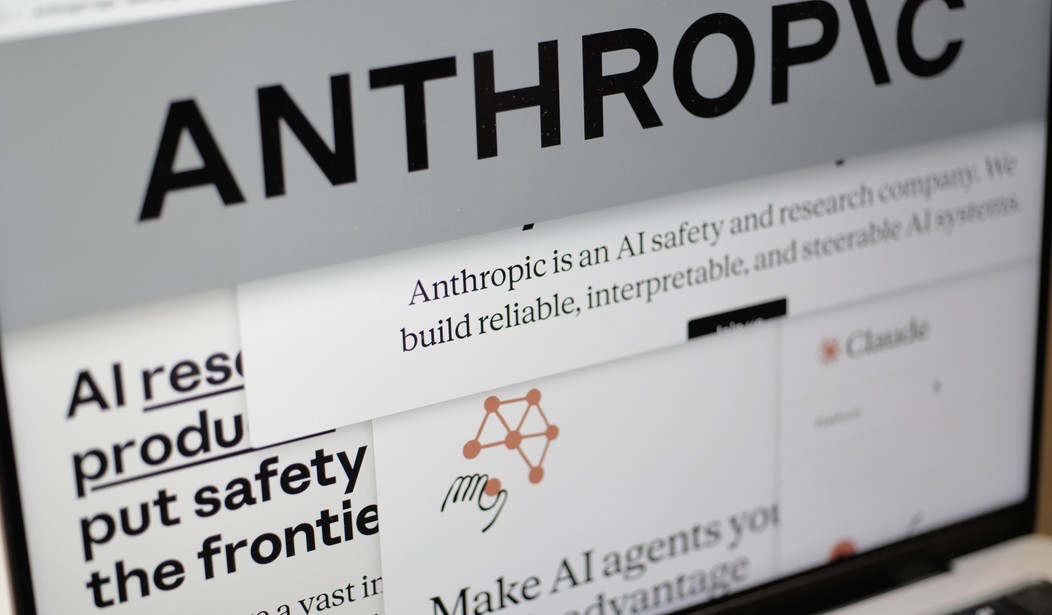
On Monday, leading artificial intelligence company Anthropic announced the Anthropic Public Benefit Fund, setting aside five percent of the company’s shares for a fund “dedicated entirely to the public benefit.”
We’re committing a portion of Anthropic’s shares to the Anthropic Public Benefit Fund, a new wholly owned entity dedicated entirely to the public benefit. It will start off with 5% of our shares. For every 50% increase in the company’s value over a set baseline, we can contribute up to an extra 2%, subject to our board’s discretion. In total, this means that roughly 20% of Anthropic’s shares are committed to the public good. Our co-founders have already pledged to donate 80% of their equity, and around half our employees are donating a portion of their equity as part of a donation matching program we’ve run since our founding. In the post below, we share more details about our new fund. https://t.co/XzDntVH0vH
— Anthropic (@AnthropicAI) October 18, 2026
"We’re committing a portion of Anthropic’s shares to the Anthropic Public Benefit Fund, a new wholly owned entity dedicated entirely to the public benefit," the company wrote on X. "It will start off with 5% of our shares. For every 50% increase in the company’s value over a set baseline, we can contribute up to an extra 2%, subject to our board’s discretion."
"In total, this means that roughly 20% of Anthropic’s shares are committed to the public good," it continued. "Our co-founders have already pledged to donate 80% of their equity, and around half our employees are donating a portion of their equity as part of a donation matching program we’ve run since our founding."
To those who believe businesses should serve a political or social mission, this may sound like great news, perhaps improved only by putting the shares under government control. But what is “the public good?” What does Anthropic mean by it, and why should an AI company’s judgment about what benefits society be acted upon?
The problem is not doing good. It is who gets to decide what “good” means, and whose money they get to spend on it. Individuals can support the causes they believe in, and executives are welcome to do the same with their own wealth. But a corporate “public good” mission lets a handful of executives elevate their preferences into a mandate to act on everyone else’s behalf. You give your money to a company for them to provide you with a good or service, nto for them to use your money for a different cause.
Forget that distinction, and a company behaves less like a business and more like a nonprofit. Making products cheaper, more abundant, or better is no longer the overriding priority. It becomes one goal competing with a company trying to enact its version of the "public good" on the rest of society.
Now, according to Anthropic's press release, the "public good" includes, donations to traditional nonprofits, which sound straightforward and harmless enough. But what about “mitigating AI job displacement?” Does that mean retraining workers? Subsidizing particular jobs? Funding campaigns for Anthropic’s preferred labor policies?
Who knows, but that is why businesses should be encouraged to pursue profit, not an open-ended mandate to improve society. A company earns a customer’s money by offering something that customer wants. A “public good” fund can spend that for advancing policies that the same customer opposes. The first requires consent to the exchange. The second abuses that consent.
Just think back to Budweiser, Nike, or the NFL at the height of the woke corporate crusade. Conservatives told these businesses to stay out of politics: sell the beer, make the sneakers, play the football game. Customers were paying for a product or an afternoon’s entertainment, not a lecture on the company’s preferred social causes. During this time, "public good" was directly translated to furthering wokeness.
That principle does not change with Anthropic, or when someone believes their own definition of "public good" holds political power.