
President Donald Trump declared “ECONOMIC D-DAY” in the conflict against the Islamic Republic of Iran earlier this week – indicating that the war is entering a new phase focused on hurting the nation’s wallet.
The president said that the initiative would tackle “ANY country that allows its financial institutions, businesses, airports, or government entities to provide any type of lifeline to Iran” and said those countries will “face TREMENDOUS Economic Consequences.”
“Oil smuggling, swap lines, cash transfers, exchange houses, ship registries, front companies — It all needs to stop NOW. You know who you are,” he continued.
Cale Brown, Chair of Polaris National Security and former State Department deputy spokesperson, explained in a written interview with Townhall that “the cost to Iran will accrue at a faster rate than to the US — here the US has an asymmetric advantage it can leverage at a lower political cost.”
The move comes as the president says there are no ongoing talks between the United States and the Islamic Republic, as tensions soared in July and early August as Trump mulled whether or not to do an energy-focused attack against Iran.
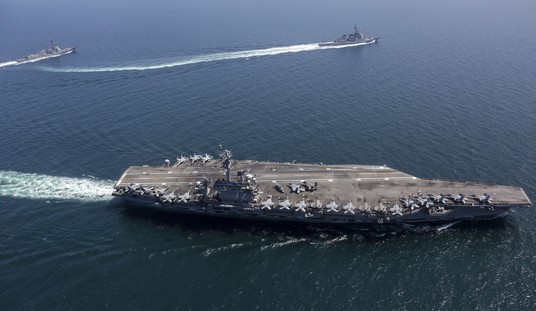
The U.S. struck Iran for multiple days in a row in July after Iran violated the Memorandum of Understanding by attacking cargo ships in the Strait of Hormuz.
“If the focus on economic leverage brings the temperature down militarily, that would be great, but the regime in Tehran gets a vote and they have fewer economic tools with which to counter ours,” he said, specifically pointing out that “the rial’s exchange rate for dollars is approaching two million to one.”
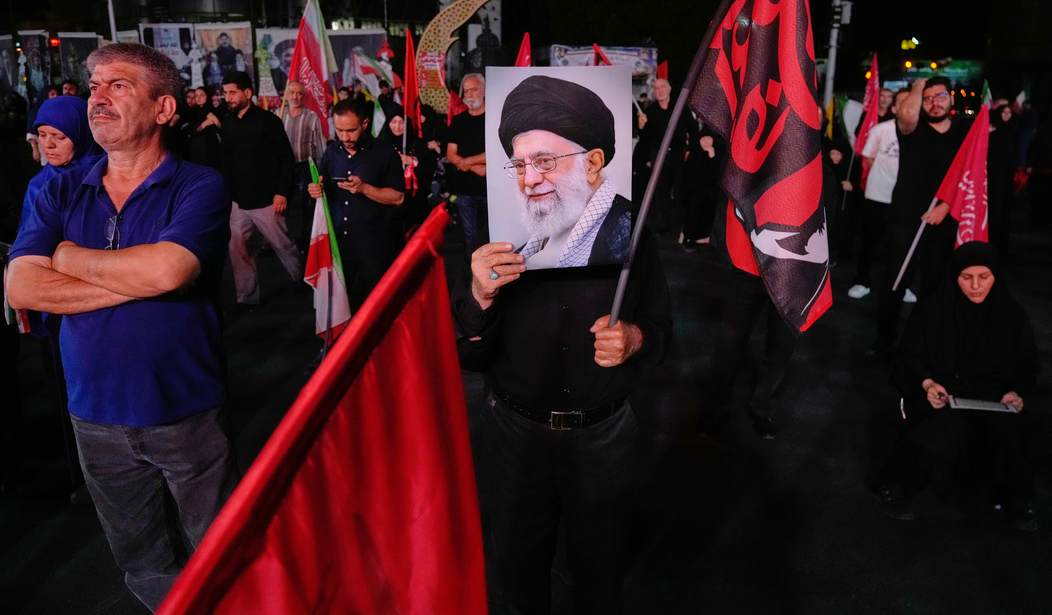
Economic protests rocked the Islamic Republic this past winter, leading to the killings of thousands of protesters.
The Treasury Department has its own “Operation Economic Fury” that’s been focused on “freezing” cryptocurrency assets and crippling money coming in from oil to the regime, the department explained in May. As for this new development, there’s still more to be learned.
“If we are doing the maximum economic pressure, then that means that likely there will not be a large-scale kinetic restart,” Treasury Secretary Scott Bessent told CNBC, adding that there will likely be more details released on Monday, according to the outlet.
The national security expert echoed Bessent’s sentiment, noting that “by focusing on economics the president is under less pressure to wrap things up quickly.” The president stressed as recently as Monday that he does not have a “time schedule” for when he wants the conflict to wrap up.
In terms of how other countries will react, Brown said it is somewhat “premature” to make a determination before “the contours of [an] economic pressure campaign are laid out.”
“Many were dismissive of our ability to bring substantial pressure without complete buy in from Europe in Trump's first term. But we were able to take Iranian oil exports down to a fraction of what they were before ‘Max Pressure,’” Brown said.
“I would caution against underestimating what the administration can do with a determined Commander in Chief and the creative application of economic pressure,” he added.
Brown further stated that "many are too quick to adopt the talking point that this is a.war of choice. Iran chose to fight this war starting in 1979, whether we acknowledged it or not, and to date it had not paid a sufficient price for the shedding of American blood over the past 47 years."
"Opting not to address a growing threat is another kind of choice, and that was one the President could not countenance," he continued.
Editor's Note: Do you enjoy Townhall's conservative reporting exposing the radical left and woke media? Support our work so we can keep bringing you the truth.
Join Townhall VIP and use promo code FIGHT to receive 60% off your membership.