


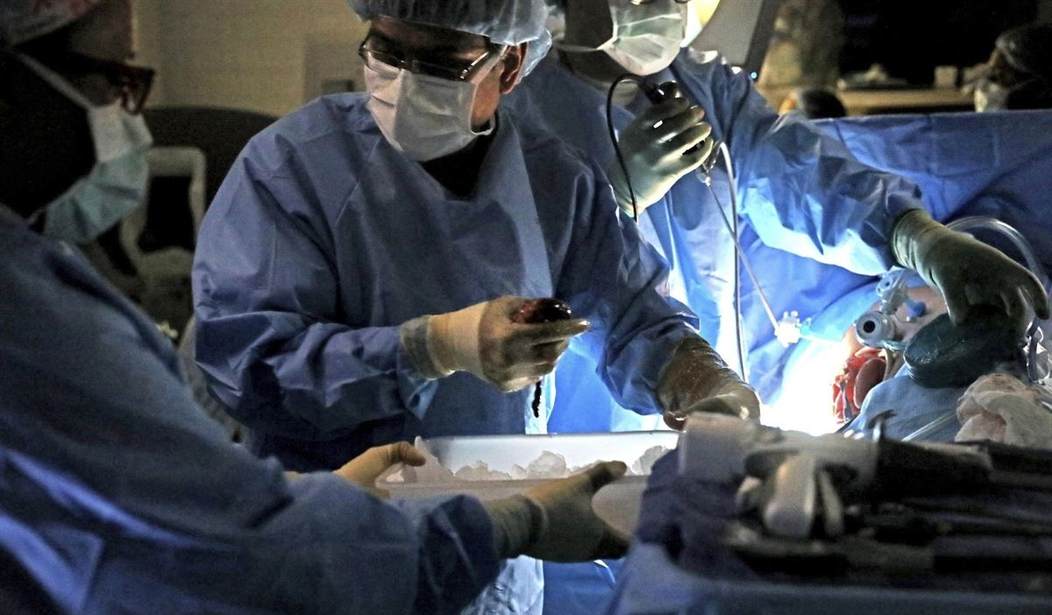
Last year, we learned from The New York Times that the push for organ donation is harming donors and putting lives at risk. This includes Misty Hawkins, who was 42 when she choked while eating and fell into a coma. Hawkins' mother decided to take her off life support and donate her organs, but when surgeons opened up Hawkins, they saw her heart was still beating. Danella Gallegos was homeless when doctors at Presbyterian Hospital in Albuquerque told her family she wouldn't recover. They agreed to donate Gallegos' organs, but her family saw tears in Gallegos' eyes, and right before surgery, a doctor got Gallegos to respond. Despite that, the organ procurement organization wanted to go ahead with retrieving Gallegos' organs and suggested morphine to reduce movement. The hospital refused and Gallegos made a full recovery.
But the damage was done. On July 22, 2025, Secretary Kennedy announced changes to the organ donation and procurement process, and in August of this year, Kennedy decertified Network for Hope, a Kentucky organ procurement organization, after the group ignored signs of life in several patients scheduled for donation.
Organ donations do save lives, but critics have long expressed the very concerns laid out in The New York Times report: that the care and lives of patients were being compromised to procure organs for donation. Now the system is floating a new proposal that makes the entire controversy worse by proposing the use of Normothermic Regional Perfusion (NRP) to cut off blood supply to patients' brains to procure organs.
NRP donors are not brain dead, but they have a poor prognosis or an unacceptable quality of life, so death is planned in such a way that they can donate their organs.
👀 Read my latest article:
— Dr. Heidi Klessig (@heidiklessigmd) November 17, 2026
“Slitting organ donors’ necks will not increase trust in the U.S. transplant system”
The U.S. organ transplant system is now recommending that surgeons slit the blood vessels supplying organ donors’ brains as a safety measure to keep the donors from… pic.twitter.com/QGdBe2Rrkg
The NRP process begins by withdrawing medical support and letting the donor’s heart stop. At this point, death is declared under the Uniform Determination of Death Act’s (UDDA) circulatory-respiratory standard: the irreversible cessation of circulatory and respiratory functions.
But because waiting for the heart to stop beating is often a slow process, the organs can begin to degrade from a lack of oxygen. This hypoxic interval can make organs like the heart unsuitable for transplantation. If these organs could somehow be resuscitated, the number of transplantable organs could be increased. But if blood flow to the brain should occur during this resuscitation, the patient might wake up.
Therefore, in order to procure a donor heart, NRP surgery traditionally begins with clamping off the blood flow to the patient’s brain. This is meant to make the patient intentionally brain dead and prevent them from waking up when the rest of the body is resuscitated. Also, by clamping the arteries that feed the brain, the legal category of death switches to the UDDA’s neurologic standard: the irreversible cessation of all functions of the entire brain including the brain stem. This way, doctors are legally covered when the person is resuscitated from the neck down and their heart starts beating again.
In 2022, bioethicist Matthew DeCamp, MD, and some of his colleagues noted that NRP patients are not dead. "Restarting circulation reverses what was just declared to be the irreversible cessation of circulatory and respiratory function. It is no defense to suggest that the patient was already dead when the action negates the conditions upon which the determination was made."
Lauris Daldjian, MD, is the director of the bioethics and humanities program at the University of Iowa Carver College of Medicine. She called NRP a "technologically elaborate attempt to refashion definitions of death to maximize the number and quality of transplanted organs." And Dr. Claire Morgan, a transplant surgeon and whistleblower, said that NRP does not always completely cut off blood flow to the brain, meaning patients could potentially be aware of and experiencing pain during the removal of their organs. She filed complaints with federal regulators and the national transplant network.
It was Dr. Morgan's complaints that led to the suggestion of cutting the blood vessels rather than clamping them.
If there's a possibility someone will wake up, there's a possibility that they aren't dead.
— Via Media⚓ (@ztech1001) November 18, 2026
Sec. Kennedy said that Health and Human Services made "horrifying" discoveries in that New York Times report, including 351 cases where organ donation was authorized but not completed, 103 cases that showed "concerning features" like neurological signs incompatible with organ donation, and at least 28 patients who may not have been deceased when procurement was initiated.
On October 30, Health and Human Services and the Centers for Medicare and Medicaid finalized a rule to help more donated organs reach patients through the strengthening of the oversight of Organ Procurement Organizations. "Every donated organ carries the chance to save a life," said Sec. Kennedy. "Under President Trump’s leadership, we are holding failing organizations accountable, strengthening patient safeguards, and helping high-performing organizations reach more patients. We will honor donors’ gifts by demanding results."
CMS Administrator Dr. Mehmet Oz added, "Americans waiting for lifesaving transplants cannot afford poor performance by OPOs, and CMS is committed to holding these organizations accountable."
The public can submit comments on this policy to the Health Resources and Services Administration (HRSA) from November 13 through December 28, 2026.
Editor's Note: Do you enjoy Townhall's conservative reporting exposing the radical left and woke media? Support our work so we can keep bringing you the truth.
Join Townhall VIP and use promo code FIGHT to receive 60% off your membership.



Join the Conversation
VIP members get the ability to comment on articles.