





It started with “one-time” stimulus checks. Now some politicians are proposing $2,000 for everyone until the crisis passes.
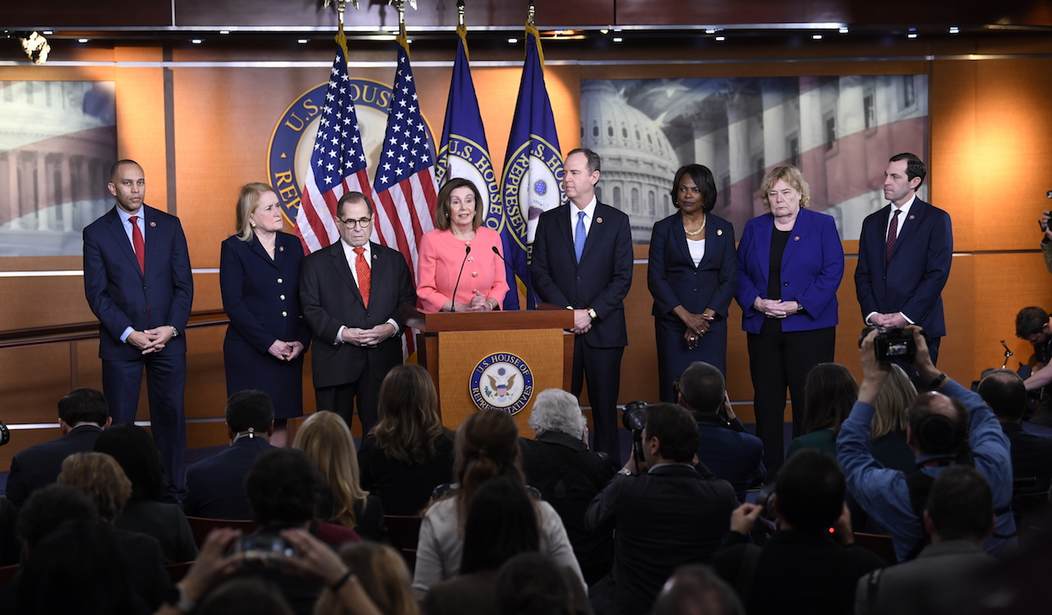
“A one-time, twelve-hundred-dollar check isn’t going to cut it,” says Rep. Ro Khanna (D-Calif). “Americans need sustained cash infusions for the duration of this crisis.”
Khanna, along with Rep. Tim Ryan (D-Ohio), is co-sponsor of the Emergency Money for the People Act in the House.
The legislation, among other things, would give every American over the age of sixteen $2,000 a month so long as they make less than $130,000 annually ($260,000 for married couples).
If it takes a month to go from a one-time payment of $1,200 to $2,000 until whenever, you can bet that in two months someone is going to propose $3,000 for everyone forever. When you are buying votes, the price can only go up.
Which means that we are pretty much talking about universal basic income (UBI). The idea that Andrew Yang failed to bring about with his presidential campaign is finding traction amid the COVID-19 pandemic. But is UBI a good idea?
Some hold the view that UBI would eliminate all existing social programs, replace them with a one simple payment to everyone. Currently, the US spends about $2.9 trillion on social protection. If that were divided equally to 330 million, everyone would get $8,800 per year or $733 per month.
If you are working and getting paid, $733 on top would not hurt. But if that were your only income you would definitely be below the US poverty line. Better than roughly half of the world though.
It is no wonder that politicians go for $2,000 per month. That would require nearly $8 trillion per year—or nearly double the size of the entire federal budget. The $2,000 UBI would require every dollar from the federal, state and local budget). So, no military, no NASA, no salaries for elected politicians, but everyone gets $2,000 per month.
What about taking from the super-rich to fund this? The richest Americans on the Forbes 400 have an average wealth of $7.4 billion, which brings their total wealth to roughly $3 trillion. Divide that among 330 million Americans and you will get... $747 per month. A third of the $2,000 promised, and that is just the first year! The next 400 richest in line will have much less.
Even if UBI is $2,000 per adult, and $500 per below age 16, assuming we have roughly 66 million below age 16 and 256 million adults, the final cost would come to $6.5 trillion per year. Cutting off those making more than $130,000 (less than 10 percent of population at most) would not change the numbers drastically.
Speaking of taxpayers, we pay above $5 trillion per year in taxes, including $1.2 trillion in social security contributions. If we kept current taxes and borrowed and cut most government functions, $2,000 per adult and $500 per child might be doable in purely arithmetic terms, assuming everything remains unchanged, which, of course is a gargantuan assumption.
Arithmetics aside, (it’s not like unfavorable math ever stopped politicians), the more important question is “Should we just give everyone $2000?” The answer to that question depends on why you wanted to implement UBI in the first place.
If you are trying to help the needy, then UBI is an awful tool because it is not targeted to those in need. There are many holes in today's safety net—some people in need not receiving assistance, some people receiving assistance but not really in need. UBI will intentionally ignore that—those making $130,000 per year will receive the same as those making $13,000 per year, $2,000 each.
If you think that UBI will remove the government bureaucracy and jobs that administer social assistance, think about two caveats. If the government apparatus is inherently and deliberately inefficient, there are plenty of excuses to keep offices full of bureaucrats even with UBI. Alternatively, if government apparatus did strive for efficiency, with today’s IT and AI capabilities it could shed personnel tomorrow even without UBI.
If you are trying to reduce income inequality, replacing social assistance which is targeted (the poor get more, the rich get less) with UBI (everyone gets the same) is not the way to go. There is an argument that a lot of current government spending is poorly targeted, and that the relatively wealthy collect the gains intended for the poor. If you think that is the problem worth solving, UBI does not fix it.
The big problem with UBI is that in a system of robbing Peters to pay Pauls driven by politicians, no UBI number will ever be enough. What can beat the “$2,000 for Everyone!” slogan? Three Thousand Dollars for Everyone!”
The perilous arithmetic of the previous paragraph doesn’t hold under any realistic assumptions—do you really believe anyone would vote to get rid of salaries for politicians and pretty much every government employee and federal agency in exchange for $2,000 for everyone?
Any realistic UBI, temporary or permanent, would keep all current government payouts and just add UBI to them. Taxpayers would pay $5 billion for today's government spending, and then another $5 billion (or more) for UBI in higher taxes today or higher taxes tomorrow (if UBI were funded by borrowing).
Zilvinas Silenas is the president of the Foundation for Economic Education (FEE). Silenas is co-author of the bestselling economics textbook in Lithuania and has 13 years of policy analysis in Lithuania and Europe. From 2011-2019 he served as the president of the Lithuanian Free Market Institute (LFMI).
Join the Conversation
VIP members get the ability to comment on articles.