





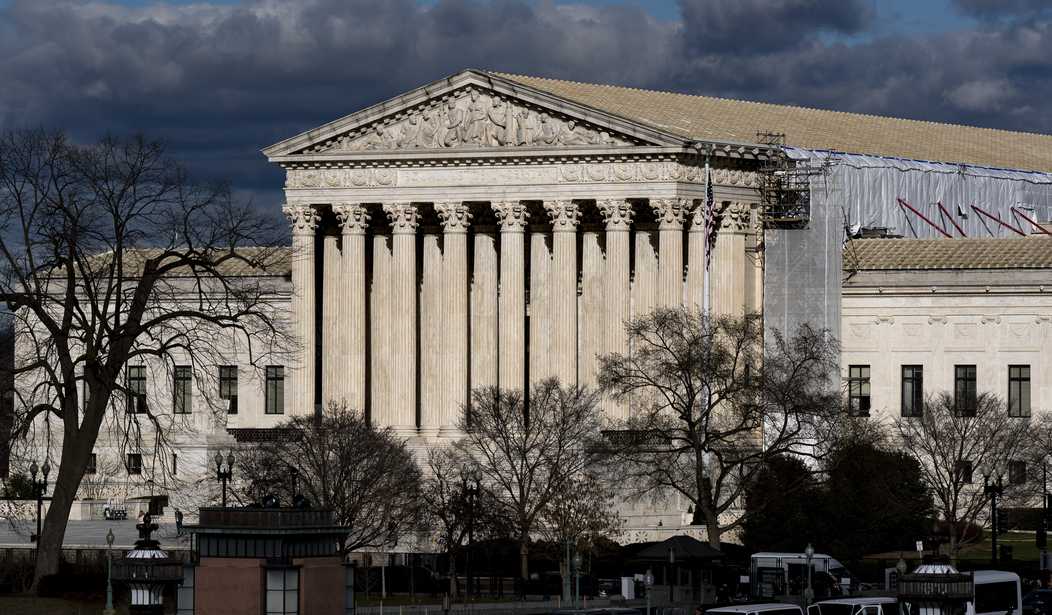
The Supreme Court recently delivered a decision on the constitutionality of one of the federal government’s most peculiar and least understood agencies, the Consumer Financial Protection Bureau.
Unlike the Fifth Circuit Court, which earlier ruled that the agency’s unique funding model violates the Constitution, Justice Clarence Thomas argued in the majority opinion the government’s funding of the CFPB “satisfies the Appropriations Clause”.
The CFPB is a federal agency unlike any other. For one, it has no direct funding. Its funds come from the Federal Reserve, our opaque central bank.
In perpetuity, the CFPB can claim up to 12 percent of the Fed’s “surplus,” which are profits it makes through various liquidity and asset schemes that come from buying and selling government bonds. They also charge interest on loans to financial institutions with zero congressional oversight.
While the funding structure has passed legal scrutiny for the time being, questions remain on the agency’s actions and whether the CFPB may be harming, rather than helping, consumers.
The CFPB is the brainchild of now-Sen. Elizabeth Warren and was created with the intention of policing “unfair and deceptive practices” in the financial sector. It is a more consumer-facing version of the Federal Trade Commission but more specialized in consumer financial services.
Since then, it has become an agency of scorn for financial product providers and their customers, restraining credit availability and making it more difficult for consumers to get access to capital such as business loans.
For one, the CFPB does not have a traditional rulemaking process that invites and accepts comments from citizens. It disseminates rules without democratic input, as any other agency is required by law to follow. This would not be a dealbreaker for agencies overseeing highly specialized industries with limited scope, but it’s different if we’re talking about rules that impact every bank and financial customer in the country.
Second, many of the CFPB’s rulings have been targeted at credit programs offered by specific financial firms, revealing selective enforcement based more on political factors than actual deceptive practices. Former employees have gone on the record detailing how they were directed to concentrate on individual companies rather than specific behavior.
Whether this be payday loans, credit card rewards, or even auto financing, Americans have turned to these programs for credit and to improve their standard of living. The vast majority appear satisfied with their offerings.
And all of this, despite the agency’s own lax security that has already put consumers at risk.
Last year, it was revealed that a CFPB staffer forwarded the confidential financial information of nearly a quarter million Americans to their personal email, an unprecedented breach from within a federal agency.
One of the more controversial rules from the agency was the fulfillment of a campaign promise by President Biden to cap credit card fees at just $8 per month. In the wake of the Fifth Circuit ruling calling into question the agency’s funding, that rule has been halted by a federal judge in Texas.
Capping fees may satisfy political concerns, but for Americans who rely on credit to pay their bills or make ends meet in tough times, making credit less available only hurts those most in need of tools to get by. That includes minority and poorer households and businesses, who feel the direct impact when credit is artificially constrained.
The power and reach of the CFPB will face another hurdle when the Supreme Court revisits not just the agency’s rulemaking, but federal agencies as a whole with the case of Relentless, Inc. v. the U.S. Department of Commerce.
In the much heralded Fisheries case, the Court will rule on the fate of the Chevron Doctrine, the ability for agencies to promulgate rules beyond the remit of Congress. This would have a sweeping impact on the ability of the CFPB to issue its rules and regulations without authority from the legislative branch of the federal government.
Consumers deserve both protection and the freedom of choice when it comes to goods and services, especially when dealing with the financial sector.
The unique financial products offered in the United States give us an advantage in boosting our standard of living. Access to credit is seen as a chief measure of financial inclusion and success.
But when rules are burdensome, and reduce the availability of credit, this is worth another look. And competing branches of government should work overtime to keep the CFPB in check.
At best, the Consumer Financial Protection Bureau is an agency without watchers. At its worst, it’s an unaccountable bureaucracy halting innovation and entrepreneurship. Reforms will have to come at some point for consumers to both prosper and be protected.
Yaël Ossowski is deputy director at the Consumer Choice Center.



Join the Conversation
VIP members get the ability to comment on articles.