





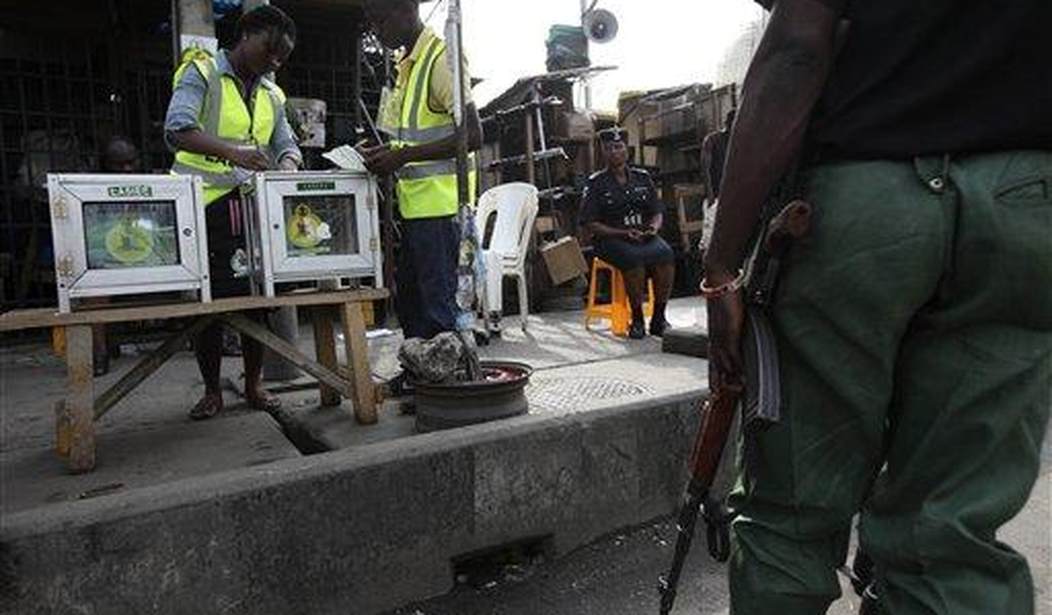
Nigeria, Africa’s largest democracy, went to the polls last weekend. On Wednesday, incumbent party candidate Bola Ahmed Tinubu of the All Progressives Congress was declared the victor. Predictably, as the results trickled in, those coming up short opted for the de rigueur response: demand a new election and rouse supporters in protest.
In Africa, refusal to acknowledge defeat at the ballot box has become as widespread as democracy itself. Moreover, the losing candidates find a receptive audience in Western media houses that play into tropes about the continent. It is Africa, therefore there must be corruption.
But their credulity was stretched further in Nigeria. Many Western observers had bought into the hype surrounding a supposedly new candidate, Peter Obi, reporting before the election that he had emerged the surprise front runner. So when he claimed his failure could only be explained by fraud, they were only too willing to amplify and lend credibility to his claims, which are devoid of any evidence.
In the febrile atmosphere of post-election Nigeria, such flippancy is irresponsible. Insecurity is already rife in the country. Boko Haram Islamist terrorists stalk the north. Separatist militants engulf the south-east. Kidnapping for ransom is rampant throughout the nation. Rejecting the election result and stirring tensions risks worsening the situation.
Moreover, the protestors must believe their leader on loyalty and conspiracy, rather than reason and evidence. Obi-mania and its remnants now risk undermining electoral institutions – those whose reforms the West had praised in the year before the vote, particularly for introducing a biometric system to weed out false, duplicate or ghost votes.
Nevertheless, Western media continue to propagate Obi’s claims because they had projected their liberal hopes onto the candidate. Nigerian politics has traditionally been a two-horse race between the dominant parties – the All Progressives Congress (the current incumbents) and the People’s Democratic Party (the opposition). Running for the marginal Labor Party, Obi was the third candidate.
He was supposed to be a breath of fresh air to blow through Nigeria’s sclerotic politics. For a demographic skewed heavily to the youth, he was meant to represent their hopes and change – despite being 62 and having run as the PDP VP candidate in the previous election. He was supposed to be clean – despite being listed in the Pandora Papers, the tranche of leaked data exposing the global elite’s secret offshore accounts, which found he had broken Nigerian law to stash millions abroad. He was going to energize turnout – despite it eventually coming in at a derisory 29%, lower than 2019’s poor showing of 35%.
Instead, Bola Tinubu was elected with 37% of the vote. Obi did not even come second, but third with 25% behind Atiku Abubakar on 29%. This was not a tight election in the end. A few fiddled votes did not swing it. Tinubu gained nearly 2 million more than Atiku and over 2.5 million more than Obi. To have a material effect, the fraud must have been on an epic scale. Yet Tinubu, in shock results, did not even win his stronghold, Lagos, where he served as a two-term governor, or the home state of the outgoing President from the APC party.
Nor did international election monitors detect the grand fraud in their preliminary statements, despite noting flaws and technical glitches in the process. Indeed, the election was far from perfect. Some polling units opened late. A new electronic system that was supposed to transmit results to an online portal crashed. And there was reported violence around select polling booths. But Western Governments have also recognized these as growing pains of a developing democracy, rather than the hijacking of it. The US and UK governments have already congratulated Tinubu on his victory.
Still, many in the media ran with Obi’s story of a sham election. They had believed polls before the election that Obi was the front runner, despite the surveys questioning potential voters through smartphones – an unrepresentative sample in a nation where 63% of the population are multidimensionally poor. Where most thought Bola Tinubu losing Lagos was a major upset, for others Obi’s marginal win was instead evidence of fraud. For the Financial Times, large rallies in Lagos where crowds “greeted him like a rock star” meant the reported result didn’t pass its anecdotal “smell test”: the margin of victory should have been larger.
The Times even reported on uncertified videos showing officials using correction fluid on results, despite the videos almost certainly being the product of misinformation. Fact checkers have been debunking the videos circulating post-election, finding most are from past years or completely different contexts. Beforehand, Western outlets were reporting on the harm disinformation could wreak on the Nigerian vote. Yet when they align with the fraud narrative, they are reported on.
The election was not pretty. Turnout was depressing. Technical glitches undermined confidence. But the Western media should not become complicit in bolstering the claims of those that seek to undermine democratic institutions, nor fan the flames of post-election violence.


Join the Conversation
VIP members get the ability to comment on articles.