






Some expect Haiti's 7.0 earthquake death toll to reach over 200,000 lives. Why the high death toll? Northern California's 1989 Loma Prieta earthquake was more violent, measuring 7.1 on the Richter scale, resulting in 63 deaths and 3,757 injuries. The 1906 San Francisco earthquake measured 7.8 on the Richter scale, about eight times more violent than Haiti's, and cost 3,000 lives.
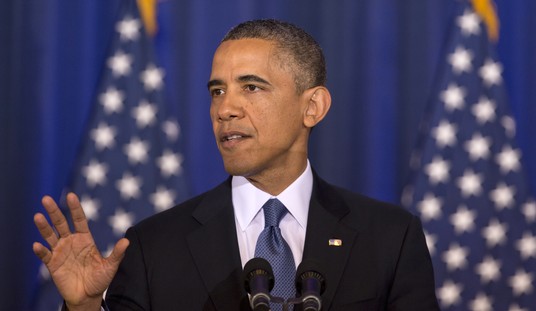
As tragic as the Haitian calamity is, it is merely symptomatic of a far deeper tragedy that's completely ignored, namely self-inflicted poverty. The reason why natural disasters take fewer lives in our country is because we have greater wealth. It's our wealth that permits us to build stronger homes and office buildings. When a natural disaster hits us, our wealth provides the emergency personnel, heavy machinery and medical services to reduce the death toll and suffering. Haitians cannot afford the life-saving tools that we Americans take for granted. President Barack Obama called the quake "especially cruel and incomprehensible." He would be closer to the truth if he had said that the Haitian political and economic climate that make Haitians helpless in the face of natural disasters are "especially cruel and incomprehensible."

The biggest reason for Haiti being one of the world's poorest countries is its restrictions on economic liberty. Let's look at some of it. According to the 2009 Index of Economic Freedom, authorization is required for some foreign investments, such as in electricity, water, public health and telecommunications. Authorization requires bribing public officials and, as a result, Haiti's monopolistic telephone services can at best be labeled primitive. That might explain the difficulty Haitian-Americans have in finding out about their loved ones.
Corruption is rampant. Haiti ranks 177th out of 179 countries in the 2007 Transparency International's Corruption Perceptions Index. Its reputation as one of the world's most corrupt countries is a major impediment to doing business. Customs officers often demand bribes to clear shipments. The Heritage Foundation's Index of Economic Freedom says that because of burdensome regulations and bribery, starting a business in Haiti takes an average of 195 days, compared with the world average of 38 days. Getting a business license takes about five times longer than the world average of 234 days -- that's over three years.
Crime and lawlessness are rampant in Haiti. The U.S. Department of State website (travel.state.gov), long before the earthquake, warned, "There are no "safe" areas in Haiti. ... Kidnapping, death threats, murders, drug-related shootouts, armed robberies, home break-ins and car-jacking are common in Haiti." The Australian Department of Foreign Affairs and Trade warns its citizens that, "The level of crime in Haiti is very high and the police have little ability to enforce laws. Local authorities often have limited or no capacity to provide assistance, even if you are a victim of a serious crime." Crime anywhere is a prohibitive tax on economic development and the poorest people are its primary victims.
Private property rights are vital to economic growth. The Index of Economic Freedom reports that "Haitian protection of investors and property is severely compromised by weak enforcement, a paucity of updated laws to handle modern commercial practices, and a dysfunctional and resource-poor legal system." That means commercial disputes are settled out of court often through the bribery of public officials; settlements are purchased.
The way out of Haiti's grinding poverty is not rocket science. Ranking countries according to: (1) whether they are more or less free market, (2) per capita income, and (3) ranking in International Amnesty's human rights protection index, we would find that those nations with a larger free market sector tend also to be those with the higher income and greater human rights protections. Haitian President Rene Preval is not enthusiastic about free markets; his heroes are none other than the hemisphere's two brutal communist tyrants: Venezuela's Hugo Chavez and Cuba's Fidel Castro.
Haiti's disaster demands immediate Western assistance but it's only the Haitian people who can relieve themselves of the deeper tragedy of self-inflicted poverty.

Join the Conversation
VIP members get the ability to comment on articles.