





Editor’s Note: This piece was co-authored by former Sen. John Breaux (D-LA).
In our decades representing constituents in the United States Senate and clients in capitals around the world, we’ve seen a lot of hard-fought political battles. But there is a fundamental principle of fair play that transcends national borders: a company should not be punished simply for its success—and a U.S. company should never be attacked by a foreign government for petitioning American policymakers.
Unfortunately, that is exactly what we are witnessing today as the South Korean government intensifies a coordinated regulatory and media assault on Coupang (NYSE:CPNG), an innovative U.S. technology and e-commerce company that exports billions of dollars in American products to Asia each year and serves millions of Korean consumers.
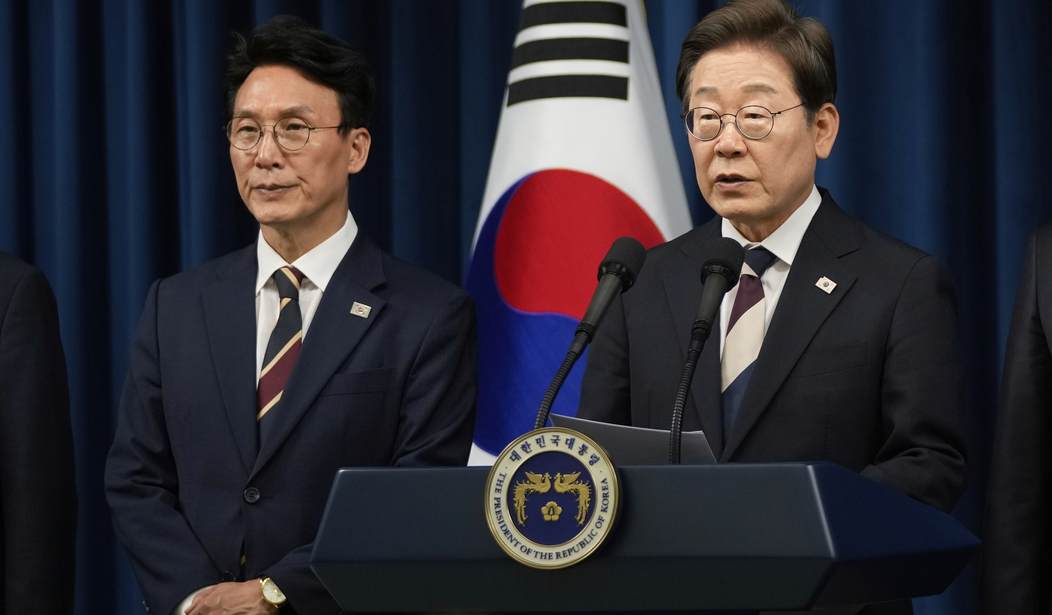
The irony is thick: After directing a raft of Korean agencies aim to “bankrupt” Coupang in favor of domestic rivals, the Lee Jae-myung government is waging an aggressive lobbying campaign in Washington—and spending tens of millions of dollars in the process—seeking to downplay and explain away its regulatory assault. At the same time, Korean officials have publicly dismissed legitimate U.S. government concerns over this discriminatory treatment of Coupang as somehow an illicit result of the company’s “lobbying.”
Coupang is a great American success story. Founded by an entrepreneurial Harvard Business School student and backed by a long list of prominent U.S. investors, the company has quickly become a global leader in AI-driven logistics and landed in the Fortune 150. Its first overseas market was Korea, into which the company poured many billions of U.S. FDI dollars to enable lightning-fast deliveries from thousands of American sellers to an entirely new set of Korean (and Taiwanese and Japanese) customers.
As Korean customers embraced Coupang’s innovative services and American-produced offerings, the Korean government escalated a strategy of regulatory harassment and punishment. From imposing massive fines for common industry practices to mobilizing a dozen unrelated agencies in response to a minor data breach, the discriminatory pattern is clear: Korean officials will go to great lengths to protect Korean companies from American competition.
Perhaps most offensive is the Korean government’s narrative that any member of the U.S. Congress or the Trump Administration who stands up for an American company in the face of such discriminatory treatment is doing so only because of the company’s “lobbying.” After Vice President JD Vance objected to Korea’s assault on Coupang, Prime Minister Kim Min-seok dismissed the concerns and insisted the company “shouldn’t try to resolve this through lobbying.” Foreign Minister Cho Hyun similarly suggested congressional concerns over the Coupang abuse “should be viewed as a result of a specific company’s lobbying efforts.”
Anyone familiar with the U.S. system of government knows such claims are absurd—a cynical attempt to delegitimize valid concerns from American policymakers. U.S. officials don’t need counsel from any lobbyist to know that targeting and disadvantaging an American company is wrong and represents a blatant violation of Korea’s commitments to the United States.
More important, suggestions by senior Korean officials that Vice President Vance and other lawmakers only expressed concerns because of “lobbying” is personally insulting to those American leaders and deeply disrespectful to the integrity of the U.S. political system. It’s hard to recall another instance when top officials from a foreign government—especially a geopolitical and economic ally—cast such offensive aspersions.
It is high time for South Korea to realize that the alliance between our two nations is not a one-way bridge. The Lee Jae-myung government cannot spend tens of millions of dollars on DC lobbying to secure favorable trade and defense terms while simultaneously working to dismantle the most successful American commercial presence in its home market.
If Seoul wants to be treated as a world-class economic partner, it needs to act like one. That means ending discriminatory treatment of American tech firms, admitting that legitimate corporate advocacy is a lawful and essential activity, and respecting the rules of fair play that must govern our trade relationship.
We’ve always been proud to count South Korea as a friend, but friends don’t treat each other’s successful companies like public enemies. It’s past time for the harassment of Coupang to end, and for Seoul to start practicing the same transparency and fair play they demand of us.
Editor’s Note: Do you enjoy Townhall’s conservative reporting that takes on the radical Left and woke media? Support our work so that we can continue to bring you the truth.
Join Townhall VIP and use promo code FIGHT to receive 60% off your membership.



Join the Conversation
VIP members get the ability to comment on articles.