





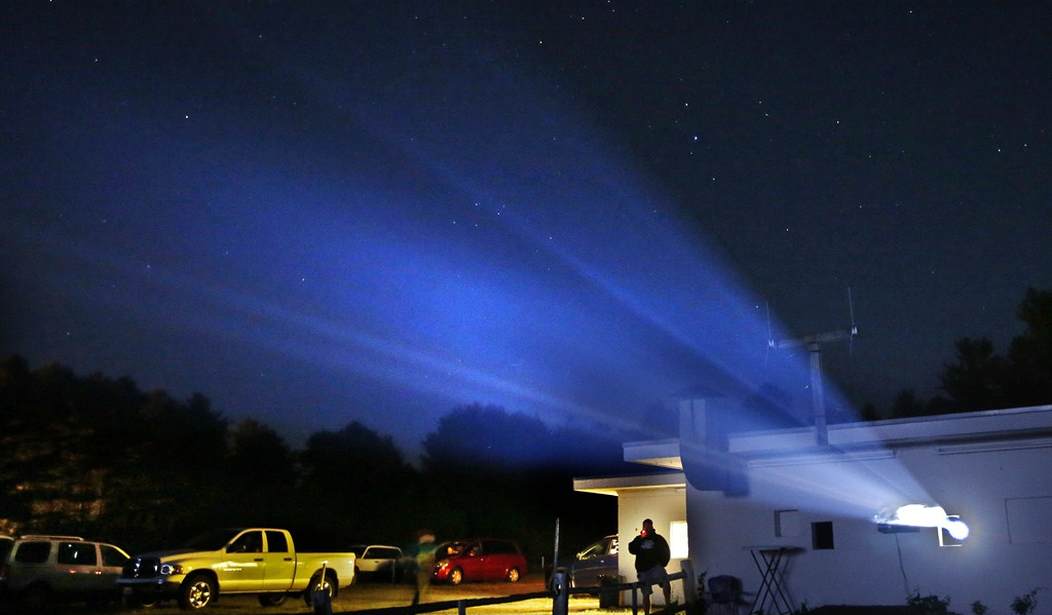
Long live one of America’s finest creations: the drive-in theater.
One of my great drive-in memories dates to 1969, when my parents took my five sisters and me to see “Herbie the Love Bug” in our Plymouth Fury III station wagon.
As the blue sky fell dark and the film projector began rattling behind the concession stand, black-and-white numbers — “5, 4, 3, 2, 1…” — flashed onto the screen.
Scratchy, yellowed 1950s footage advertised concession-stand hot dogs, popcorn and candy.
And then the first film — a B movie — would play on the massive screen.
Kerry Segrave, author of “Drive-in Theaters: A History From Their Inception in 1933,” explains why my deeply nostalgic drive-in memory could only happen in America.
First, in postwar America, there was an abundance of cheap land near America’s rapidly growing suburbs — land that was easily accessible thanks to the new postwar highway system.
Second, the booming economy gave moms and dads disposable entertainment income — drive-ins were affordable and so were the home-packed coolers filled with Regent soda pop and French onion dip.
Third, the baby boom created large families seeking hassle-free activities. Parents could pile the kids into the car without having to “dress up” — the youngest ones often wore their pajamas because they’d be sound asleep by the drive home and could be put right to bed.
Fourth, America’s postwar optimism created a love affair with the automobile — a symbol of our freedom to explore. Cars of that era — with their flashy chrome and massive size — became rolling works of American art.
“A country whose inhabitants regarded automobiles as simply a mode of convenience to get from A to B would never develop a drive-in industry of any extent,” writes Segrave — which is why Canada and Australia were the only other two countries to embrace drive-in theaters, but they never came close to America’s “intense love affair with drive-ins.”
The 1950s and 1960s became the golden era of the drive-in theater with nearly 4,500 in operation across America — until a rapid decline that started in the early 1970s.
Federal laws mandating extended daylight saving time — which made the shows start an hour later — were the first major blow.
As the suburbs continued expanding, real estate costs soared and drive-in owners often sold land for huge profits.
Increasing lawsuits eliminated the drive-in playgrounds, and insurance costs soared, which further crushed profitability.
The family unit began to change in the late 1970s into the 1980s — families had fewer children and lots more divorce. And more families preferred to stay home to watch VCR movies and dozens of new cable channels.
Increasing fuel costs caused cars to get smaller — making them less comfortable.
The drive-ins went through a dark phase in the 1970s and 1980s, relying on adult films just to survive — but few survived.
Then came COVID-19. With indoor theaters closed and families desperate for entertainment, drive-ins experienced a surprise revival.
And now, driven largely by nostalgia, some 300 drive-in theaters are flourishing again.
If you’re lucky enough to have a drive-in theater in your town, take your family to one of America’s finest creations this summer.
You’ll give your children a taste of Americana they will cherish forever.
Find Tom Purcell’s syndicated column, humor books and funny videos of his dog, Thurber, at TomPurcell.com. Email him at Tom@TomPurcell.com.
Editor's Note: Do you enjoy Townhall's conservative reporting that takes on the radical left and woke media? Support our work so that we can continue to bring you the truth.
Join Townhall VIP and use promo code FIGHT to receive 60% off your membership.



Join the Conversation
VIP members get the ability to comment on articles.