





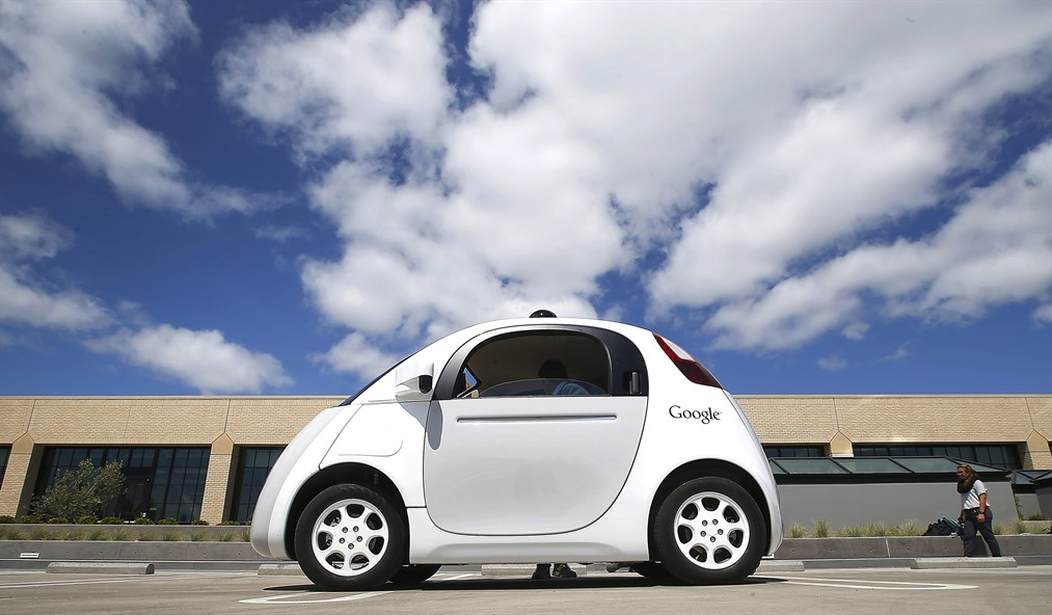
The smart car is upon us and self-driving automobiles soon will be commonplace — which will be the buzz at this week's 2016 Detroit Auto Show.
In the past two or three years, you see, computer processing capacity has become powerful enough to rapidly manage and analyze massive amounts of complex data sets or “big data.”
What does this mean for automobiles?
By installing incredibly intricate roadside sensor networks and additional sensors in “smart” automobiles — both of which feed continuous data, via the Internet, to a powerful collection engine — automobiles will be in constant communication with road conditions and each other.
Smart cars can be programmed to avoid crashing into roadside obstacles and each other, auto-correct if a driver strays from the road or sound an alarm if a driver shows signs he's falling asleep.
In the U.S. alone, according to Entrepreneur.com, “self-driving cars could eliminate the more than 33,000 motor-vehicle traffic deaths a year, 2.3 million injuries and billions in car damage.”
Traffic jams will be significantly reduced or eliminated.
Imagine if every car sitting on the Parkway in front of the Squirrel Hill Tunnel could be safely guided through at a coordinated speed that eliminates stop-and-go driving.
How about energy savings?
“Street lamps could automatically switch off in areas with no nighttime traffic, and turn on only when road sensors detect a vehicle getting closer,” reports Information Week.
It's hard for a car buff like me to imagine — I love to drive — but driverless automobiles will soon be everywhere.
“A separate study released last month by Britain's Juniper Research anticipates 25 million self-driving cars will be on the road around the world a decade from now,” reports The Detroit News.
According to a Rand Corp. report, that means people who are unable to drive — the blind, disabled or people too young to get a license — will enjoy “independence, reduction in social isolation and access to essential services.”
Self-driving cars have the opportunity to save the average erstwhile car owner a bundle.
According to The Wall Street Journal, the average utilization rate for a typical car owner is only about 5 percent — that means your car sits idle 95 percent of the time, a waste of money.
When you include insurance costs, fuel, wear and tear and car payments, the average person is spending thousands a year to own a car — but would spend significantly less than that if he or she paid by the mile utilizing a self-driving car fleet.
Ravi Shanker, a Morgan Stanley U.S. auto analyst, says self-driving cars could “contribute $1.3 trillion in annual savings to the U.S. economy alone,” reports The Journal — which will dramatically disrupt the auto manufacturing industry.
What is happening to the automobile — as our technology is able to analyze and manage big data — is happening across every industry.
We are at the cusp of another industrial revolution, also referred to as Industry 4.0 or the fourth industrial revolution, whereby interconnections between machines, systems, assets and people will enable massive improvements in efficiency and performance.
Its scale, scope and complexity will be unlike anything humankind has yet experienced, according to Klaus Schwab, founder and executive chairman of the World Economic Forum (which will meet this month in Switzerland to discuss “Mastering the Fourth Industrial Revolution”).
Hey, America, we may be sitting on a pile of debt, but if we make some smart decisions — if we press our political class to unleash, rather than inhibit, the collective genius of our most industrious people — great times are still ahead for our country and the world.



Join the Conversation
VIP members get the ability to comment on articles.