





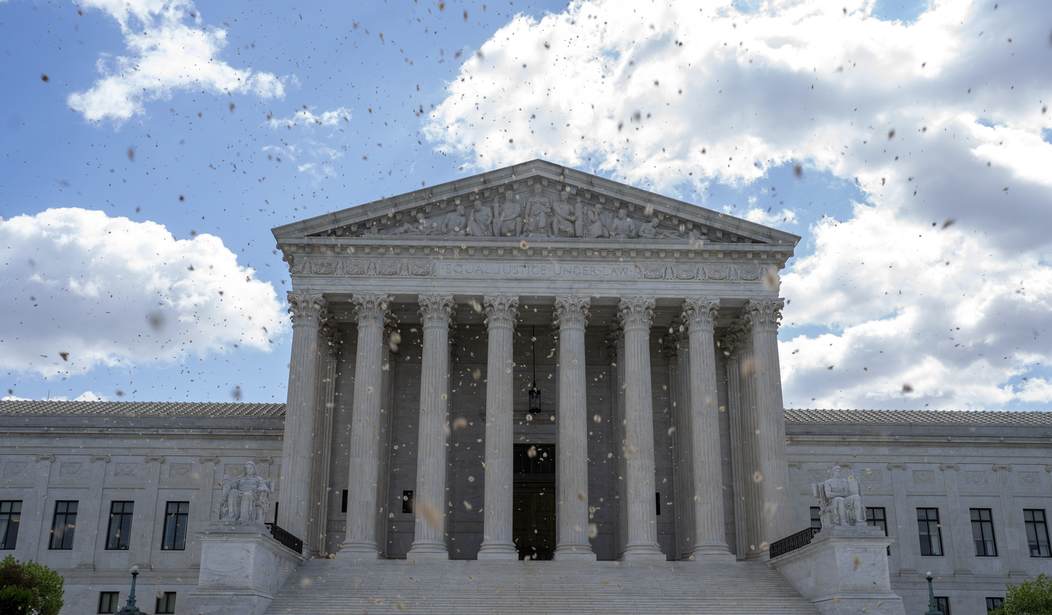
The U. S. Supreme Court set the wheels in motion for intense political speculation when it decided to hear arguments over a Mississippi law that protects unborn children after 15 weeks. A central question in Dobbs v. Jackson Women’s Health Center is whether a state may ban pre-viability abortions.
In Roe v. Wade, SCOTUS stated that states could not restrict abortion until the point of viability. According to the court, this is when the unborn have the “capability of meaningful life outside the womb.” The court stated that viability generally occurs around 24 weeks. The Mississippi law contradicts this key holding. Now, opinions are running high that the court will use this opportunity to reverse Roe v. Wade and defend the Mississippi law.
The court need not reverse Roe outright to uphold the law. It could modify Roe to allow states to pass pre-viability bans. If it does this, the heart of Roe will be cut out and states will be free to ban abortion earlier in pregnancy. They may even be able to prohibit it altogether.
Loud protests from the pro-abortion crowd are expected if this law is upheld. One cry will say that because abortion is embedded deeply into our social fabric, many Americans do not believe it is wrong. Thus, states should not be allowed to restrict or ban it.
It is true that today the American public is divided on abortion, unlike in 1973 when polls indicated a strong majority opposed. After the issuance of Roe, the public sentiment changed dramatically regarding the morality and acceptance of abortion. Over time attitudes have shifted. While abortion remains controversial, it is supported by millions of Americans.
American patriot, Thomas Paine, fueled the American Revolution with his classic essay, Common Sense. In this essay, Paine says:
“{A} long habit of not thinking a thing wrong, gives it a superficial appearance of being right, and raises at first a formidable outcry in defense of custom. But the tumult soon subsides. Time makes more converts than reason.”
Paine was talking about the abuses that the American colonists suffered under the crown of England. He was lamenting the fact that many colonists had become so used to these abuses that over time they accepted their plight instead of overthrowing their oppressors. However, Paine was prophetically observing today’s public acquiescence to Roe’s judicial tyranny.
In 1973, the Supreme Court issued Roe v. Wade. The infamous ruling invalidated pro-life protective laws and tragically opened the door to over 63 million abortions. After nearly fifty years of this injustice, more see it as acceptable. A recent Gallup poll shows that 47% of the public believe that abortion is morally acceptable, while 46% disagree. This is the highest level of acceptance for abortion since Gallup began asking this question over 20 years ago.
A Supreme Court decision impacts public thinking and shapes public attitudes. In 1896 it upheld the segregationist practice of “separate but equal” in Plessy v. Ferguson. In doing so, it legitimized racial segregation that was implanted in the laws of various Southern states. Had it ruled differently, perhaps the oppression of segregation would have collapsed much earlier. However, it took almost 60 years for the court to reverse itself in Brown v. Board of Education. The court now has an opportunity to similarly acknowledge and reverse its colossal failure of 1973, acknowledge the humanity of unborn life, and allow for such lives to be protected.
The law is a teacher that instructs public attitudes. Roe opened the door for the acceptance of abortion on demand. Likewise, its demise will mold public opinion in favor of protecting life. When this happens, the observation and wisdom of founding father Thomas Paine will be affirmed.
It is a tragedy that it has taken America nearly fifty years and the deaths of 63 million children to acknowledge that protecting innocent human lives is a foundational value of our American republic. The Supreme Court now has an opportunity to reaffirm this value and implant it back into the nation's social conscience.



Join the Conversation
VIP members get the ability to comment on articles.