





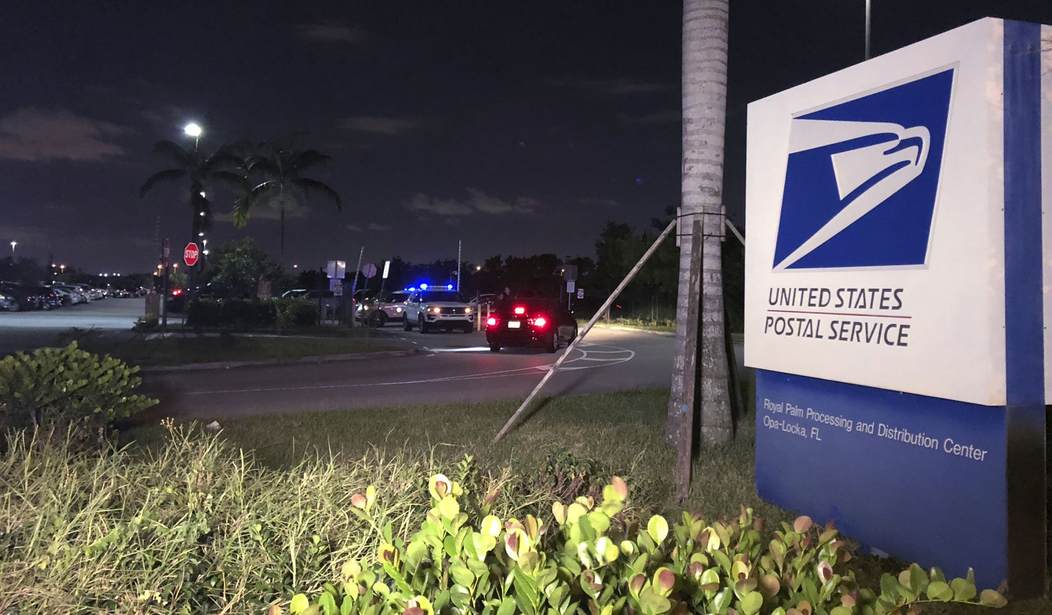
The United States Postal Service’s (USPS) deep financial problems are widely known and well documented. Despite maintaining a government-sponsored monopoly over the delivery of traditional mail, USPS is nearly bankrupt, having lost nearly $70 billion since 2000. With steep losses, as well as unfunded liabilities totaling $120 billion, it shouldn’t come as a surprise that this agency consistently receives a “high risk” label by the Government Accountability Office. But instead of implementing meaningful reforms to combat USPS’s long-term sustainability problem, we’ve only seen postage price increases - which have in the past failed to actually fix USPS’s fiscal outlook.
According to newly released financial information by the Postal Service, USPS recorded a loss of $3.9 billion in 2018, which is more than $1 billion higher than the losses suffered during 2017. It is clear the status quo is untenable and irresponsible.
Taxpayers have a direct stake in many aspects of USPS, including operations, personnel compensation policies, and infrastructure acquisition. All of the decisions associated with these practices can impact the long-term financial health of USPS, impacting the likelihood that taxpayers may be unfairly saddled with liabilities the Postal Service is unable to pay. After the debacle of Fannie Mae and Freddie Mac’s taxpayer-backed conservatorship, now in its 10th year, taxpayers should be under no illusion what will happen if USPS fails financially. Each year that Congress and the administration avoid comprehensive reform greatly increases the likelihood of a taxpayer-funded bailout becoming a reality.
Thankfully, there seems to be progress in fixing the solvency of USPS. Just last month, President Trump announced that the United States would be withdrawing from the deeply-flawed Universal Postal Union (UPU), an antiquated United Nations body that allows developing countries, like China, to ship packages to other countries at a cost advantage. In essence, it is a massive, unnecessary subsidy to foreign businesses that translates into higher shipping costs for Americans. The current scheme is causing $300 million in annual losses to the U.S. postal system.
The president’s move should certainly be hailed as a positive, long-awaited step to restoring parity in international shipping markets where foreign sellers have been given preferential low rates, allowing them to gain a competitive edge to undercut U.S. producers and small businesses. Then-candidate Trump campaigned on the promise to level the playing field, and with this action, he is helping to accomplish that goal.
While $300 million is a fraction of USPS’s $3.9 billion FY18 deficit, any way to responsibly generate revenue should be viewed as a step in the right direction.
However, amidst this positive development, the Postal Regulatory Commission (PRC) just this week approved the biggest price hike on first class mail in its history. The USPS has succeeded in applying numerous rate changes in recent history, but this move would bump letter mail prices by 10 percent, bringing stamps to 55 cents a piece. It is a big mistake to further burden ratepayers without accompanying reforms to operations or inefficiencies.
Instead of rushing to raise prices, a more responsible approach would have been to delay any increase until the president’s task force on postal reform releases its findings. That way, positive recommendations could be coupled with balanced changes to pricing. Taxpayers can only hope that this task force will offer market-oriented fixes to reverse decades of fiscal calamity, without expanding the scope of USPS operations, such as allowing it to engage in banking activity.
This process is sure to call into question the viability of price increases for the Postal Service’s monopoly products. An agency on the verge of a taxpayer bailout must conduct a full and open review of how it manages its money. Given how the current system is not adequately providing assurances in fiscal management, NTU drew this conclusion for rate increase considerations in comments earlier this year on USPS’s Annual Compliance Report:
“To propose rate-hikes on letter mail now, rather than a top-to-bottom reformed business plan, would be a disservice to millions of customers who, through USPS’s monopoly on certain lines and its regulatory advantages, have little choice for going elsewhere.”
It is evident that the USPS’s financial challenges are a result of poor management. Asking the public to pay more, without coupling those price increases to any serious reforms, is a squandered opportunity to change this inefficient and wasteful agency.


Join the Conversation
VIP members get the ability to comment on articles.