





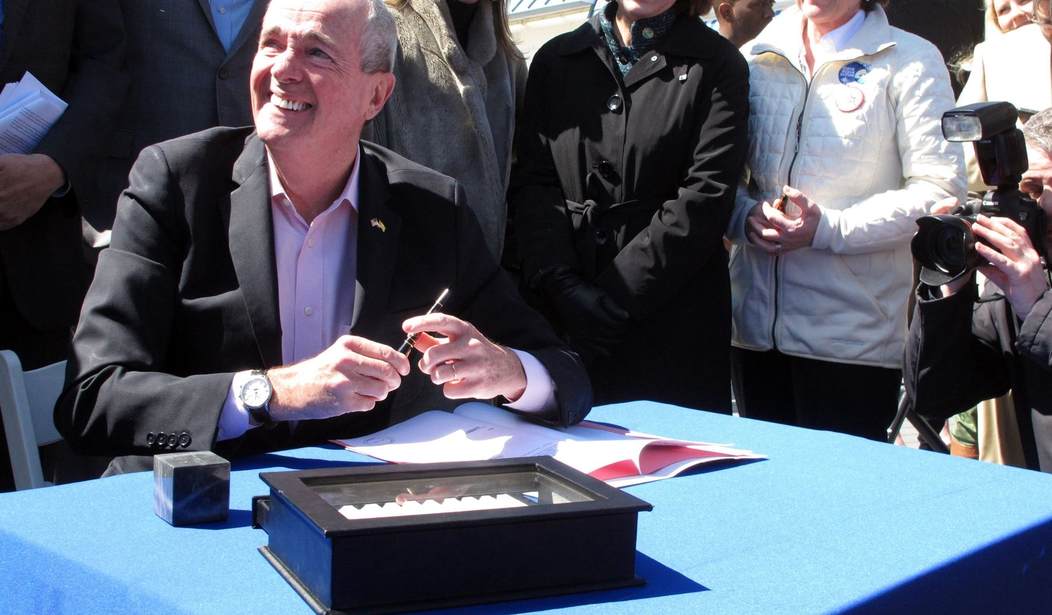
While some states across the country are taking the lesson from last year’s tax reform that flatter and fairer is a better tax code, New Jersey is on the brink of doing the opposite. Governor Murphy’s budget will hike taxes by $1.5 billion, spend an extra $2 billion, and do little to tackle the mounting pension crisis. Tax-and-spend schemes like this threaten the economic and fiscal vitality of the state, and lawmakers must reject it.
New Jersey needs a budget that is fiscally responsible and prioritizes taxpayers.
The economic situation in New Jersey is dire, as taxpayers attempt to clawback from the economic downturn. Since the end of the recession in 2010, the economy has only grown by a yearly average of 0.82 percent, about one-third of the nationwide average. Only just last year did New Jersey employment return to pre-recession levels, but median household income still is 5.75 percent lower than in 2007. At a time when economic growth remains uncertain and delicate, tax increases could derail progress made over the last 7 years.
However, in typical New Jersey fashion, Democratic leaders cannot agree on which taxes will increase. The Governor seeks higher individual tax rates, a sales tax hike, and a host of other new taxes, while legislative leaders prefer to raise the corporate tax rate to the highest in the nation.
None of these taxes will bring prosperity to the state. New Jersey is already ranked 50th by the nonpartisan Tax Foundation in their State Business Tax Climate Index, largely because it has one of the highest individual income taxes and the highest property taxes in the country. It is concerning to see metrics that show taxpayers struggling under the weight of crushing taxes, and that Democratic lawmakers choose to ignore the facts.
The majority of the $1.5 billion tax increase in the governor’s budget is generated from the reinstatement of New Jersey’s millionaires tax, which increases the top income tax rate to 10.75 percent, a sharp jump from the current rate of 8.96 percent. It may be politically expedient to tax “the rich,” but in reality it is poorly designed tax policy. Since two-thirds of New Jersey businesses file as individuals, many small businesses would be exposed to a higher rate and end up paying more. As taxes act as an added cost, businesses are likely to pass on these costs to consumers and workers, many of whom would be lower and middle-income, in the form of layoffs, stagnant wages, or increased prices for goods and services.
Causing wealthy taxpayers or small businesses to flee to more tax-friendly jurisdictions will have severe fiscal implications. For example, when just one billionaire relocated to Florida in 2016 (no income tax), the state lost hundreds of millions of tax revenue. Further, a report commissioned by former Governor Christie found the tax loss from losing a single $1 million earner is equal to 59 taxpayers earning $50,000, and if one single filer earning $1 billion leaves, it takes 70,618 single taxpayers earning $50,000 to replace the lost revenue.
To offset the drop in revenue, more government services would need to be cut or additional taxes placed on middle and lower class taxpayers.
The Governor praises his budget for being “fair for middle class taxpayers,” but the middle class is not spared, due to a boost to the sales tax rate to 7 percent. Over the past two years, New Jersey’s 7 percent sales tax decreased to 6.625 percent - not a large tax reduction, but it is better than the alternative. According to research from New Jersey Policy Perspective, a return to the 7 percent rate will cause families with an income between $25,000 and $49,000 to pay an additional $61 a year, and $86 more per year for families making between $49,000 and $79,000.
The Governor also calls for new taxes on the service economy that will also smack middle class taxpayers by expanding retail taxation to services like Uber, Lyft, AirBnb, and electronic cigarettes - all of which are predominantly used by younger and less affluent Americans. It also permits the collection of taxes from online retailers with no physical presence in New Jersey, in conflict with precedent established by the U.S. Supreme Court.
Leadership in the Legislative Branch support a hefty increase to the state’s corporate tax rate, from its current rate of 9 percent to 12 percent. If enacted, New Jersey would have the highest rate in the country. It would also be higher than neighboring Pennsylvania and almost double New York’s rate of 6.5 percent. A low corporate tax rate spurs business activity and attracts capital investment from around the world. This can lead businesses to expand job opportunities, improve productivity, and boost take home pay for workers from all income levels.
New Jersey benefits from having 19 Fortune 500 companies, a productive workforce, and close proximity to two world-class cities. But further burdening taxpayers from every income level plus the possibility of higher business taxes makes it difficult for there to be a prosperous future for New Jersey. Taxpayers desperately need true reform, not more misguided tax policy, to succeed in the long term.



Join the Conversation
VIP members get the ability to comment on articles.