
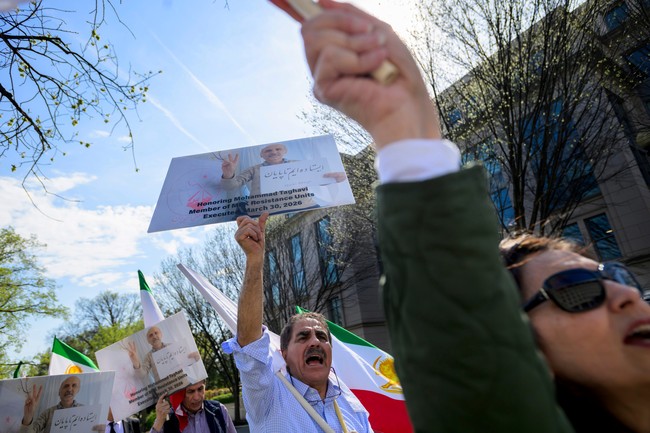
How many more young Iranians must hang from the gallows before the international community finally finds its voice? How many more prisoners must be tortured, beaten, and condemned by sham courts before Western governments recognize that expressions of concern are a woefully inadequate response to crimes against humanity?
Iran's clerical dictatorship is conducting a campaign of terror against its own people. The executioners are working overtime. The prisons are overflowing. Families are being intimidated into silence. Yet the response from much of the democratic world remains depressingly familiar. Statements are issued, concern is expressed, diplomatic protests are lodged, and the killing continues.
At least 37 people arrested during January's nationwide uprising had reportedly been executed by October 22. Another 158 protesters had been identified as facing death sentences. Five further executions in early November brought the documented toll to at least 42, assuming no overlap in the reported cases. These are human beings, many of them young people whose apparent crime was to demand freedom from a brutal theocracy.
On November 3, two 20-year-olds, Amir-Hossein Maleki and Amir-Hossein Ebrahimi, were executed in Isfahan. They were defendants in the notorious Alikhani Square case, bringing the number executed in that single prosecution to nine. Three more young men remain under threat of execution. Five days later, Hassan Divband, Hamid Kazemi, and Reza Zanganeh were executed in Karaj following proceedings reportedly marred by torture, forced confessions, and denial of legal representation. On November 7, another political prisoner, 27-year-old Mohammad Aref Shahbakhsh, was executed in Zahedan.
Imagine the anguish of their parents. Imagine waiting outside a prison, desperately hoping for news, knowing that at any moment your son may be dragged from his cell and hanged. Imagine discovering that the authorities who murdered your child may now imprison you for daring to demand justice. This is the reality of life under Iran's mullahs. During my 15 years in the European Parliament, including five years as president of its Delegation for Relations with Iraq, I witnessed the Iranian regime's methods at close quarters. I saw how Tehran exported violence, cultivated terrorist militias, and systematically undermined neighboring countries. I also learned that the regime's greatest fear was never an American aircraft carrier or an Israeli missile. It was, and remains, the Iranian people.
The January uprising demonstrated that fear. Young men and women poured onto the streets demanding an end to clerical rule. The regime responded with bullets, mass arrests, torture, and executions. Its leaders understand that another nationwide rebellion could threaten their survival. The gallows have therefore become an instrument of political control.
The recent war has provided a convenient additional excuse. Since the U.S. and Israeli strikes began in February, the authorities have increasingly portrayed dissent as treachery and opposition activists as foreign agents. National security has become the catch-all justification for crushing anyone courageous enough to challenge the dictatorship. Even universities have become hunting grounds for the intelligence services. Students face interrogation, expulsion, and disciplinary punishment. Families of executed protesters are harassed. Somayeh Afshar, the mother of a young protester who was executed, has reportedly been imprisoned. Her treatment exposes the grotesque cruelty of a system that punishes grieving mothers alongside their murdered children.
Amnesty International has repeatedly condemned executions following grossly unfair trials, including proceedings tainted by torture and coerced confessions. Iran Human Rights Monitor recorded at least 96 executions during October alone, 78 of them unannounced by the authorities. Behind these figures lies a deliberate strategy of intimidation intended to spread fear throughout society.
Yet the regime has failed to extinguish resistance. Inside Iran's prisons, courageous inmates continue the remarkable "No to Execution Tuesdays" campaign. Beginning in Ghezel Hesar Prison in January 2024, the weekly hunger strikes have spread to dozens of prisons. On November 9, the campaign marked its 146th consecutive week, with prisoners reportedly participating across 66 institutions. Consider the courage required. These are men and women already deprived of liberty, many enduring appalling conditions, who risk further punishment by refusing food in protest against executions. Their demand is simple. End the death penalty for everyone, whether political prisoners or those convicted of ordinary offenses.
Maryam Rajavi, the president-elect of the National Council of Resistance of Iran (NCRI), condemned the latest executions and warned that the regime's attempt to prevent another uprising would only strengthen the determination of rebellious young Iranians. Her assessment reflects an important reality. Terror may temporarily suppress demonstrations, but it cannot manufacture legitimacy. What, then, should the democratic world do? First, the United Nations must demand an immediate moratorium on executions and unrestricted access for independent investigators to Iranian prisons. Those responsible for torture, forced confessions, and unlawful killings must face individual accountability. Second, Britain and the European Union must impose targeted sanctions on the judges, prosecutors, prison officials, and security commanders implicated in these atrocities. Their assets should be frozen and their international movements restricted. Third, governments must place human rights at the center of every diplomatic engagement with Tehran. The regime should understand that murdering protesters carries consequences extending far beyond another carefully worded condemnation.
Above all, Western leaders must recognize the Iranian people's right to determine their own future through democratic change. For too long, international diplomacy has treated Iran's human rights catastrophe as a secondary issue, overshadowed by nuclear negotiations, regional conflict, and economic interests. That approach has failed spectacularly. The executioners are counting on our indifference. Every day of silence encourages another hanging. Every empty declaration emboldens another torturer.
History will judge those who ordered these crimes. It will also judge those who knew what was happening and chose to look away. The people of Iran are risking their lives for freedom. Surely the democratic world can summon the courage to stand beside them.
Struan Stevenson was a member of the European Parliament representing Scotland (1999-2014), president of the Parliament's Delegation for Relations with Iraq (2009-14) and chairman of the Friends of a Free Iran Intergroup (2004-14). He is an author and international lecturer on the Middle East.