





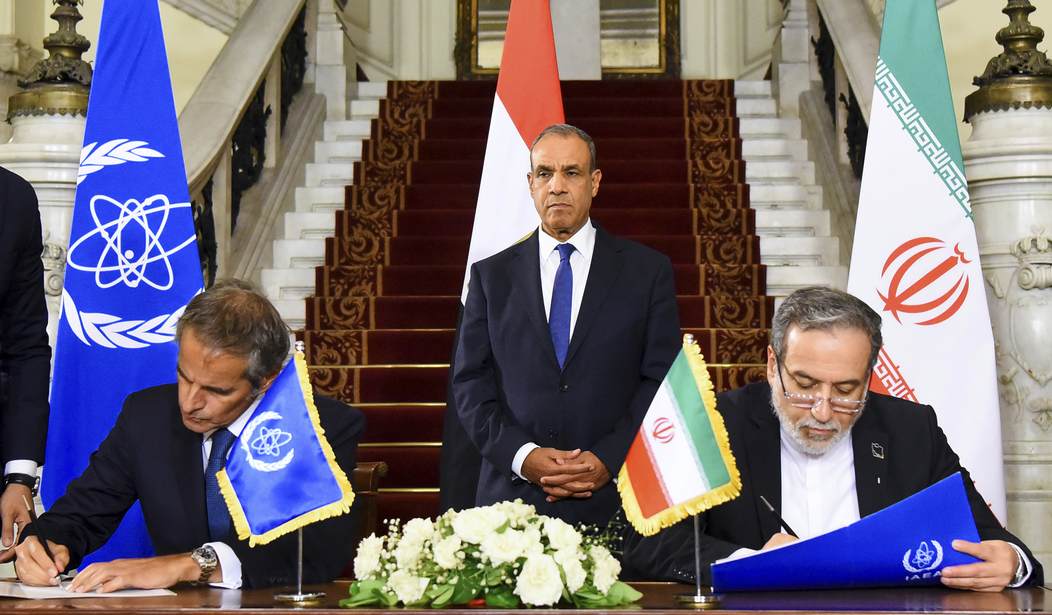
For more than two decades, the world has been warned that Iran’s nuclear program was about far more than a benign pursuit of civilian energy. Yet successive Western governments repeatedly chose negotiation over verification, promises over dismantlement, and hope over evidence. Today, after the United States and Israel have inflicted serious damage on Iran’s nuclear infrastructure and Washington is demanding a meaningful reduction in Tehran’s enrichment capacity, the same fundamental question confronts the West. Will it finally insist on deeds rather than words?
The warning bells rang loudly in August 2002. The National Council of Resistance of Iran (NCRI) publicly revealed the existence of two secret nuclear facilities in Iran, the uranium enrichment complex at Natanz and the heavy water facility at Arak. The information had reportedly been obtained through networks inside Iran. The revelations shattered Tehran’s claim that its nuclear activities were fully transparent and peaceful. The International Atomic Energy Agency (IAEA) subsequently visited the facilities. That disclosure was a watershed moment. It demonstrated that the international community was not discovering Iran’s nuclear activities through its own inspection machinery. It was being alerted by the Iranian opposition.
The history that followed should have taught the West a lesson about the dangers of diplomatic complacency. By 2003, the IAEA was already raising concerns about shortcomings in Iran’s declarations and limitations in the safeguards system. European governments negotiated temporary suspensions. Tehran signed agreements, offered assurances, and later resumed enrichment. The IAEA repeatedly demanded greater transparency, access to facilities and implementation of the Additional Protocol. Yet Iran continued to exploit the gap between political promises and the technical reality of its nuclear program.
The pattern became depressingly familiar. Concealment was followed by exposure. Exposure was followed by negotiations. Negotiations produced partial concessions. Those concessions were followed by renewed construction and another round of diplomacy. Barack Obama’s deeply flawed 2015 Joint Comprehensive Plan of Action (JCPOA) was presented as the great diplomatic solution. The agreement imposed significant restrictions on Iran’s nuclear activities and created an elaborate system of international verification. But it did not resolve the fundamental strategic question.
Should the Islamic Republic be allowed to retain an industrial-scale enrichment capability that could ultimately provide the infrastructure for a nuclear weapons option? When the United States withdrew from the JCPOA in 2018, the diplomatic architecture began to unravel. Tehran progressively breached the nuclear restrictions imposed by the agreement. By 2021, Iran was enriching uranium to 60 percent, near weapons-grade. That was far beyond the level normally required for civilian nuclear power. The IAEA recorded the progression from enrichment to 5 percent, then 20 percent, and finally 60 percent. This is where the role of the IAEA becomes crucial and painfully limited. The agency has performed an indispensable service by documenting Iran’s nuclear activities. But inspectors cannot verify what they cannot see.
By 2025, the IAEA reported that Iran had removed monitoring equipment and that the agency had lost continuity of knowledge concerning centrifuges, rotors, bellows, heavy water, and uranium inventories. It also warned about Iran’s growing stockpile of highly enriched uranium. By June 2025, the IAEA estimated that Iran possessed 440.9 kilograms of uranium enriched up to 60 percent U-235. The agency also stressed that it was unable to verify the whereabouts and status of all such material following subsequent military attacks.
The military campaign has now changed the equation. Israeli attacks in June 2025 struck Natanz and Isfahan. The United States subsequently attacked Natanz, Isfahan, and Fordow. Further U.S. and Israeli attacks hit Natanz again in 2026. Reuters reported in January that Iran’s principal enrichment facilities had been severely affected. The pilot plant at Natanz was destroyed, while underground facilities at Natanz and Fordow were heavily damaged. Yet IAEA Director General Rafael Grossi warned that Iran could eventually resume limited enrichment. That is the crucial point. Bombing centrifuges is not the same as eliminating nuclear capability. Iran possesses scientific expertise, engineers, uranium stocks, and centrifuge technology. It also has a political determination to preserve what it describes as its right to enrich uranium.
The physical destruction of buildings may set the program back, perhaps substantially. It cannot by itself erase the scientific knowledge and technical expertise required to rebuild it. That is why JD Vance’s latest warning deserves serious attention. In a Reuters interview, the vice president argued that Washington cannot simply exchange Iranian assurances for American concessions. If Tehran genuinely has no intention of producing a nuclear weapon, he argued, it should demonstrate that commitment through a meaningful reduction in its enrichment capacity. That is the right principle. Iran’s current position suggests that the regime still wants to preserve the option to enrich. Tehran has reportedly rejected demands to halt enrichment or transfer enriched uranium abroad while continuing to insist that its nuclear program is peaceful. After 24 years of deception, delay, and diplomatic maneuvering, the burden of proof must now rest squarely on Tehran. The West should demand three things. First, Iran must provide full access to the IAEA. Second, there must be a verified accounting of every gram of enriched uranium and every centrifuge. Third, Iran must accept verifiable dismantlement of infrastructure capable of producing weapons-grade material. Anything less risks recreating the very cycle that brought us to this point.
The lesson of Natanz is not that diplomacy failed. The lesson is that diplomacy without credible verification and meaningful consequences failed. The NCRI sounded the alarm in 2002. The IAEA documented the warning signs. Western governments negotiated repeatedly. Iran repeatedly used the resulting breathing space to advance its nuclear capabilities. Now the nuclear facilities may lie damaged, but the nuclear ambition has not necessarily disappeared. The time for another carefully worded Iranian promise has passed. If Tehran genuinely wants peace, it must accept the only currency that can now command international confidence. Verifiable action.
Struan Stevenson was a member of the European Parliament representing Scotland (1999–2014), president of the Parliament’s Delegation for Relations with Iraq (2009–14), and chairman of the Friends of a Free Iran Intergroup (2004–14). He is an author and international lecturer on the Middle East. He is the author of "COUNTDOWN TO COLLAPSE – Iran’s Regime on the Brink."
Editor’s Note: Thanks to President Trump and his administration’s bold leadership, we are once again respected on the world stage, and our enemies are being put on notice.
Help us continue to report on the administration’s peace through strength foreign policy and its successes. Join Townhall VIP and use promo code FIGHT to receive 60% off your membership.

Join the Conversation
VIP members get the ability to comment on articles.