





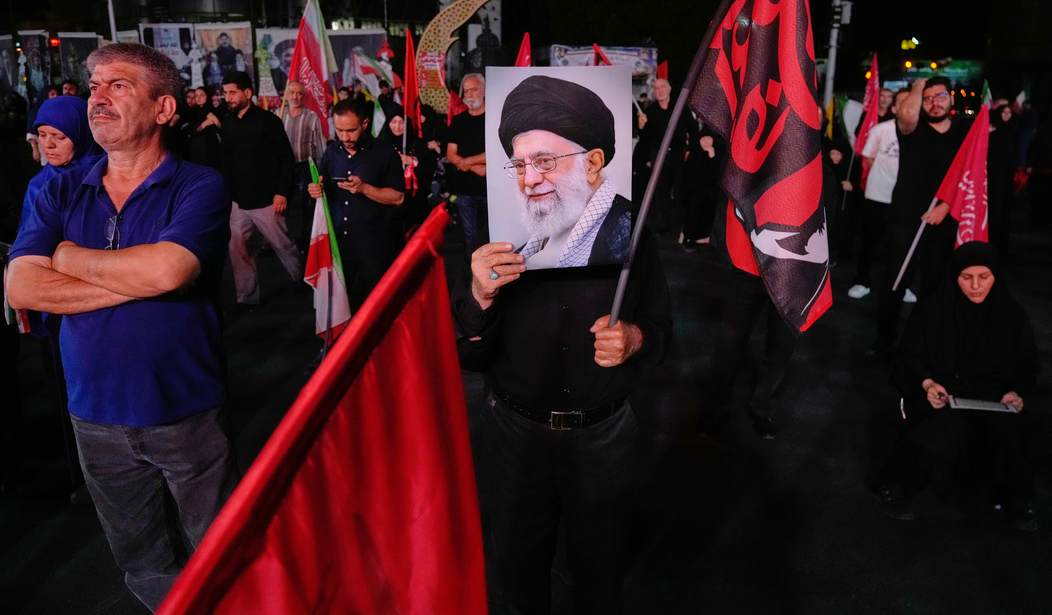
The Islamic Republic has entered the most dangerous phase of its 47-year existence. Every option before the ruling clerics carries enormous risk. Every decision accelerates the crisis. Every attempt to cling to power deepens the misery of the Iranian people. Only weeks ago, Tehran's leaders claimed victory after surviving a bruising confrontation with Israel and the United States. Today, that illusion lies in ruins. The fragile ceasefire has collapsed, American strikes have resumed, Iranian missiles have targeted neighboring Gulf states, commercial shipping in the Strait of Hormuz has come under attack, and the regime has succeeded in alienating almost every country in the region. Far from projecting strength, the clerical establishment appears increasingly isolated, desperate, and unpredictable.
For decades, the regime relied upon a strategy of asymmetric warfare. Hamas in Gaza, Hezbollah in Lebanon, the Houthi movement in Yemen, and an array of Shi’ite militias in Iraq formed Tehran's so-called "Axis of Resistance." They served as buffers against direct confrontation while extending Iranian influence from the Mediterranean to the Red Sea. That strategy is rapidly unraveling. Hamas has suffered devastating losses. Hezbollah has endured sustained military pressure that has severely weakened its operational capabilities. The Houthis face relentless attacks on their missile sites, ports and command centers. Iraqi militias have become increasingly vulnerable to precision strikes and growing political opposition inside Iraq itself. Billions of dollars invested over decades have produced diminishing returns. Iran's expensive regional empire has become an enormous liability.
With its proxies under unprecedented pressure, Tehran has increasingly chosen direct confrontation. Missile attacks against Gulf neighbors represent a dramatic escalation that risks driving every Arab state into closer military cooperation with Washington. Even governments that previously sought dialogue with Tehran now face growing pressure to strengthen collective defense arrangements. Such isolation arrives at the worst possible moment. Iran's domestic economy resembles a collapsing house whose foundations have crumbled away. Years of corruption, sanctions, chronic mismanagement, and massive military expenditure have hollowed out the productive economy. Electricity shortages plague cities during intense summer heat. Water scarcity has reached alarming levels across several provinces. Factories operate below capacity. Youth unemployment remains painfully high. The national currency has endured repeated collapse.
Now even bread, the final refuge of struggling families, has become a luxury for many. Bread carries immense symbolic and practical importance across Iran. When meat disappears from family tables, when dairy becomes unaffordable, when fruit becomes an occasional purchase, bread remains the essential daily staple. Doubling its price inflicts a direct assault upon millions already living close to absolute poverty. The figures speak for themselves. Iran has one of the world's richest bread-making traditions, with hundreds of regional varieties. The four most famous breads—Lavash, Barbari, Taftoon, and Sangak—are staples found in bakeries throughout the country. Each has a distinct texture, shape, and traditional use. All have almost doubled in price. Similar increases stretch from Tehran to Mazandaran, Razavi Khorasan, Hamedan, and Semnan.
Regime officials attempt to explain these increases through technical adjustments and administrative reforms. Ordinary Iranians understand the real causes. Inflation devours incomes. Energy prices continue to climb. Rent consumes family budgets. Corruption siphons national wealth into the hands of politically connected elites and the Islamic Revolutionary Guard Corps (IRGC). Meanwhile, vast sums continue flowing toward military adventures, internal repression, and ideological expansion. Every loaf of bread has become a reminder of government failure.
History demonstrates that revolutions rarely begin over abstract political theories. They emerge when ordinary families lose hope that tomorrow will bring improvement. Rising food prices have repeatedly served as catalysts for popular uprisings across the Middle East. Iran itself witnessed widespread protests following earlier fuel price increases. Bread possesses even greater emotional power. The regime therefore confronts an impossible dilemma. Greater repression may suppress demonstrations temporarily, yet further violence fuels deeper public anger. Economic concessions require financial resources that scarcely exist. Diplomatic compromise would demand strategic retreat across the region, something hardliners view as surrender. Continued military escalation risks devastating retaliation from vastly superior American and allied forces.
Each available path carries profound dangers. Inside the corridors of power, another struggle quietly unfolds. Rival factions seek influence while attempting to avoid responsibility for mounting failures. Military commanders demand greater authority. Clerical leaders seek to preserve religious legitimacy. Economic managers scramble for increasingly limited resources. Mutual suspicion grows as external pressure intensifies. Throughout modern history, authoritarian systems frequently appear strongest immediately before rapid collapse. Their security forces remain formidable. Their propaganda continues broadcasting confidence. Their leaders proclaim inevitable victory. Beneath that surface, however, public trust evaporates, elite unity fractures, and economic decline accelerates.
Iran increasingly displays each of those characteristics. Beyond the headlines surrounding missile exchanges and military strikes lies another battle, the struggle for Iran's future. Millions of educated young Iranians aspire to prosperity, normal relations with the outside world, and accountable government. They seek opportunity rather than permanent confrontation. Their aspirations stand in sharp contrast to an aging revolutionary leadership whose worldview remains trapped in 1979.
Organized democratic opposition continues expanding despite relentless repression. Underground resistance networks operate across the country. Labor protests, teachers' demonstrations, pensioners' rallies, and student activism reveal a society whose grievances extend far beyond economic hardship alone. The ruling establishment may retain formidable instruments of coercion, yet coercion alone rarely sustains governments indefinitely. The coming months promise profound uncertainty. Military confrontation may continue. Economic hardship seems certain to deepen. Regional isolation appears destined to expand. Proxy organizations once regarded as strategic assets continue losing strength. International patience grows thinner with every attack on civilian shipping and neighboring states.
The clerical dictatorship still possesses weapons, prisons, and security forces. Its greatest asset, public legitimacy, disappeared long ago. When governments lose economic credibility, regional influence and popular consent simultaneously, history usually enters its decisive chapter. Iran now stands at precisely such a moment. The regime still holds power, yet every passing week narrows its choices. Bread has become scarcer. Friends have become fewer. Enemies have become stronger. For the Iranian people, who have endured decades of sacrifice, repression, and broken promises, the prospect of genuine democratic change has rarely appeared closer.
Struan Stevenson was a member of the European Parliament representing Scotland (1999-2014), president of the Parliament's Delegation for Relations with Iraq (2009-14), and chairman of the Friends of a Free Iran Intergroup (2004-14). He is an author and international lecturer on the Middle East.
Editor's Note: For decades, former presidents have been all talk and no action. Now, Donald Trump is eliminating the threat from Iran once and for all.
Help us report the truth about the Trump administration's decisive actions to keep Americans safe and bring peace to the world. Join Townhall VIP and use promo code FIGHT to get 60% off your VIP membership.


Join the Conversation
VIP members get the ability to comment on articles.