





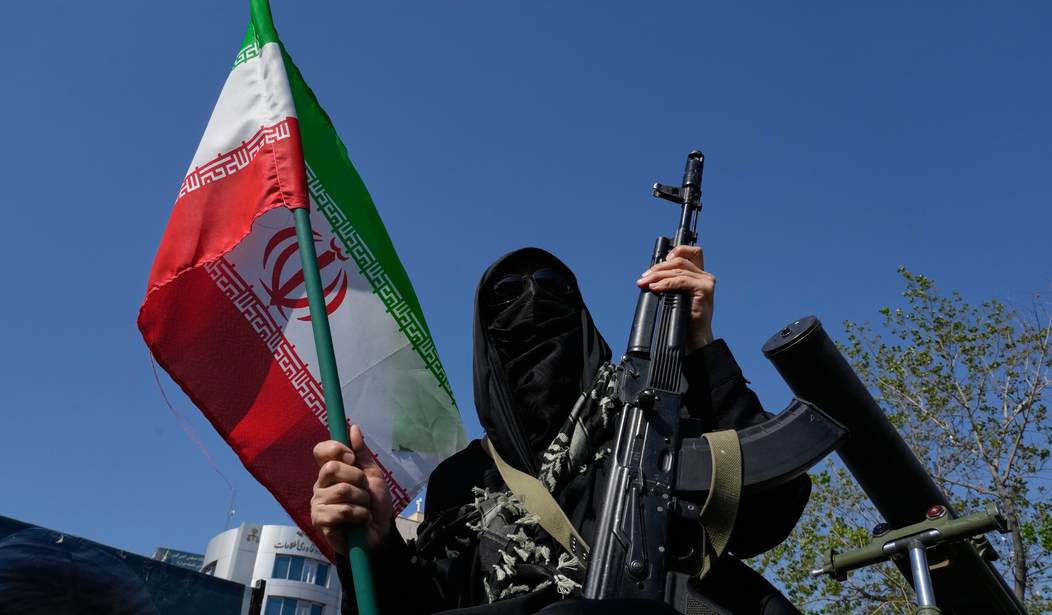
The 12-day war involving the United States, Israel, and Iran may prove to be one of the most consequential events in modern Middle Eastern history. While international attention has focused on military strikes, damaged nuclear facilities, and regional security implications, a more profound transformation has been unfolding inside Iran itself. The conflict has accelerated a process that had been gathering momentum for years: the gradual replacement of clerical rule with direct military domination by the Islamic Revolutionary Guard Corps (IRGC).
For decades, many observers described Iran as a theocratic state governed by senior clerics under the doctrine of Velayat-e Faqih (guardianship of the jurist). Today, that description feels increasingly outdated. Real power rests less with the religious establishment and more with the commanders of the IRGC, whose influence stretches across every sector of Iranian life. The war has merely exposed a reality that millions of Iranians already understood. The mullahs provide the ideological façade, the Guards wield the guns, control vast economic assets, and direct the machinery of repression. Iran now resembles a military dictatorship wrapped in religious symbolism.
The consequences for ordinary citizens have been catastrophic. Official statistics released by regime institutions reveal an economy spiraling into crisis. Inflation has surged to levels that devastate household incomes. Food prices have risen at a pace that places basic necessities beyond the reach of millions. Wages lag far behind living costs. Savings evaporate. Families who once enjoyed modest security now struggle to provide bread, medicine, and shelter for their children. Even these grim figures probably understate the scale of the disaster.
The regime's priorities explain the decline. Rather than investing oil revenues in infrastructure, industry, healthcare, education, or job creation, enormous resources have flowed into the IRGC, ballistic missile programs, nuclear projects, and proxy militias scattered across the Middle East. While military commanders accumulated wealth and influence, roads crumbled, water systems deteriorated, and electricity networks decayed. The result appears across the country. Power blackouts have become a regular feature of daily life. Factories sit idle during electricity shortages. Businesses lose income. Students attempt to study by candlelight. Hospitals face mounting pressure. Across vast regions, water scarcity has reached alarming levels. Government reports indicate that renewable water resources continue to decline while desertification advances relentlessly. Rivers shrink, reservoirs empty, and agricultural communities confront an increasingly uncertain future.
Iran possesses immense natural wealth, abundant human talent, and enormous economic potential. Yet decades of corruption, mismanagement, and militarization have pushed the country toward economic exhaustion. The suffering extends far beyond economic hardship. The Iranian people endure one of the most repressive political systems on earth. Executions continue at an alarming rate. Dissidents face imprisonment. Journalists encounter censorship. Women resisting compulsory veiling confront brutality and intimidation. Ethnic and religious minorities endure systematic discrimination. Trade unionists, teachers, pensioners, and students who raise legitimate grievances frequently encounter arrest rather than dialogue.
Such conditions inevitably generate resistance. During recent years, waves of protests have erupted across Iran. Workers, pensioners, teachers, farmers, and students have all taken to the streets demanding change. Demonstrations emerge in large cities and remote provinces alike. Every new economic shock, every blackout, every water shortage, and every rise in food prices deepens public anger. The regime's response follows a familiar pattern: repression, arrests, and violence. Yet repression no longer guarantees stability.
A growing number of Iranians have concluded that meaningful reform cannot emerge from within the existing system. The concentration of power in the hands of the IRGC has effectively closed avenues for gradual change. Elections inspire little confidence. Competing factions offer cosmetic differences while preserving the same underlying structure of authoritarian control. Against this backdrop, the organized resistance has gained increasing prominence. The National Council of Resistance of Iran (NCRI), together with the People's Mojahedin Organization of Iran (MEK), has maintained a nationwide network capable of challenging the regime's narrative and mobilizing opposition. Resistance Units operating inside Iran continue to demonstrate remarkable resilience despite severe repression. Their message resonates with a population searching for an alternative to dictatorship, corruption, and economic collapse.
The regime understands this threat. That explains the relentless propaganda campaigns, mass arrests, and demonization directed against the organized resistance. Authoritarian governments fear organized opposition far more than spontaneous protests because organized movements possess the capacity to transform public anger into political change. History offers many examples of regimes that appeared invincible until the moment they collapsed. The Shah's dictatorship seemed secure during the late 1970s. Communist governments across Eastern Europe projected strength until they suddenly disintegrated. Authoritarian systems often appear stable from the outside while internal decay steadily weakens their foundations.
Iran today displays many of the same symptoms. Economic collapse undermines legitimacy. Infrastructure failures erode confidence. Corruption breeds cynicism. Water shortages fuel unrest. Electricity blackouts expose incompetence. Military domination alienates broad sections of society. Every crisis chips away at the regime's remaining credibility. The war has accelerated these trends. Rather than emerging stronger, the ruling establishment appears increasingly dependent upon coercion. As the IRGC tightens its grip, the distinction between the military apparatus and the state itself grows ever thinner. Such systems rarely generate prosperity or stability. They generate fear, resentment, and eventually resistance.
A decisive confrontation between the Iranian people and their oppressors seems increasingly inevitable. Predicting the timing of revolutionary change remains impossible. History seldom follows a precise timetable. Yet the direction of travel appears clear. A young, educated, and highly connected population seeks freedom, prosperity, and democratic government. The ruling elite offers economic hardship, repression, and endless militarization. That contradiction cannot endure forever. The future belongs neither to aging clerics nor to IRGC generals. It belongs to the Iranian people. When the next great uprising comes, and many signs suggest that day draws closer, it may finally sweep away a failed dictatorship and open the path toward a democratic republic founded upon freedom, human rights, and the rule of law.
After nearly half a century of tyranny, that moment would represent far more than political change. It would mark the rebirth of a nation whose people have waited long enough for liberty.
Struan Stevenson was a member of the European Parliament representing Scotland (1999-2014), president of the Parliament's Delegation for Relations with Iraq (2009-14), and chairman of the Friends of a Free Iran Intergroup (2004-14). He is an author and international lecturer on the Middle East.
Editor's Note: For decades, former presidents have been all talk and no action. Now, Donald Trump is eliminating the threat from Iran once and for all.
Help us report the truth about the Trump administration's decisive actions to keep Americans safe and bring peace to the world. Join Townhall VIP and use promo code FIGHT to get 60% off your VIP membership.

Join the Conversation
VIP members get the ability to comment on articles.