





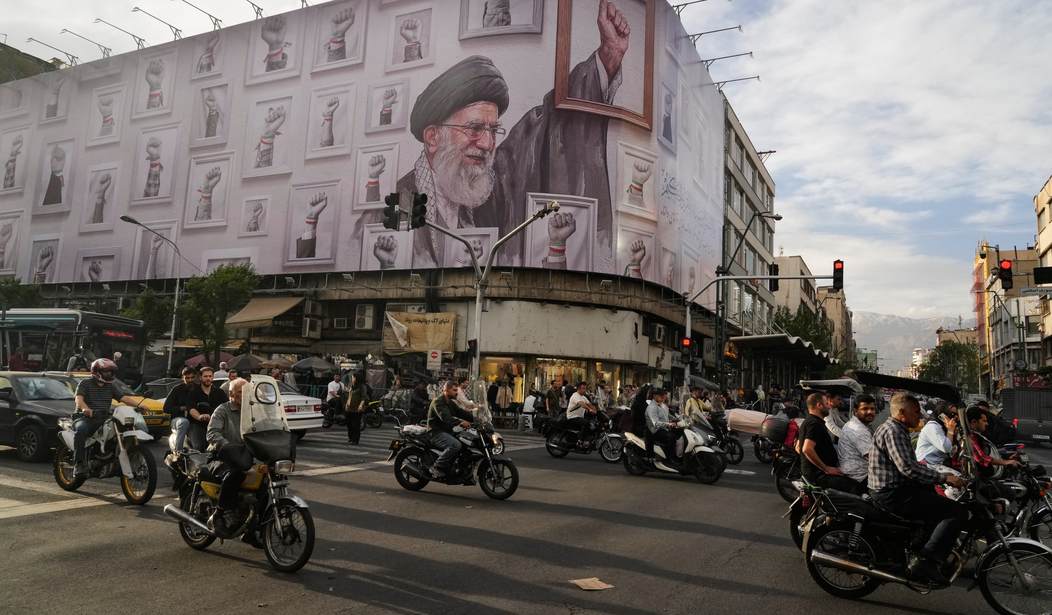
For years, Western policymakers clung to the belief that the clerical regime in Tehran represented a stable pillar of Middle Eastern politics. That illusion is rapidly collapsing. The Islamic Republic now faces a convergence of crises unprecedented since 1979 – military setbacks, economic decline, diplomatic isolation, and growing public anger. Increasingly, the regime’s survival depends upon repression by the Islamic Revolutionary Guard Corps (IRGC), whose expanding influence has transformed Iran from a revolutionary theocracy into an entrenched military dictatorship.
President Donald Trump’s rapid rejection of Tehran’s ceasefire proposal signals that Washington may finally recognize the nature of the challenge. Iran’s demands – compensation for war damage, recognition of sovereignty over the Strait of Hormuz, sanctions relief, an end to the naval blockade, and guarantees against future military action – reveal a regime seeking time to recover, regroup, and rearm. The West should resist that temptation.
Inside Iran, conditions worsen daily. Inflation has devastated ordinary households. Food prices continue to surge beyond the reach of millions. Rice, chicken, cooking oil, and other essentials have become luxuries for many families. The Iranian rial has collapsed in value, while sanctions, corruption, war, and internet restrictions have paralyzed large sections of the economy.
Such conditions rarely sustain authoritarian systems indefinitely. Economic despair erodes fear, and hardship weakens obedience. Iranian leaders clearly understand this danger. President Masoud Pezeshkian’s repeated calls for “national cohesion” reflect mounting anxiety within the ruling establishment. While state propaganda blames “enemy plots” and “economic warfare,” ordinary Iranians confront a harsher reality every day through unemployment, shuttered businesses, and shrinking incomes.
The regime’s regional position has also deteriorated significantly. Bashar al-Assad, once Tehran’s most important Arab ally, has faded from regional influence following Syria’s prolonged devastation and fragmentation. Hamas has suffered severe losses in Gaza, while Hezbollah faces mounting Israeli military pressure in southern Lebanon. Iraqi Shiite militias, long considered reliable instruments of Iranian influence, now operate in a less permissive political environment under a new Iraqi prime minister. For decades, Tehran built a network of proxy forces stretching from Beirut to Baghdad and from Damascus to Gaza. That network now faces sustained military and political pressure across multiple fronts.
At home, the IRGC remains the regime’s ultimate guarantor of power. Yet even that institution shows signs of strain. Senior commanders have been killed, intelligence failures have increased, and sanctions have sharply restricted revenue streams. Iranian oil exports, the regime’s economic lifeline, face growing disruption under tighter international scrutiny and U.S. pressure. The Strait of Hormuz standoff has further exposed Tehran’s vulnerabilities. Iranian leaders once believed the waterway provided strategic leverage over the global economy. Instead, threats to shipping and energy supplies have increased international anger toward the regime. Energy markets fluctuate with every escalation, while Asian and European governments grow increasingly wary of prolonged instability.
The West now faces a critical choice. One option is to repeat the failed policies of the past – limited sanctions relief, endless negotiations, temporary nuclear agreements, and diplomatic engagement disconnected from realities on the ground. Such policies repeatedly granted Tehran time to rebuild its networks, advance uranium enrichment, finance proxy militias, and strengthen domestic repression. The alternative requires greater clarity and resolve. Western governments should intensify sanctions and enforce them rigorously. Too often, sanctions regimes weaken through inconsistent implementation and political hesitation. Iranian oil exports should face tighter restrictions backed by meaningful penalties for violators. Every illicit shipment reaching foreign markets extends the life of the regime.
Iranian embassies should be closed and their diplomatic staff expelled. In multiple cases, diplomatic missions linked to Tehran have been accused of involvement in espionage, intimidation, surveillance, and plots targeting dissidents abroad. Democratic nations should reconsider the legitimacy granted to representatives of a government that continues to imprison, torture, and silence its own citizens. At the same time, the Iranian democratic opposition deserves greater international attention. The National Council of Resistance of Iran (NCRI) has long argued that the regime survives through repression at home and destabilization abroad. Western governments should now actively show their support for this leading challenger to the tyrannical theocracy.
Critics argue that stronger pressure could further destabilize the region. Yet the Middle East already suffers from decades of proxy warfare, militia activity, and confrontation involving Tehran and its allies. From Lebanon to Yemen, Gaza to Syria, Iranian influence has played a major role in regional instability. Lasting stability will remain difficult while the IRGC continues financing armed groups and threatening international shipping routes.
History offers repeated lessons about authoritarian systems built on fear, corruption, and economic decay. The Soviet Union once appeared permanent until it suddenly collapsed. The Shah’s government looked secure until mass unrest overwhelmed it. Such systems often project strength outwardly while weakening internally. Iran’s rulers now confront many of those same pressures, a collapsing currency, soaring living costs, military setbacks, diplomatic isolation, weakened alliances, and growing public dissatisfaction. These forces create a dangerous and potentially transformative moment.
The West should therefore abandon illusions about meaningful reform emerging from within the current system. Diplomacy without leverage risks prolonging repression rather than moderating it. Appeasement may delay confrontation, but it does not resolve the underlying crisis. This moment demands firmness and unity. Democratic nations should tighten pressure on the regime, restrict its financial lifelines, and stand openly with the Iranian people rather than their rulers. Iran’s future ultimately belongs not to the ayatollahs or the IRGC, but to millions of Iranians seeking freedom, economic stability, and normal relations with the world.
The rejected ceasefire proposal may yet prove a turning point. Tehran expected hesitation and division among Western governments. Instead, it increasingly confronts a recognition that its growing weakness presents a rare strategic opportunity. A regime that once boasted of exporting revolution across the Middle East now struggles to contain economic collapse and preserve its shrinking sphere of influence. Tyrannies often survive when democratic nations lose confidence in their own principles. Iran’s rulers depend as much on hesitation abroad as repression at home. That hesitation should now end.
Struan Stevenson was a member of the European Parliament representing Scotland (1999-2014), president of the Parliament's Delegation for Relations with Iraq (2009-14), and chairman of the Friends of a Free Iran Intergroup (2004-14). He is an author and international lecturer on the Middle East.
Editor's Note: For decades, former presidents have been all talk and no action. Now, Donald Trump is eliminating the threat from Iran once and for all.
Help us report the truth about the Trump administration's decisive actions to keep Americans safe and bring peace to the world. Join Townhall VIP and use promo code FIGHT to get 60% off your VIP membership.


Join the Conversation
VIP members get the ability to comment on articles.