





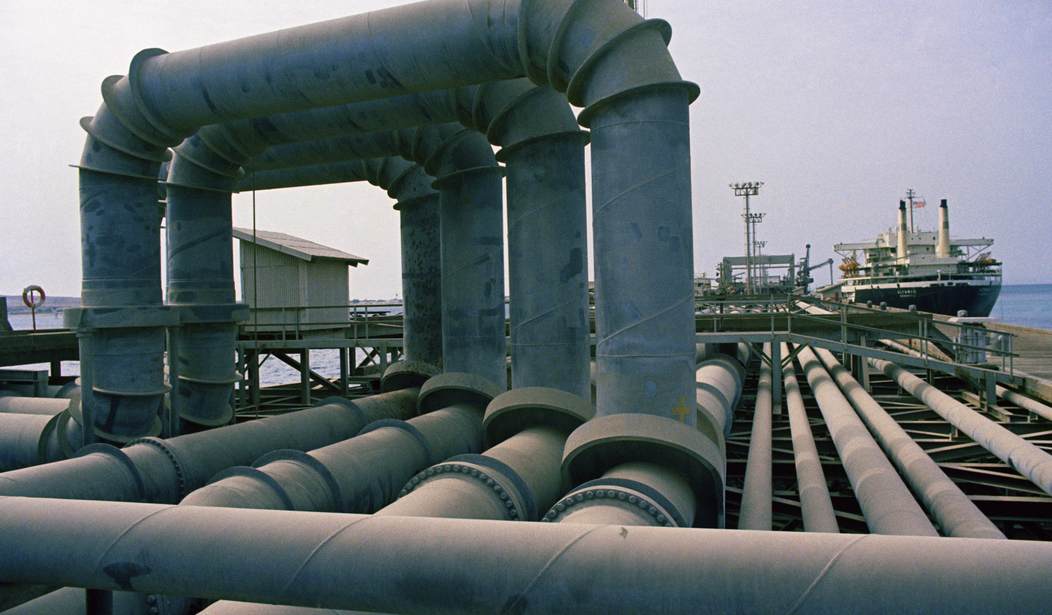
The drums of war beat louder in the Gulf, even as Donald Trump publicly muses about winding down the conflict with Iran. His latest warning, demanding the immediate reopening of the Strait of Hormuz or face devastating attacks on critical infrastructure, reveals a far more muscular strategy taking shape behind the scenes. The deployment of 5,000 U.S. Marines to the region only raises the prospect that Washington might be preparing for the seizure of Kharg Island. If so, the implications would be seismic.
Kharg Island is not merely another strategic outpost in the Gulf; it is the jugular vein of Iran’s economy. The overwhelming majority of the regime’s oil exports, its principal source of hard currency, flow through this single terminal. Sever that artery, and the already crippled economy collapses into cardiac arrest. Even before the outbreak of hostilities, Iran was reeling under the combined weight of sanctions, corruption, and systemic mismanagement. Inflation was rampant, the currency in freefall, and unemployment, particularly among the young, at catastrophic levels.
It was this economic despair that ignited the nationwide protests in late 2025 and early 2026, when tens of thousands of brave, mostly young Iranians, took to the streets demanding change. The regime’s response was as predictable as it was brutal. The Islamic Revolutionary Guard Corps (IRGC), alongside the notorious Basij, unleashed a campaign of terror. Reports suggest that as many as 30,000 protesters were slaughtered in a ruthless crackdown designed to extinguish dissent through fear. Yet dissent has not been extinguished. It simmers beneath the surface, waiting for the next spark.
The potential seizure of Kharg Island could provide that spark and much more. By choking off the regime’s oil revenues, it would accelerate the economic implosion already underway. Salaries would go unpaid, subsidies would vanish, and the regime’s ability to fund both domestic repression and foreign adventurism would be severely curtailed. The mullahs’ grip on power, already weakened, could rapidly unravel.
Critics will rightly point out that such a move would be fraught with danger. Any operation to seize and hold Kharg Island would require “boots on the ground,” a prospect that evokes bitter memories of past Middle Eastern entanglements. Iranian forces would almost certainly resist fiercely, and the risk of escalation, drawing in regional proxies or even other global powers, cannot be dismissed.
Moreover, Iran could retaliate asymmetrically. The IRGC has long honed its capacity for unconventional warfare, from mining shipping lanes to launching missile attacks via allied militias across the region. The Gulf could become a tinderbox, with global energy supplies and the world economy caught in the crossfire.
And yet, the alternative may be worse. Allowing the regime to continue its stranglehold over the Strait of Hormuz, a chokepoint through which a significant portion of the world’s oil supply passes, is not merely a regional issue; it is a global one. The closure of the Strait disrupts international trade, drives up energy prices, and threatens economic stability far beyond the Middle East. Reopening it is an economic imperative.
Airstrikes alone may not suffice. Iran’s critical infrastructure is dispersed, hardened, and in many cases redundant. Bombing campaigns can degrade capabilities, but they rarely deliver decisive outcomes. The regime has shown a remarkable willingness to absorb punishment and endure. What it cannot endure, however, is the sustained loss of its primary revenue stream. This is where Kharg Island becomes pivotal.
A decisive move to seize or neutralize this export hub would strike at the heart of the regime’s survival. It would send an unmistakable signal, not only to Tehran but to the Iranian people and their burgeoning Resistance Units, that the balance of power is shifting. For a population that has repeatedly demonstrated its willingness to rise up, despite horrific risks, such a signal could be transformative.
Indeed, history teaches us that authoritarian regimes often appear strongest just before they collapse. When economic collapse converges with popular unrest and external pressure, the result can be sudden and irreversible. The fall of the Soviet Union, the collapse of Eastern European dictatorships, and the wave of uprisings during the Arab Spring all followed this pattern. Iran may now be approaching a similar inflection point.
For Western policymakers, the challenge is to calibrate action with foresight. The objective must not simply be to weaken the regime, but to create the conditions for a stable and peaceful transition. That means supporting the Iranian people, not abandoning them to chaos or leaving a vacuum that could be exploited by even more extreme forces. It also means recognising the moral dimension of this conflict. The regime in Tehran is not merely a geopolitical adversary; it is a government that has waged war on its own people for decades. From the crushing of dissent to the systematic violation of human rights, its record is one of repression and brutality. Any strategy that hastens its demise, while minimizing civilian suffering, carries a compelling ethical argument.
Of course, there are no guarantees. War is inherently unpredictable, and unintended consequences are inevitable. But leadership is not about avoiding risk altogether; it is about choosing the least dangerous path among imperfect options. If Donald Trump is indeed contemplating a move on Kharg Island, he is gambling on a bold but coherent theory that by cutting off the regime’s oil lifeline, he can force a rapid end to the conflict and reopen the Strait of Hormuz.
It is a high-stakes gamble, perhaps the highest of his presidency. But in a region long defined by half-measures and strategic drift, it may also be the kind of decisive action that history rewards. The coming days will reveal whether this is brinkmanship or the prelude to a decisive turning point in one of the world’s most volatile conflicts.
Struan Stevenson was a member of the European Parliament representing Scotland (1999-2014), president of the Parliament's Delegation for Relations with Iraq (2009-14), and chairman of the Friends of a Free Iran Intergroup (2004-14). He is an author and international lecturer on the Middle East.
Editor's Note: For decades, former presidents have been all talk and no action. Now, Donald Trump is eliminating the threat from Iran once and for all.
Help us report the truth about the Trump administration’s decisive actions to keep Americans safe and bring peace to the world. Join Townhall VIP and use promo code FIGHT to get 60% off your VIP membership.

Join the Conversation
VIP members get the ability to comment on articles.