





For half a century the Islamic Republic of Iran has clung to power by smoke and mirrors, basing their medieval tyranny on ideology, terror, economic mismanagement and repression. But the recent genocide under digital darkness is different. According to a harrowing report in The Sunday Times, between 16,500 and 18,000 mostly young Iranians have been slaughtered by the Islamic Revolutionary Guard Corps (IRGC) and Basij militia in the nationwide uprising that erupted in late 2025. A staggering 360,000 have been injured, with thousands shot in the face by shotgun pellets and blinded. Many wounded have avoided hospitals entirely for fear of being arrested and dragged off to prison, torture and execution. The main Iranian opposition movement the Mujahedin-e Khalq (MEK), puts the proven figure of those killed at 3,000, including seven of its members, whose identities have been confirmed, and arrests at 50,000.
This degree of violence is unprecedented in post-1979 revolutionary Iran. But brutal regimes throughout history have met the same bitter end. When a state’s legitimacy collapses, its violence becomes the very architect of its downfall. Consider Romania in 1989. Nicolae Ceaușescu, the dictator who ruled with an iron fist and secret police (Securitate) that terrorized the populace, ordered the army to fire on protesters. Within days, even segments of his own security apparatus defected. In the uprising’s final moments, a staged rally turned into an eruption of public hatred broadcast live on television. Ceaușescu fled and was summarily executed, a dramatic collapse triggered by an eruption of public resistance and the desertion of his own power base. History taught us that a regime built on fear collapses when people refuse to be afraid.
Or take Tunisia in 2011, where the uprising that toppled Zine el-Abidine Ben Ali was driven less by organized armies than by ordinary citizens in the central and southern regions. When security forces refused to fire on civilians en-masse and the army stood down, Ben Ali had no choice but to flee. His downfall, the first domino of the Arab Spring, stemmed from the loss of authority over coercive institutions and the refusal of ordinary soldiers to serve as executioners of their own people.
Libya under Muammar Gaddafi offers an even starker lesson. In 2011, faced with mass protests and defections in his regime, Gaddafi responded with escalating brutality, sniper fire on crowds, bombing of civilian areas, and wholesale terror. Yet faced with coordinated resistance and the collapse of loyalty within his own security services, Gaddafi’s rule endured only months longer, ending in his capture and bloody death. History again shows that brutality cannot indefinitely substitute for legitimacy.
And even when violence appears initially to succeed in subduing dissent, it sows the seeds of long-term collapse. The Syrian regime of Bashar al-Assad unleashed heavy weapons, barrel bombs, and chemical attacks against civilians from 2011 onwards. Yet even as Assad clung to power, with the help of external backers like Russia and Iran, the war shattered Syria’s society and economy, leaving it broken, isolated and swathed in human misery. Nothing but further violence was offered to a traumatized population and within weeks Assad had fled to Moscow.
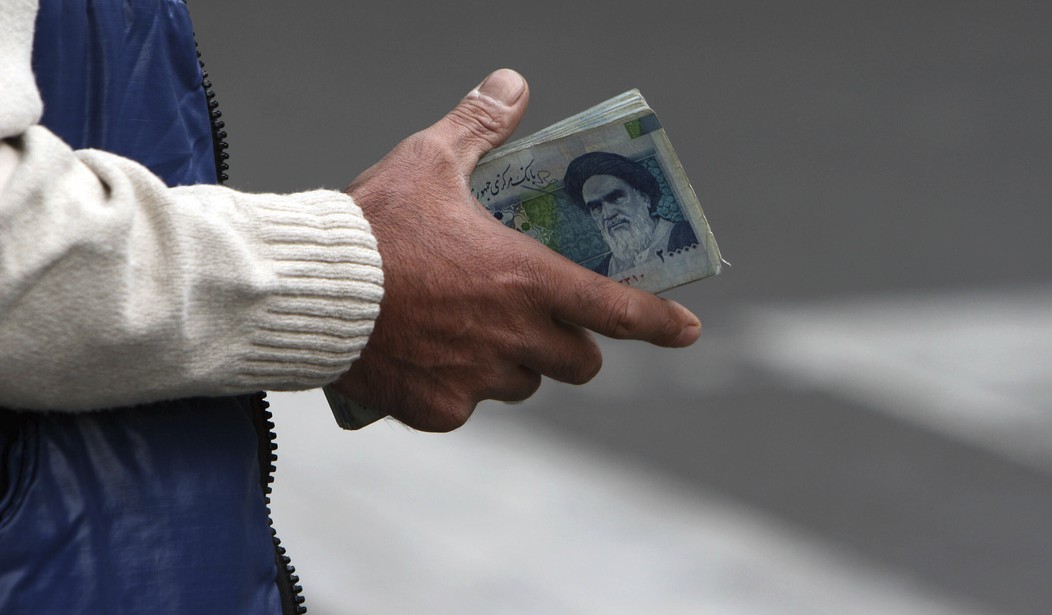
Iran’s clerical regime now finds itself in a situation that is eerily comparable. The anger in 2025 did not come from a single spark, it was the culmination of decades of economic malaise, political repression, corruption, and demographic frustration. Youth unemployment is rampant, the rial has collapsed, and the IRGC itself has become a bloated cartel extracting rents rather than defending the nation. Ordinary Iranians increasingly ask not for reforms but for the overthrow of the entire theocratic system. The uprising spread to 220 cities through all 31 provinces, and slogans like “Death to Khamenei” echoed from east to west, a direct rejection of the supreme leader’s authority itself. The regime’s response has been predictably brutal. IRGC and Basij units have opened fire with live ammunition and military-grade weapons, killing and maiming tens of thousands.
Such repression, whether shooting civilians in the street or marshalling militias against them, reflects a regime that has lost its political centre of gravity. When all the state has left to offer is bullets and batons, it is not governing, it is besieged. The evidence is unmistakable. The mullahs’ theocracy has become an island of terror surrounded by a rising tide of popular revolt. And while Tehran may fancy itself a bastion of resistance against the West, the outside world increasingly views the Iranian state as a pariah, isolated economically, diplomatically cast out, and kept afloat only by alliances with failing authoritarian patrons.
Theocratic repression cannot fix a shattered economy. It cannot restore legitimacy when institutions are seen as instruments of brutality. And it cannot reverse the demographic tsunami of educated, connected, aspirational youth who refuse to be caged. Iran today is a nation at breaking point, not because it faces external threats, but because it has lost the consent of the governed. History teaches that such regimes do not endure. Whether in Eastern Europe, North Africa or the broader Middle East, the calculus is always the same. When the violence of the state outweighs its legitimacy and when its coercive instruments fracture or defy orders, the edifice collapses. The clerical rulers in Tehran may cling to power with their last bullets and their last internet blackouts, but they rule a country where the youth see nothing to live for under their rule.
The Shah’s overthrow in 1979 was welcomed by many as liberation, but the theocratic system that replaced him now stands on the brink of its own reckoning, not from an external enemy, but from the hearts and minds of its own people. In the end, the mullahs’ era of terror will be remembered not as a moment of strength, but as a final flailing of a dying regime, a relic of repression in a world that refuses to be tamed. Those who pay with their lives and their sight today are investing in a future Iran that rejects the cruelty of the past. History is watching.
Struan Stevenson is the Coordinator of the Campaign for Iran Change (CiC). He was a member of the European Parliament representing Scotland (1999-2014), president of the Parliament's Delegation for Relations with Iraq (2009-14), and chairman of the Friends of a Free Iran Intergroup (2004-14). He is an author and international lecturer on the Middle East.
Editor’s Note: Do you enjoy Townhall’s conservative reporting that takes on the radical left and woke media? Support our work so that we can continue to bring you the truth.
Join Townhall VIP and use promo code FIGHT to receive 60% off your membership.


Join the Conversation
VIP members get the ability to comment on articles.