





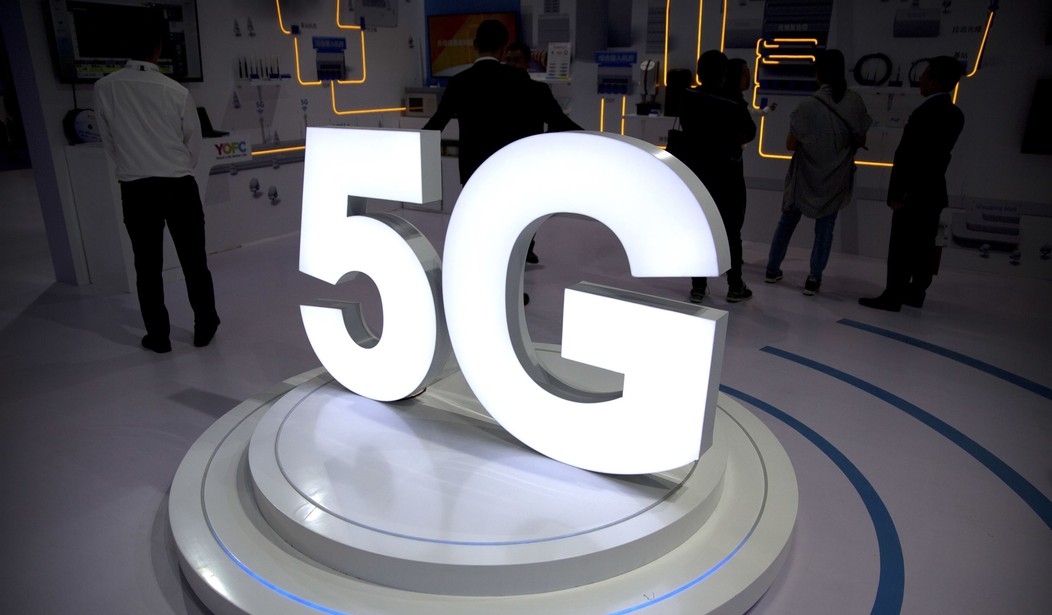
Since assuming office, Chairman of the Federal Communications Commission (FCC) Ajit Pai has demonstrated bold and principled leadership to establish a policy environment that encourages the development of new technologies and the high-speed wireless networks that are critical to delivering to American consumers. However, there is still more to do if the FCC is to cement American leadership and beat China’s push to get ahead of the U.S. on 5G deployment. This tech war must be won by the U.S.
The U.S. is on the cusp of freeing up much needed mid-band spectrum. In fact, pending FCC approval, there is a 40-megahertz swath of mid-band spectrum that is greenfield – ready to be deployed immediately – that will allow for the fastest deployment of fifth generation wireless broadband technology, commonly referred to as 5G services. To do this, the Chairman must stand firm against long-serving interests who are exploiting false fears in an attempt to slow the repurposing of this currently underused spectrum. If he doesn’t succeed in quickly deploying more lower mid-band spectrum, it will put America at risk and allow our country to fall dangerously behind in the race to 5G.
China is beating us right now in the deployment of 5G technologies and it is time for U.S. government officials to take the threat of technological superiority from China seriously and expedite the deployment of 5G technology. China is an economic, and national security, threat to the U.S. and it is time for government bureaucrats to let the U.S. free market work to beat China in this economic battle.
A sound principle of good public policy is that government should facilitate, not frustrate, innovation and investment. Chairman Pai said on July 10, 2018 in a speech in Geneva, Switzerland, “History tells us that emerging technologies will evolve in ways that people don’t anticipate … There is often a strong temptation to regulate new technologies, especially by forcing them into old frameworks” and “perhaps the most important way that the FCC facilitates innovation is by freeing up spectrum for wireless services and making it available for flexible use.”
Because of some strong free market leadership at the FCC, numerous successes have placed American technological superiority at the forefront of the global stage.
The FCC leadership has stood up to entrenched interests within other parts of the Administration on a number of different issues because of a willingness to do what is best for the United States’ technological future. For instance, the FCC put out the “FAST Plan” to auction spectrum in the 24 GHz band for 5G use after years of foot dragging by other government agencies. Chairman Pai stood up to the tech mob and reversed the Obama Administration’s ‘Net Neutrality’ rules that would have turned the broadband market into a heavily regulated public utility. Since that decision, broadband investment has increase by billions of dollars and broadband speeds have increased sharply for consumers.
The Commission also approved the T-Mobile Sprint merger as a means to encourage free market competition and innovation while helping to secure “United States leadership in 5G, close the digital divide in rural America, and enhance competition in the broadband market.” In addition, Chairman Pai pushed to block Chinese telecommunications companies Huawei and ZTE from access to Universal Service funds because of cybersecurity concerns.
Finally, the FCC was strongly against the nationalization of U.S. 5G networks with the Chairman saying in no uncertain terms, “I oppose any proposal for the federal government to build and operate a nationwide 5G network.” The FCC has been strong in protecting markets and encouraging innovation and investment.
The threat from China is not merely economic, it is a threat to cybersecurity. The Wall Street Journal reported on October 11, 2019 “The European Union has identified a series of specific security threats posed by foreign vendors of telecommunications equipment, significantly heightening the bloc’s scrutiny of suppliers like Huawei Technologies Co., according to officials familiar with the matter and a privately circulated risk assessment prepared by European governments.” The EU worries that 5G mobile networks that can link many devices with faster connection speeds makes it easier to embed hacking technology and backdoor vulnerabilities that enable spying and the collection information from consumers, businesses and the government.
The FCC under the leadership of Chairman Ajit Pai has an opportunity to quickly deploy mid-band spectrum that will help get the U.S. ahead of China in the race to deploy 5G technology. Chairman Pai’s FCC should expedite the repurposing of this underutilized spectrum to prevent the U.S. from losing the race to technological superiority in the 5G services that consumers demand.
Steve Pociask is president and CEO of the American Consumer Institute, and chair of the FCC’s Consumer Advisory Committee. The views expressed here are solely his own.



Join the Conversation
VIP members get the ability to comment on articles.