





In historiography, one learns that historians take facts and evidence to create interpretations of why events happened. The “what” is important, but the “why” serves as history’s lessons.
The worst sin a professional historian can commit lies in holding a person, place, or event’s historical period against them. Marcus Aurelius, for example, served as Rome’s finest emperor. Through his wise and restrained government, Rome knew peace, prosperity, and security that it rarely saw again after his death.
Christian civilizations have dutifully honored Marcus Aurelius in historical works and statues, choosing to overlook his zeal in persecuting faithful followers of Jesus Christ. The Emperor governed in a time when the state and religious faith were one and the same. He wrongly saw Christianity as a threat to the state itself (generally leaving Jewish faithful alone because they did not proselytize.)
Christians overlook Marcus Aurelius’s slaughter of the faithful by and large. Most understand that the emperor lived in a time and place where it would have been remarkable if he believed differently. Western Civilization, including most Christians, celebrate Marcus Aurelius for his greatness as a leader, an administrator, a philosopher, and as a warrior.
In other words, do not hold his time and place against him.
Recently, a commission in Washington, D.C. recommended removing or “contextualizing” national monuments featuring the Founding Fathers, including Benjamin Franklin who advocated for ending slavery late in life.
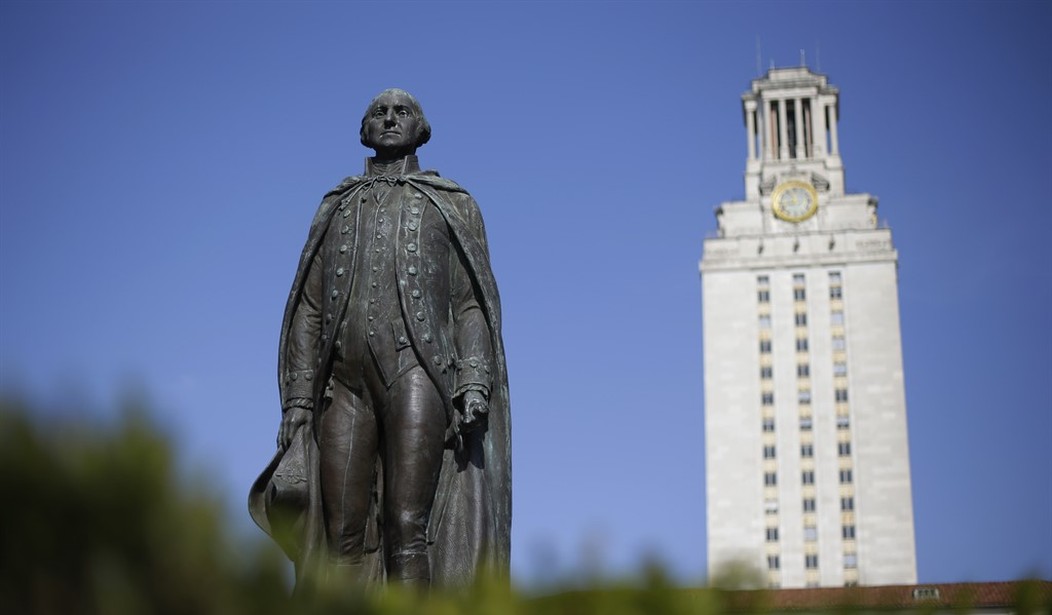
One of the most absurd suggestions was George Washington himself. The Left condemns him as a slaveowner and demands that we ignore his time, place, and personal attitudes and actions.
Washington owned slaves his entire life, but gradually developed a repugnance for the practice. Even in his younger years, he hated the idea of separating them from the people and place that they knew. This meant increasing costs to support growing families, but the occasionally cash poor Washington took the responsibility.
As he matured, he developed serious qualms about the institution itself. As he led armies in the northern states during the War of Independence, he saw the fighting ability of black soldiers and pushed for military desegregation almost 175 years before President Harry Truman mandated it.
After the war, he expressed regret about his part in slavery. He told a close friend, “The unfortunate condition of the persons whose labors I in part employed has been the only unavoidable subject of regret.” He went on to say that he saw it as his duty to provide for their “ease and comfort” as much as possible while preparing “the rising generation for a destiny different from that in which they were born.” This was his alternative to manumitting them into a world less sympathetic to their condition.
Washington feared “the justice of the Creator” on this issue and advocated for gradual emancipation. Few in Virginia or the South would have seen his stance as anything but radical on the issue, which makes one of America’s most careful rhetorical statesman even more remarkable relative to the times.
His presidency helped to deliver the death blow to slavery in the end. At Treasury Secretary Alexander Hamilton’s urging and against the advice of a furious Thomas Jefferson, Washington chose an industrial and commercial future for America. In part, he made this choice because it would limit and eventually perhaps choke out agrarian based slavery.
Washington’s intuition was correct. The massive Northern industrial society put enormous pressure on Southern slavery as the century wore on and finally achieved emancipation through arms, as opposed to the legal process Washington favored.
In other words, George Washington deserves indirect credit for abolition as opposed to condemnation for his ownership of slaves.
While the 21st century student rushes to condemn Washington for keeping slaves, he or she ought to examine the times and wonder instead at how mid to late 1700s Virginia produced such a forward thinking mind on the topic.
In Jarrett Stepman’s War on History, one can see the results of condemnation of historical figures without context or understanding. An Alexandria church removed a plaque dedicated to the first president because it “made some in our presence feel unsafe or unwelcome.”
How absurd.
The Left pushes to eliminate history because radical revolutions only succeed when they destroy the foundations on which civil society rest. German philosopher Martin Heidegger, for example, invented an entire branch of philosophy to undermine classical liberalism and pave the way for National Socialism.
Losing foundations of civil society create the perfect conditions for Leftist totalitarian regimes. American history is worth fighting for because without it, we and our rights and freedoms are lost.



Join the Conversation
VIP members get the ability to comment on articles.