





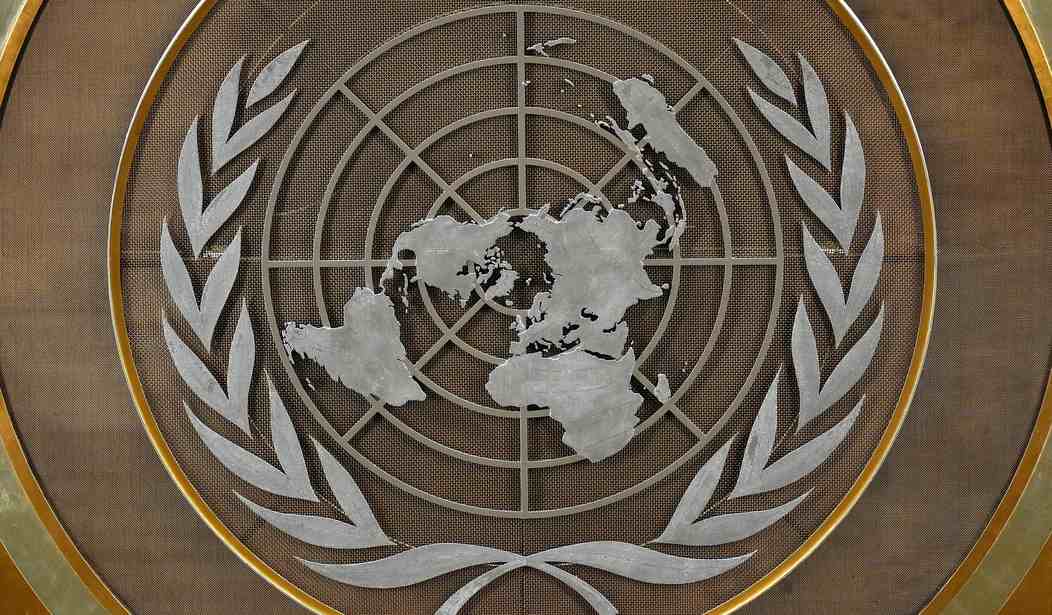
There are many analyses concerning the decline of international institutions like the U.N., and much of this analysis is well-founded. But it is also insufficient. Few of these analyses examine the failures of these institutions like the UN or the International Criminal Court (ICC) when the great powers are not involved. Moreover, too often we forget that institutions are led by people who frequently are not up to the responsibilities that their high office entails.
Sadly, the record of Luis Ocampo, former prosecutor for the ICC, epitomizes this point. In this role, Ocampo launched a case in proprio motu, of his own accord, in 2007, against members of Kenya’s government for alleged crimes, including genocide, in conjunction with Kenyan elections and post-election violence. Unfortunately, these cases fell apart and could not be brought to prosecution. The ICC’s own subsequent review of the failure of Ocampo’s investigation excoriated him for multiple prosecutorial failings.
Among these failings, the report cited Ocampo’s autocratic management style, poor management skills, and his attempts to browbeat his staff into giving him the results he wanted. Ocampo reportedly“instilled an attitude that the Office of the Prosecutor must go forward with the Kenya cases, must save the cases, regardless of the evidentiary gaps, and that any other view was disloyal.” The report also blasted him for, “focusing on bringing peace to the region or demonstrating the relevance of the ICC”, without effective prosecutorial action based on law and facts.” In other words, he was excessively partisan, demanding an outcome consonant with his beliefs rather than with the available evidence.
Worse yet, although he left the ICC in 2012 for a private position, he continued pressuring the ICC to investigate and prosecute presidential candidate Uhuru Kenyatta despite a lack of evidence. However, one year later, after Kenyatta had been elected president, he operated behind the scenes to try to arrange an “honorable exit” for Kenyatta. As a result, his successor, Fatou Bensouda, distanced herself from this prosecution and even commissioned the independent ICC review that excoriated Ocampo’s conduct. Indeed, she even withdrew the charges against Kenyatta.
Since the ICC was established due to the Rwandan genocide 32 years ago to hold perpetrators of major political crimes accountable for their actions, this failure did much to undermine its reputation and credibility. But it apparently did not have a chastening effect on Ocampo. Ocampo has now morphed into a hired gun for the Armenian diaspora, if not Russia, most notably against Armenia, which has moved decisively towards making peace with Azerbaijan, welcoming American investment in the form of the Trump Road for International Peace and Prosperity (TRIPP), and seeking EU membership. As a result, Moscow has mounted an intense and long-lasting campaign of subversion and threats against Armenia.
More recently, Putin delivered an ultimatum demanding that Armenia comply with Russian demands or Moscow will cut off its gas supply. Specifically, Putin is demanding that Armenia stop raising the future of Russia’s military base in Gyumri, rescind restrictive measures against Russian-owned companies, including Gazprom Armenia and the South Caucasus Railway, choose the Eurasian Economic Union (EAEU) over the European Union, and that Yerevan either repeal its law launching integration with the EU or immediately set a date for a nationwide referendum on this question.
These demands come on top of a vintage but failed Kremlin campaign in Armenia’s earlier election. And here Ocampo and his son Tomas have played an even more scandalous role. In a video, apparently financed by members of the Armenian diaspora, Ocampo and his son falsely accused Azerbaijan of genocide against Armenians in Nagorno-Karabakh and discussed a “favorable price” for influencing the EU, European Commission, and the European Parliament to cease cooperation with Azerbaijan. Then one of the Ocampos stated that, “What we need to achieve is to remove Pashinyan.”
Thus, Ocampo is not only soliciting funding from the Armenian diaspora to remove Pashinyan, but he is also shilling for Russia’s agenda. This agenda entails removing Pashinyan, undermining the TRIPP, preventing Armeno-Azerbaijani peace and thereby regenerating possible bilateral tensions, breaking ties between Azerbaijan and Europe, and thus reinforcing European energy dependence upon Russia. This is a strange position for a former prosecutor of the ICC to adopt. But it shows that the weaknesses of international institutions like the ICC or the U.N. are not only attributable to the machinations of the great powers but rather to the failings of their personnel.
However, the consequences of Ocampo’s failures go further. An institution created specifically to hold perpetrators of genocide and equivalent crimes accountable failed in its mission thanks to Ocampo and this has led to more such failures. And then he has apparently become a hired gun for forces who actually are willing to risk war, in this case, in the Caucasus. Therefore, the repair of international institutions cannot wait for the great powers but must simultaneously occur within establishments like the ICC.
Editor’s Note: Do you enjoy Townhall’s conservative reporting that takes on the radical Left and woke media? Support our work so that we can continue to bring you the truth.
Join Townhall VIP and use promo code FIGHT to receive 60% off your membership.
Join the Conversation
VIP members get the ability to comment on articles.