





Lawmakers, whether at the federal, state, or local level, bear a responsibility to ensure we are making well-informed decisions. But we cannot be experts in everything we are expected to make laws about – especially as society becomes more complex and government bureaucracy extends itself into more and more aspects of our lives. As such it is important that we be provided with good, accurate data to help us make the decisions that can have such an oversized impact on our communities.
Therefore, it is not only disappointing when federal agencies, tasked with providing that data, instead offer incomplete, misleading, and even inaccurate studies based not on evidence, but on the agency’s own ingrained biases – it can lead to bad policy as well.
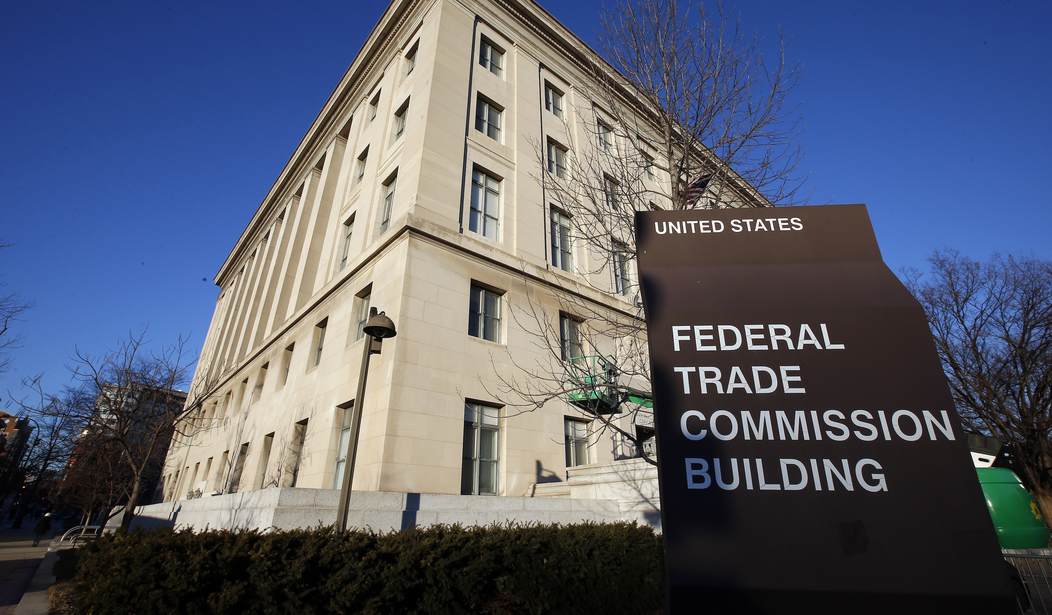
A sad example of this was the Biden administration’s Federal Trade Commission (FTC). During her tenure, FTC Chair Lina Khan set the agency’s regulatory sights on just about every sector of the economy. From technology and pharmaceuticals to agriculture, grocery retail, and even video game publishing, her agency launched aggressive investigations and lawsuits that often appeared driven more by ideology than evidence. Among those targets were pharmacy benefit managers (PBMs).
These private, third-party businesses help insurance plans manage prescription drug benefits by creating formularies of covered drugs and negotiating with drug makers and pharmacies to obtain lower prices. Their methods seem to have worked, as the FTC itself admitted in a comprehensive 2005 study that found PBM’s generate cost savings.
The Biden-era FTC, however, seemed to think that PBM’s are some sort of conspiracy against the American consumer, and were not about to let the prevailing evidence convince them otherwise. So they commissioned an interim report last year ostensibly to examine the impact of PBM’s on consumer costs of prescription drugs. To read the interim report, you would think that the PBM industry is fraught with abuse and is an exploitative model that rakes in profits on the backs of consumers.
Unfortunately for the FTC, the report includes no evidence to back those claims up. A closer look reveals glaring omissions, cherry-picked examples and a general lack of empirical evidence or analysis.
Among other issues, the FTC report relied exclusively on an unrepresentative sample of specialty generic drugs. The subset chosen makes up less than 2% of PBM-managed drug expenditures and seems to have been specifically selected to make the assertion that PBM’s significantly marked up drugs in the programs they manage. That assertion can only be made if you a) fail to account for variables such as operating costs and b) ignore the other 98% of drug spending by PBM’s. Both oversights were made by the FTC in this report and resulted in misleading data.
Cherry-picking a handful of outliers, however, was about the only thing in the report that even came close to pretending to be empirical. Most of the report relies not on numbers, analysis, the evaluation of raw data, or any other generally accepted methodology, but on anecdotes and public comments. The report’s findings are peppered with the qualifier “may” – not a word typically associated with strong, evidence-backed confidence in one’s conclusions. It also rests its argument on simplistic assertions about the three largest PBM’s in the country (which the FTC pretentiously labels “the Big 3”) controlling 80% of the market, without bothering to offer any evidence that this in itself is a problem.
Virtually all of the unbacked assertions made in the FTC report have been amply refuted by respected experts, economists, and even other FTC commissioners. The Competitive Enterprise Institute, for instance, released its own report pointing out that not only did the FTC ignore the findings of their own, much more comprehensive, 2005 study, but it utterly failed to analyze the impact of PBM’s on consumer drug prices – which was the ostensible reason for the report in the first place. Professor Dennis Carlton of the University Chicago and his colleagues released a similar report which, in contrast to the FTC staff interim report, relies on data for all drugs in the FTC dataset and disputes virtually every one of the FTC’s assertions.
The FTC report is largely a statement of faith displaying a dislike of free market solutions. Nevertheless, with this report, legislators could be enticed into supporting legislation to put unnecessary controls on this industry, controls which would ultimately raise prices for consumers. In fact, this type of excessive regulatory legislation was recently passed in my home state of Colorado.
And therein lies the danger. Every new law we pass risks adding yet more complexity to the already over-regulated healthcare sector; It is absolutely critical that if we as legislators are going to pass more laws, that we do so based on solid, dependable data, not ideologically-tinged “reports” that skew information with ingrained bias. Bad data, like the FTC’s PBM report, breeds bad law.
John Carson is a Colorado State Senator who serves on the Senate Health and Human Services Committee.

Join the Conversation
VIP members get the ability to comment on articles.