





At this writing, the number of deaths from COVID-19 in the U.S. is 42,425.
This is just a little higher than the number of deaths in the U.S. each year from auto accidents.
It's no mystery how to reduce those 40,000 auto accident deaths to zero. Simply prohibit driving.
How many Americans would agree to this?
Not many. Most Americans prefer their freedom and the benefits they get from driving, and are prepared to accept the risks associated with driving.
If there were a million traffic-related deaths each year, for sure Americans would become less wedded to their cars and more open to intrusive regulations that would make it much more difficult to drive.
When the news first broke about COVID-19, we were hearing estimates of a death toll of 2 million-plus for the United States. Knowledge of the nature of this threat was very limited.
There was great fear of waves of casualties, and of hospitals without space and equipment to deal with patients.
Under these emergency circumstances, many were open to compromising their freedom and agreeing to lockdown policies.
But the picture has changed dramatically. By the end of March, Dr. Anthony Fauci was estimating 100,000 to 200,000 deaths, and less than two weeks ago, he revised this to 60,000.
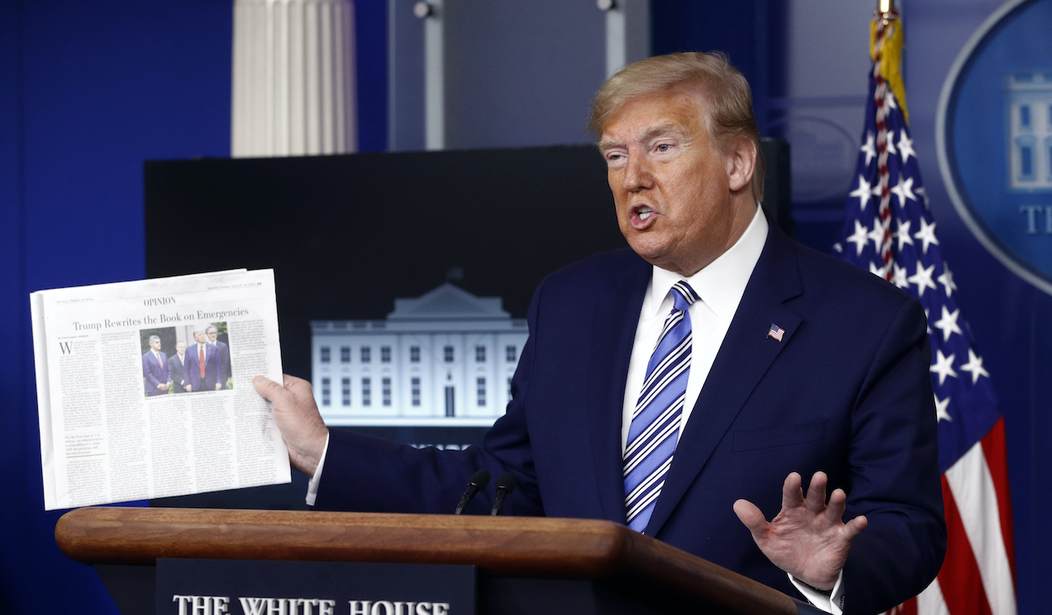
A recent opinion piece in the Wall Street Journal reported COVID-19 research results from a Stanford University team. Based on a sampling from Santa Clara County, the team estimates fatality rates of COVID-19 in the range of 0.12% to 0.2%, approximately the range of seasonal flu fatalities and less than a 10th of the initial COVID-19 estimates.
Certainly, this is no final word. But data and what we are observing points very strongly to the severity of this threat being nothing like what we were initially led to believe.
If indeed the risk involved is not all that much higher than the risk of getting into a fatal auto accident or the seasonal flu -- which could well be the case now -- how many would tolerate what is going on?
We're also seeing that national averages don't tell us much. Regional differences are huge.
Of the 42,425 casualties nationally, 45% are in New York.
Without New York, the national number would be 23,334. So total COVID-19 casualties in 49 of 50 states now total far less than our total annual auto casualties nationwide.
Two conclusions jump out, and they are both consistent with President Donald Trump's latest guidelines.
First, local realities are so disparate that governors and local authorities must lead management of this crisis in their region.
Second, the risks are far less than what was initially thought. We must adjust and prudently start opening our economy.
The price of what we are now doing is astronomical.
Per Hoover Institute economist John Cochrane, "20 million people, more than 1 in 10 US workers, lost their jobs in the first month of this shutdown. That's more than the entire 2008 recession."
"Most guesses say that companies have one to three months of cash on hand, and then fail," he added.
And in the end, the government lending and spending programs designed to get us through this will add, according to Cochrane, $4 trillion of new debt on the American people. That's $12,121 for every man, woman and child in the country.
We never have perfect information. The point in life is always to make intelligent decisions under uncertainty.
Just as one-size-fits-all policy coming out of Washington doesn't work in dealing with poverty, housing or education, it doesn't work in battling this health crisis.
Limit federal bureaucratic control of our lives and engage local government. Focus on individual freedom and personal responsibility. It's what we need now. It's what we have always needed.
Star Parker is president of the Center for Urban Renewal and Education and author of the new book "Necessary Noise: How Donald Trump Inflames the Culture War and Why This is Good News for America."


Join the Conversation
VIP members get the ability to comment on articles.