







The United States is now two months into a nearly nationwide shutdown due to the COVID-19 pandemic. The lives of every American have been changed to some degree, with tens of millions working from home in an effort to help “flatten the curve.” Millions of others are out of work completely, leading to record-high unemployment claims.
Government policies have not been immune to change either, especially in the immigration world. In fact, as one of the first actions the United States took in order to slow the spread of COVID-19, President Trump issued an executive order limiting travel from hard-hit nations. And despite the mainstream media and many prominent Democrat officials condemning the move, almost every major nation has followed the President’s lead implementing public-health-oriented travel restrictions and border controls.
Since then, additional immigration-related COVID-19 policy changes have been put in place. Many of these changes were made out of concern for the health of not only U.S. citizens and immigration officials, but also to protect those who are accused of breaking our immigration laws. The United States prides itself on ensuring that those who break our laws not only have their day in court, but are also held in humane conditions until and after those court proceedings take place.
As noted by the Federation for American Immigration Reform (FAIR), some of these policy changes were long overdue, and should seriously be considered as long-term solutions to persistent problems. Others were hastily constructed responses to extreme circumstances. Those should be reversed at the first opportunity.
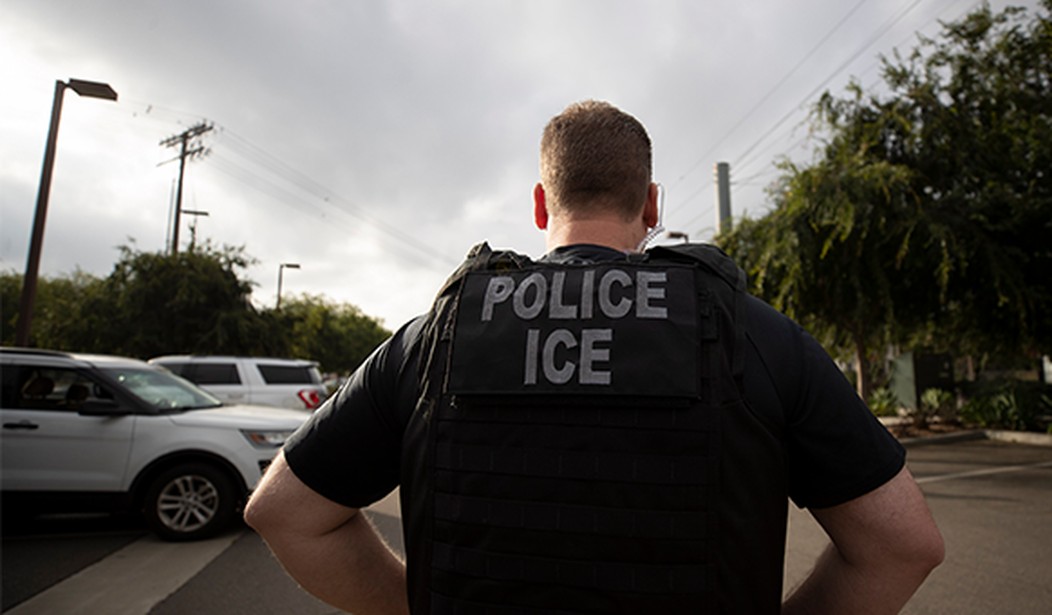
Examples of policies that should be ended ASAP include the closure of many immigration courts, ending deportation flights to some countries, and the scaling down of interior enforcement actions by U.S. Immigration and Customs Enforcement (ICE). All three of these policies have the potential to negatively impact the integrity of our immigration laws. Immigration courts are already severely backlogged. Adding to that backlog by keeping courts closed tells migrants that even if they are apprehended, it will probably be years before a judge hears their case. Shutting down deportation flights only compounds that problem. And scaling back interior enforcement sends a bad message that it’s OK to break our immigration laws.
While these are supposed to be temporary changes designed to protect people from COVID-19 infection, the mass-immigration lobby has made it clear that it has no intention of ever seeing these temporary measures disappear. Just as they refuse to see the “temporary” in programs like Temporary Protected Status (TPS), open-border activists can certainly be expected to manufacture outrage when the time comes to get back to immigration business as usual.
By contrast, there are some “temporary changes” that should have already been in place for some time, such as the Trump administration’s attempts to limit the importation of foreign workers while so many Americans are unemployed due to the COVID-19 outbreak. On March 20, United States Citizenship and Immigration Services (USCIS) announced “the immediate and temporary suspension of premium processing service for all Form I-129 and I-140 petitions until further notice due to Coronavirus 2019 (COVID-19).”
However, even before this pandemic caused the national unemployment rate to spike up to nearly 15 percent – the highest since the Great Depression – it made absolutely no sense to keep importing hundreds of thousands of foreign workers every year to compete with American labor. For example, another recent study conducted prior to the COVID pandemic found that nearly 30 percent of all STEM positions are now filled by foreign-born workers. This is despite the fact that only one-third of native-born Americans with a STEM degree currently hold a job in their preferred field.
Sometimes, during unexpected extreme circumstances, policy decisions can be made in the heat of the moment. Typically, those decisions shouldn’t survive too far beyond the crisis they were meant to address. Other times, difficult circumstances force us to rise to the challenge and enact long-overdue policies that should have been put in place long ago. If there is one immigration lesson that we should learn from the COVID-19 pandemic, it’s that we now have a prime opportunity to ensure that our immigration policies preserve American interests. And only those new measures which support that goal should still be on the books when we have finally succeeded in flattening the epidemic curve.

Join the Conversation
VIP members get the ability to comment on articles.