





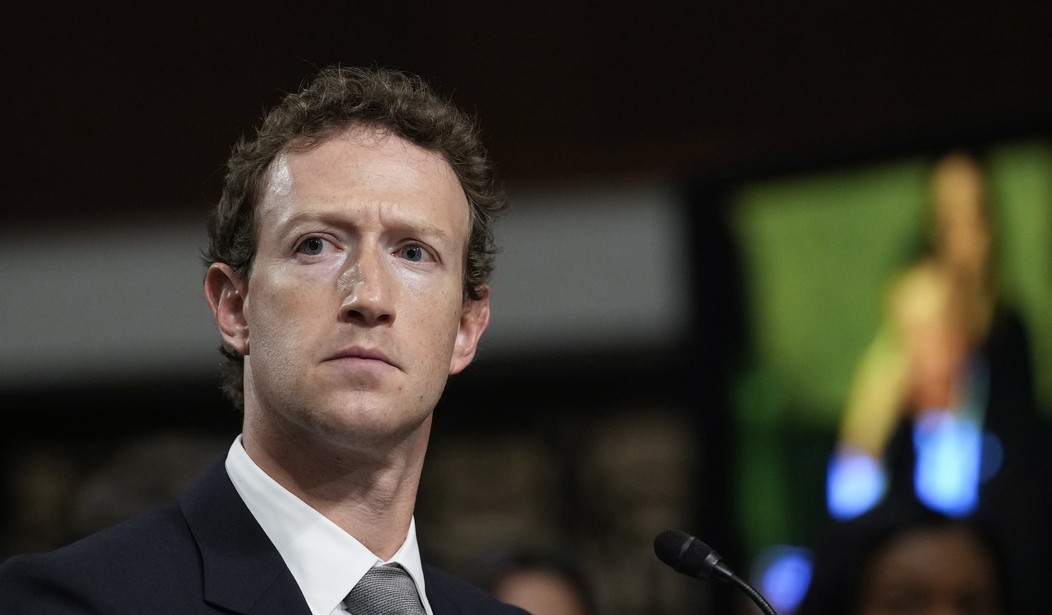
In a shocking about-face, Mark Zuckerberg and Meta have announced their major policy shift to loosen content moderation standards in favor of free speech. The move would be a remarkable reversal from the same company that once banned Donald Trump, suppressed countless conservatives, deplatformed opposition to the left, censored MAGA voices, and spent millions of dollars campaigning against Trump including massive ground game GOTV expenditures. While this newfound embrace of open dialogue is a welcomed change, it is important to recognize the strategic calculations behind the move rather than take it as a pure philosophical awakening or conversion.
In the video message outlining Meta’s policy change, Zuckerberg pointed to themes he touched on as far back as his 2019 Georgetown University speech, where he warned against the dangers of traditional gatekeepers controlling the flow of information. He also cited last November’s election as a “cultural tipping point” for less restrictive content policies. But these statements gloss over years of aggressive content suppression and the silencing of dissenting viewpoints. For many Americans, especially conservatives, this shift signals a belated admission that Meta’s previous moderation policies stifled the marketplace of ideas.
While this policy reversal should be applauded, let’s not ignore the timing and the incentives at play. Meta’s newfound devotion to free expression comes as Elon Musk’s X continues to position itself as a bastion of free speech. Musk’s platform offers Trump direct access to millions of followers and unique leverage with the White House. Although cracks in the Musk-Trump relationship have appeared, the door remains wide open for competition. Zuckerberg’s pivot may be as much about trying to reclaim lost ground as it is about embracing principled moderation.
Appointing Dana White to Meta’s board is another fascinating strategic maneuver. Known for his alignment with Trump and a no-nonsense leadership style, White’s inclusion may be an overture to right-leaning audiences and an acknowledgment that free-market principles and diverse viewpoints need to be part of Meta’s DNA if it hopes to rebuild trust. The move hints at a broader recognition within Silicon Valley that heavy-handed censorship has alienated key user segments and weakened public confidence.
Meta’s decision also reflects a broader cultural and legal shift. In August, Zuckerberg criticized the Biden administration’s pressure campaign on Covid-19 misinformation, describing it as an effort to “censor” content. This marked a sharp departure from Meta’s earlier compliance with government directives. Also, the timeline for Zuckerberg’s two big justification events doesn’t really support censorship.
Meta’s actions over the last few years including extending Trump’s suspension, fact-checking conservative content into oblivion, and bending algorithms to throttle right-leaning viewpoints were not merely business decisions gone awry. These were calculated political moves to align the companies with progressive ideologies while betraying its founding roots as a neutral platform for free speech. These policies eroded public trust, drove users to platforms like Truth Social, TikTok, new alternate new media, and reformed X. All these invited serious conversations about congressional investigation hearings and regulatory reform, including the potential repeal or reform of Section 230 of the Communications Decency Act.
Section 230 shields platforms from liability for user-generated content—a protection designed to promote free expression while allowing for responsible moderation. Yet, Meta and other tech giants twisted this protection into a cudgel for ideological suppression. It is no coincidence that bipartisan calls for Section 230 reform have grown louder, or that a second Trump administration could bring sweeping changes to how Big Tech operates. Zuckerberg’s course correction, therefore, is as much about preempting future legal challenges as it is about rebranding Meta as a champion of free speech.
Zuckerberg’s belated rediscovery of the virtues of open dialogue mirrors Elon Musk’s bold moves at X, where free speech principles have been restored and trust among users rebuilt. The contrast between these approaches highlights the broader battle for the soul of social media.
If Meta truly intends to follow Musk’s example, it must demonstrate a sustained commitment to neutrality and transparency, not merely tactical positioning. If Zuckerberg is serious about change, he must show a commitment to restoring banned accounts, dismantling politically motivated algorithms, and embracing policies that treat all viewpoints equally.
Free speech is good business. Neutral platforms thrive when they prioritize open debate and resist the temptation to play arbiter of truth. When media starts censoring and pushing political agendas it becomes boring and annoying to the point of turning it off. As Meta embarks on this new chapter, it would do well to remember the principles that made it a global powerhouse in the first place. Anything less will be seen for what it likely is, a self-serving bid to stay relevant and avoid the regulatory hammer that is on the way to Washington.


Join the Conversation
VIP members get the ability to comment on articles.