





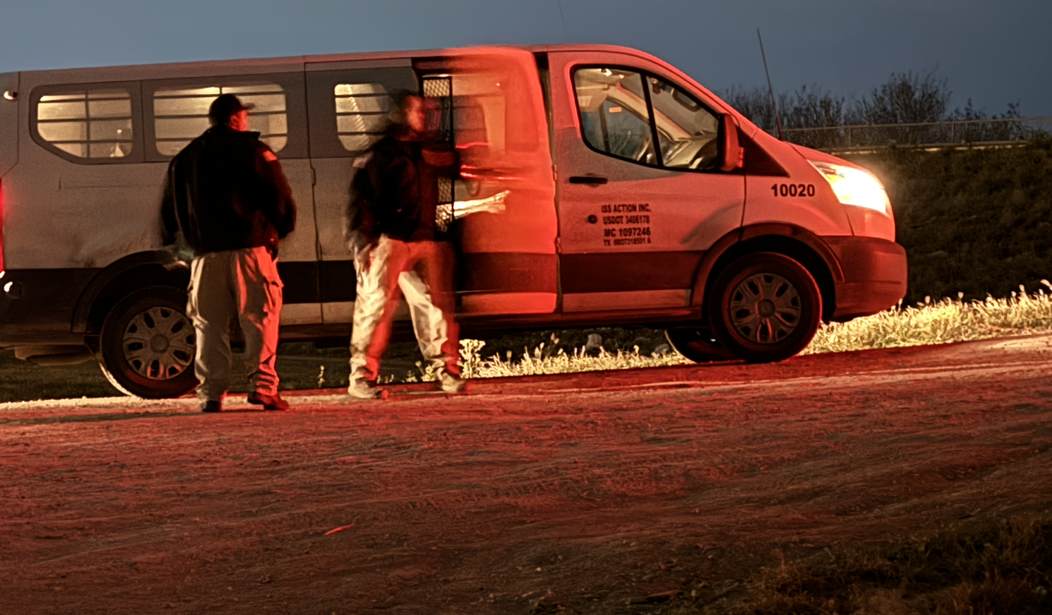
Cartels, trafficking networks, and hostile foreign actors do not pause operations based on American election cycles or changes in political leadership.
Their operations continue to impact communities along the southern border and throughout the United States every day, keeping border enforcement and defending our homeland at the center of national security conversations.
As a result, states are finding themselves on the front lines of those challenges.
That is the backdrop behind a House resolution authored by U.S. Republican Rep. Jodey Arrington (TX-19).
At its core, the resolution, HR 50, “affirms states’ constitutional authority to defend themselves when the federal government fails to secure the border.”
Earlier this month, the Texas GOP Caucus backed Arrington's resolution, reinforcing growing recognition that homeland security is not only a federal responsibility, but that states also play a critical role in protecting their communities.
In a television interview earlier this week, U.S. Republican Rep. Beth Van Duyne (TX-24), a member of the Texas GOP Caucus backing HR 50, discussed how Texas faced legal challenges during the Biden administration while attempting to protect its citizens from the impacts of the administration’s open border policies and “prevent this onslaught of illegal immigration coming into our state.”
Her comments reinforce why states cannot afford to sit on the sidelines when public safety and national security are at stake.
State authority is not a new concept; it is explicitly preserved in the U.S. Constitution. Article IV, Section 4 highlights the federal government's responsibility to “protect each [state] against invasion,” whereas Article I, Section 10 preserves states’ authority to act when “actually invaded” or facing “imminent danger” that “will not admit of delay.”
Those provisions were not written accidentally. The Framers understood that federal leadership could fail, hesitate, or prove incapable of responding to emerging threats in real time. They intentionally preserved the sovereign authority of states to defend their people when facing invasion or imminent danger.
Congressional leaders deserve credit for recognizing the constitutional authorities states have long possessed not only under the U.S. Constitution but also the Texas Constitution, which empowers the governor to call forth the militia “to repel invasions.”
That recognition matters regardless of the current state of play at the border, or which administration is in office. The reality is that the United States continues operating in an evolving threat environment in which cartels, trafficking networks, and hostile foreign actors seek to exploit vulnerabilities along both the border and within the country itself.
The threat is not hypothetical, and it is not temporary. It is evolving faster than Washington’s willingness or ability to respond to it. States cannot afford to misunderstand or underutilize the authorities available to them.
And this debate transcends far beyond immigration policies.
The White House’s 2026 National Drug Control Fact Sheet warned that transnational criminal organizations are exploiting America’s borders to traffic lethal substances and poison communities across the country. Those threats are shaping public safety and homeland security conversations nationwide, not only in border communities.
That is exactly why state authorities matter. The Texas Public Policy Foundation has long argued that states possess constitutional authorities and responsibilities in homeland defense that extend beyond simply waiting for federal action. In our “Texas Homeland Defense” report, we outline the constitutional and legal framework preserving the sovereign authority of states to act when facing invasion or imminent danger. That distinction matters because the Constitution was designed not only to establish federal responsibilities but also to ensure states retained the ability to defend their people and territory when necessary.
We are grateful to see Congress increasingly recognize those authorities as a legitimate and necessary component of homeland security, particularly in support of the Trump administration’s broader efforts to restore border security and confront transnational threats.
The late Supreme Court Justice Antonin Scalia raised similar concerns in Arizona v. United States, warning the Court was “depriv[ing] States of what most would consider the defining characteristic of sovereignty: the power to exclude from the sovereign’s territory people who have no right to be there.”
More than a decade later, that warning feels increasingly hard to ignore.
Questions surrounding state sovereignty and homeland defense are no longer theoretical debates happening only in courtrooms or policy circles. Communities across the country are increasingly confronting the real-world consequences of weakened sovereignty, criminal infiltration, and persistent threats to public safety.
Those challenges are increasingly shaping conversations surrounding public safety, law enforcement resources, and homeland security nationwide.
As those threats continue evolving, states cannot afford to treat homeland security as someone else’s responsibility.
Selene Rodriguez is a campaign director for the Secure and Sovereign Nation campaign at the Texas Public Policy Foundation.
Editor’s Note: Do you enjoy Townhall’s conservative reporting that takes on the radical Left and woke media? Support our work so that we can continue to bring you the truth.
Join Townhall VIP and use promo code FIGHT to receive 60% off your membership.


Join the Conversation
VIP members get the ability to comment on articles.