







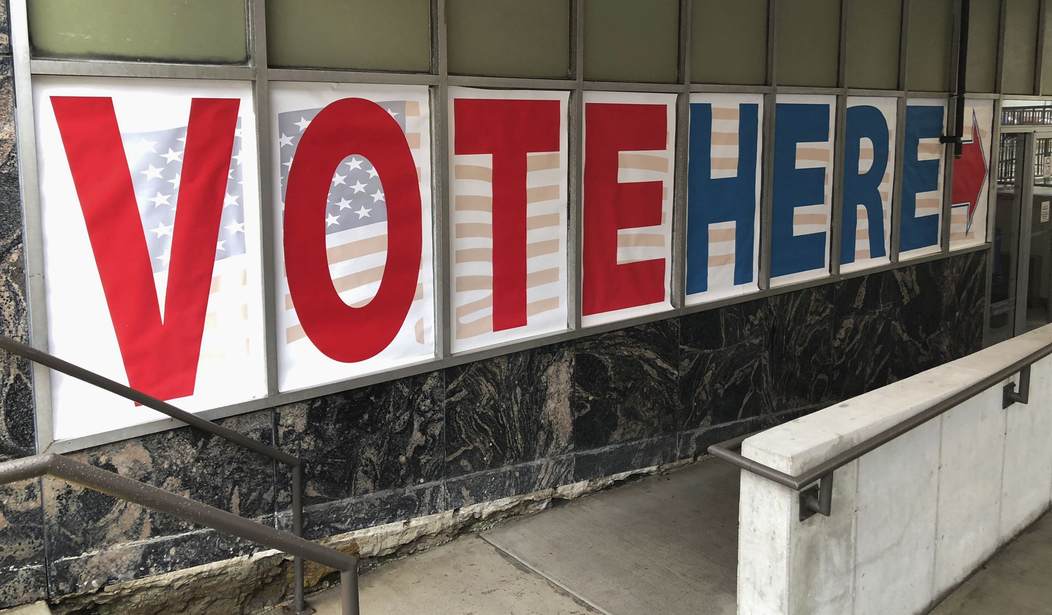
Conventional wisdom says Republicans mostly benefit from the votes of church-going people. But 2024 might add a wrinkle to the GOP’s calculus if the results of a new survey are to be believed. The poll of 3,000 self-identified people of faith shows that nearly half of them plan to sit-out next month’s election.
Only 51% of respondents to the study by the Cultural Research Center at Arizona Christian University said they were likely to vote in November. Extrapolating these data across the national population, that’s about 104 million “people of faith” who won’t exercise their right to vote. It’s a staggering number of people. Putting this in perspective, the total number of ballots cast in the 1992 presidential election was 103,745,865. It’s like an entire nation deliberately staying away from the polls this year.
The reasons for not voting are not unique. The internals of this survey show the biggest reason for Christians opting-out (68%) is a simple lack of interest in politics. Another 57% dislike both of the leading presidential candidates while 52% don’t think their votes matter.
Arizona Christian University President Len Munsil identified several takeaways from the survey, saying that people of faith “are longing for their local church to instruct them on how to think biblically about policy and politics.” Munsil, the 2006 GOP nominee for Arizona governor, further observed that Christians, “don't want to be told how to vote, but they do want to know why they should vote, and how to view political issues from a biblical framework.”
The intersection of politics and religion is littered with landmines. There is no direct parallel between modern American politics and the Bible’s millennia-old precepts of government and civics, making scripture ripe for questionable interpretation. I’ve heard people argue that sex work should be legalized because Jesus associated with a prostitute, and that the welfare state should be greatly expanded because the Bible says we’re to care for the poor.
Complicating matters is that not all clergy can be trusted. The Christian Post reported earlier this year that the Lutheran church attended by Democrat vice presidential nominee Tim Walz recently used a modified version of the Lord’s Prayer which opened with, “Our guardian, our mother, our father in Heaven, hallowed be your name.” I’m no theologian but it seems ill advised to re-write the words spoken by Jesus Christ in his Sermon on the Mount.
Biblical interpretations aside, many contemporary political issues have little or no precise correlation with biblical issues from thousands of years ago. Jesus said “render to Caesar the things that are Caesar’s,” but that doesn’t help much with setting corporate tax rates or taxing unrealized capital gains. Leviticus instructs, “When a stranger sojourns with you in your land, you shall not do him wrong,” which doesn’t address broader questions of illegal immigration or national sovereignty.
One issue with more direct biblical parallels is abortion. Among the obligations laid out in the book of Exodus is one reading, “When men strive together and hit a pregnant woman, so that her children come out… if there is harm, then you shall pay life for life.” This ancient statute is pretty clear when it comes to protecting a pregnant woman’s child.
The prophet Jeremiah writes that the word of the Lord came to him saying, “Before I formed you in the womb I knew you, and before you were born I consecrated you.” The 139th Psalm praises God with the words, “For you formed my inward parts; you knitted me together in my mother's womb.” People can debate the propriety of abortion but when God makes sacred the children He knitted together in the womb, is it wise to be killing them as a matter of public policy?
If Christians or other people of faith are looking for a perfect political candidate, they will be disappointed. They do not exist. But should the absence of perfection in a politician or a political process dissuade someone from participating in an election? Inasmuch as the entire human world is sinful and corrupt, intellectual honesty suggests this way of thinking precludes any participation in any secular activity. Of course nobody does that so why should the electoral process be subject to greater disdain than every other imperfect aspect of our imperfect lives?
It’s easy to understand how frustration can lead people not to vote. But by not voting, people of faith are forgoing the opportunity to “form a more perfect union,” as hoped for in the preamble of the Constitution. We will never have a perfect union but it’s a tragedy when we stop trying. As Luke the physician writes in the Acts of the Apostles, “always take pains to have a clear conscience toward both God and man.” We can vote for imperfect people and still have a clear conscience.

Join the Conversation
VIP members get the ability to comment on articles.