





[Editor's note: this piece is co-authored by Sarah Montalbano and Isaac Orr. Sarah Montalbano is an energy policy analyst, and Isaac Orr is vice president of research at Always On Energy Research, a nonprofit modeling firm.]
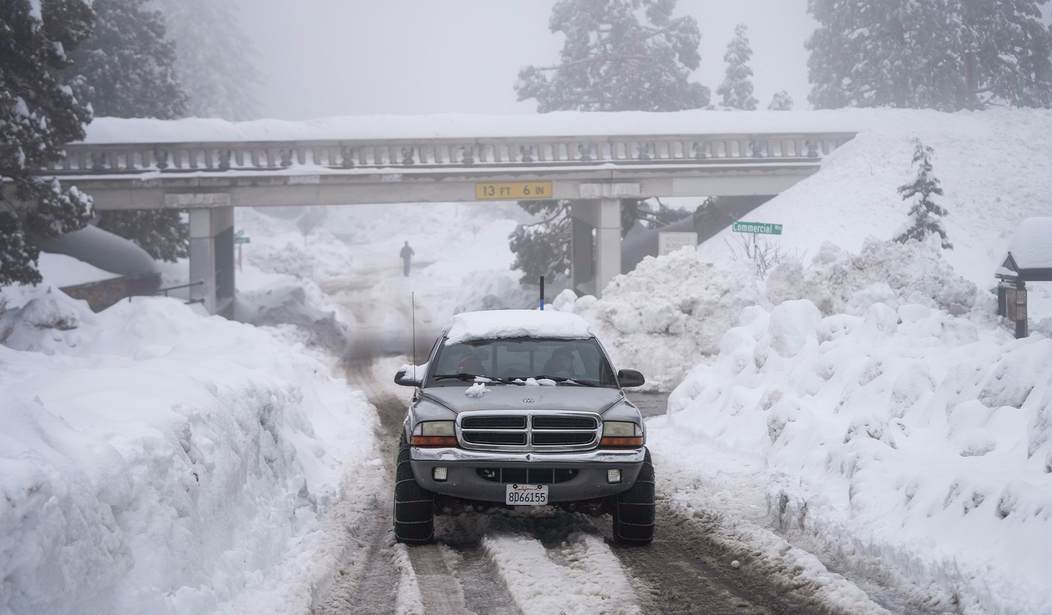
Fresh off the heels of Winter Storm Fern, the North American Electric Reliability Corporation (NERC) released an alarming 10-year outlook about the U.S. electric grid this week. It’s worse than NERC’s last prediction: More than half of the electric grid is going to be at a high or elevated risk of blackouts within the next five years due to growing demand, accelerating retirements of reliable resources, and increasing reliance on weather-dependent wind, solar, and battery storage.
The good news is that it doesn’t have to happen this way. Reliable, dispatchable coal-fired generation can stay on the grid longer and run more frequently than the NERC report expects, thanks to Trump administration policies. Utilities must take Winter Storm Fern as a warning and stop shutting down reliable generation if they want to avert blackouts and protect families from rising costs.
NERC expects electricity demand, driven by artificial intelligence and the digital economy, to “continue to climb higher than at any point in the past two decades,” with summer peak demand predicted to be 69 percent higher than last year’s projection. Unfortunately, “dispatchable resources are currently leaving the system faster than they can be replaced with other dispatchable technologies.” In much of the U.S., NERC expects new resources coming online soon to be predominantly wind, solar photovoltaic, and battery storage.
The U.S. can’t afford to retire more coal-fired generation without more reliable, dispatchable replacements coming online — not weather-dependent wind and solar. For the week of Winter Storm Fern, coal-fired generation increased 31 percent from the prior week, and natural gas generation increased 14% to meet demand. Coal is uniquely valuable to the grid during winter weather because its fuel is stored on-site, unlike natural gas, which must travel through pipelines in real-time.
Despite wind and solar capacity being nearly 30 percent of nameplate capacity across the U.S., on January 25, they were only a combined 10 percent of actual generation — and they lulled at precisely the times they were needed most. In the Northeast, where natural gas pipelines have been sidelined, utilities were predominantly burning oil between midday January 24 and early on January 26.
This doesn’t bode well for future winter storms that will strain the grid and lead to blackouts. But NERC’s predictions are based on announced generator retirements — which means utilities have a chance to reverse course.
The Trump administration has been a vocal supporter of coal-fired generation. In addition to Mr. Trump’s executive orders, the administration is repealing 2024 Biden rules regulating carbon dioxide emissions on power plants that would have forced coal plants to shut down in the next five years and hampered the economics of new natural gas plants. These rules will soon be finalized, and utilities and states would be smart to start planning now for the possibility that they will be able to keep running their coal plants and construct new natural gas.
That is, if state policy choices allow them to. States have broad authority to determine their generation portfolios, set prices, and establish mandates for wind and solar generators. Always On Energy Research, in collaboration with the Institute for Energy Research, found that the five states with the most expensive electricity are blue states and have established mandates requiring 100 percent of their power to come from renewable or carbon-free sources in the coming decades. Unless blue state legislators soften or repeal these requirements, consumers will be stuck paying more for electricity sources that weaken the grid and risk blackouts.
The NERC report demonstrates clearly that every megawatt of existing coal-fired generation is needed to meet growing electricity demand and bolster the grid in times of peak demand like Winter Storm Fern. The Trump administration knows that coal-fired generation is important, and it is time that utilities and state policymakers recognized the same.
Editor’s Note: Do you enjoy Townhall’s conservative reporting that takes on the radical left and woke media? Support our work so that we can continue to bring you the truth.
Join Townhall VIP and use promo code FIGHT to receive 60% off your membership.


Join the Conversation
VIP members get the ability to comment on articles.