





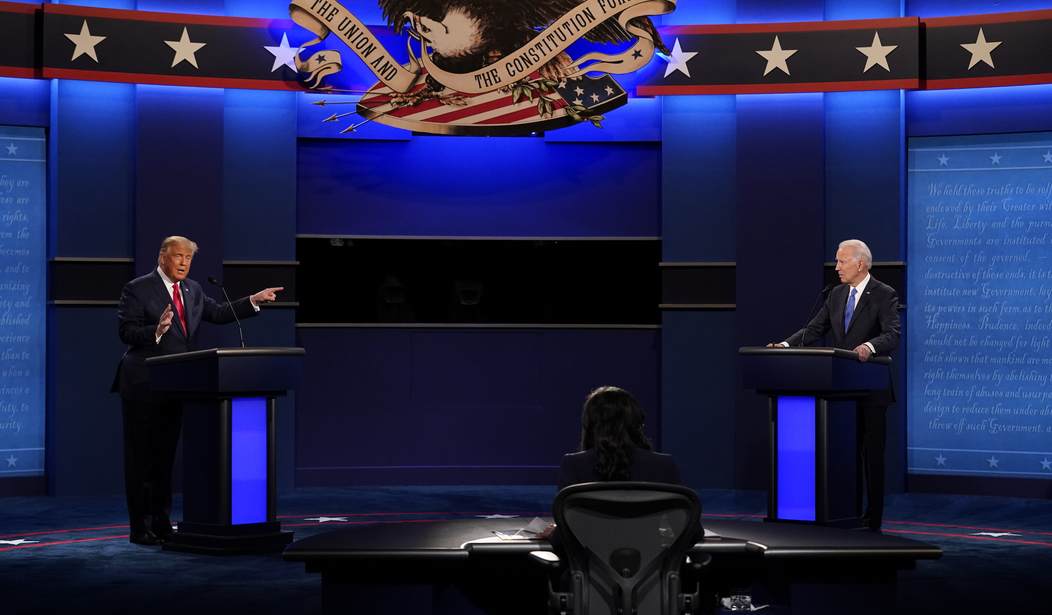
Safe to say, not too many Americans will change who they are voting for after last night’s debate. Unlike the previous debate, however, the candidates had some interesting things to say about policy. Biden accused Trump of trying to strip away healthcare coverage for more than 20 million Americans by attempting to repeal the Affordable Care Act (ACA; aka Obamacare). Meanwhile, Trump accused Biden of trying to eliminate private insurance for more than 200 million Americans.
The expensive truth is that both candidates are pedaling big-government policies that will hike prices and decrease patient choice if enacted. Biden and Trump may not see eye to eye on much, but they must agree on expanding choice and competition in the U.S. healthcare system.
Slated to cost an estimated $750 billion in extra spending over the next 10 years, Biden’s healthcare plan would be astoundingly expensive. Biden’s “Obamacare on steroids” approach would significantly increase subsidies for state healthcare exchanges and set up a “public option” to fill in present-day gaps in health coverage. As policy experts pointed out a decade ago during the original debate over Obamacare, it’d be next to impossible to design a public option in a way that wouldn’t drive private insurers out of business. After all, this taxpayer-funded entity could set healthcare premium prices far lower than any company ever could. In the private sector, setting prices below healthcare and administrative costs will result in near-instant bankruptcy.
A government-run organization, though, could simply tap taxpayers for a bailout if their prices prove to be too low. But even this slow-motion “public option” disaster would be a libertarian pipedream compared to what we’d actually get under a Biden administration. The former Vice President doesn’t operate in a policy vacuum, and policy advisors close to him such as running mate Sen. Kamala Harris (D-Calif.), are likely to exert significant influence on any Biden agenda. Before dropping out of the race and endorsing Biden, Harris supported a Medicare for All plan that envisioned, “10-year transition plan away from the current healthcare system, at the end of which, “every American will be a part of this new Medicare system. They will get insurance either through the new public Medicare plan or a Medicare plan offered by a private insurer within that system.” This private component is supposed to be modeled after Medicare Advantage, which consists of plans subscribed to by seniors and sponsored (at least partially) by private insurance companies.
The Medicare Advantage program does offer some improvements relative to traditional Medicare plans, since private companies can compete with one another albeit in a strictly regulated framework. But, make no mistake, these “private” Medicare plans are still funded by taxpayers and private sponsors are strictly curtailed in what healthcare options they can offer patients. If Harris gets her way or at least has significant input in “Bidencare,” private insurance would likely remain in name only. When bureaucrats have the ultimate say in what plans can offer and taxpayers foot the bill, it’s hard to call the result a free market.
Trump’s healthcare agenda is no walk in the park either. Despite extolling the virtues of markets in medicine, the President has tried to price-fix critical medications via executive fiat. Instead of getting drug prices under control, these actions will lead to widespread shortages if continued. Innovation will also take a major hit as companies may be discouraged from spending on R&D for the next generation of drugs. Europe went down the road of price-fixing medications fifty years ago, and medication availability and innovation took a significant hit as a result.
Both candidates need to ditch the temptation to get the government further involved in healthcare. Rather than embracing bureaucratic tinkering and sky-high tax bills, Biden and Trump should commit to keeping costs under control by encouraging consumers to shop around via tax-free Health Savings Accounts. For struggling Americans who cannot afford critical healthcare purchases, the government can lend a helping hand and create a limited system of need-based vouchers. That system would work far better – and cost far less – than the noxious meddling in medicine proposed by both candidates.
Ross Marchand is a senior fellow for the Taxpayers Protection Alliance.


Join the Conversation
VIP members get the ability to comment on articles.