





There are stretches of old Roman roads that still exist—their stones worn smooth by centuries—cutting quietly through fields long after the empire that built them has vanished. You can stand on them today and feel something unsettling: not just history beneath your feet, but continuity. We may be living on such a road now.
There are moments in history when a civilization does not collapse—it simply runs out of clarity. Its structures remain. Its language persists. The pathways—moral, political, intellectual—are still visible. And yet, fewer and fewer people can say where they lead, or why we trusted them in the first place.
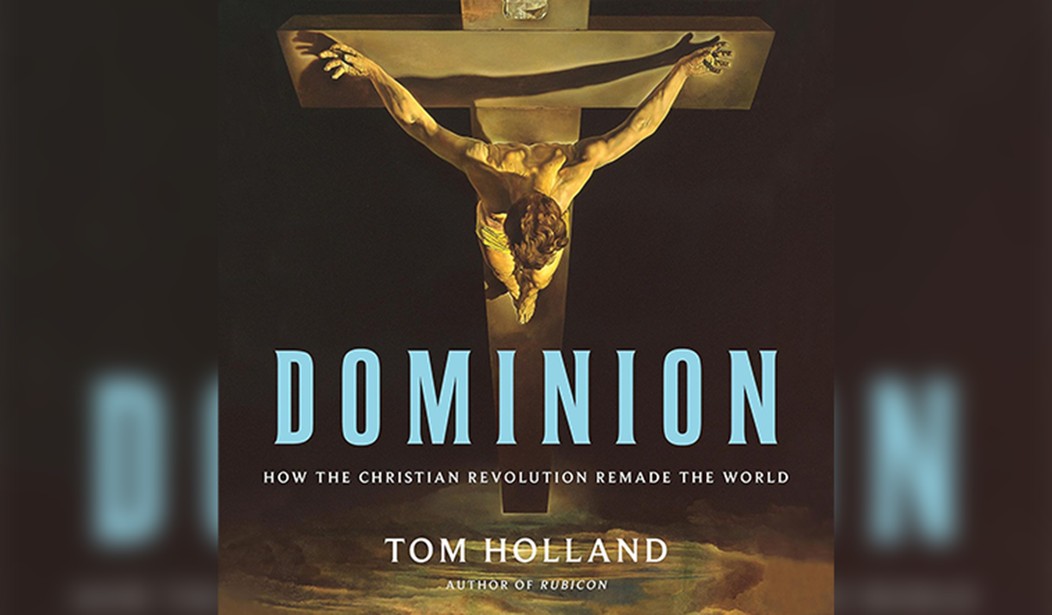
The modern West increasingly feels like such a civilization. It moves along inherited roads, guided by moral instincts it did not consciously choose, sustained by a vision of human dignity it struggles to explain. It is into this disorientation that Tom Holland’s Dominion: How the Christian Revolution Remade the World enters—not simply as history, but as recovery.
Holland’s central claim is clear: the West’s concern for the weak, its suspicion of power, and its insistence on individual dignity are not universal truths. They are the legacy of Christianity.
There is real force in that argument. But to understand it fully, we have to widen the frame. The West is not the product of Christianity alone. It is the convergence of three worlds: Greek thought, Roman order, and a Christian inversion that transformed both. If we are walking on ancient roads, then those roads were first imagined by Athens, engineered by Rome, and redirected—decisively—by the message of the cross.
The Greeks gave the West its intellectual grammar. Plato asked what it means to know truth and live well, grounding morality in a transcendent Good beyond power or convention. Aristotle brought that vision into lived experience, tying human flourishing to virtue, discipline, and rational order. By the time of Alexander the Great, Greek language and thought had spread across the Mediterranean, shaping the very world into which Christianity would emerge.
Rome, in turn, made that world durable. If Greece provided the ideas, Rome built the system. Its genius was organization—law, governance, infrastructure. Its roads connected vast territories, allowing not only armies and commerce to move, but ideas. The empire did not just dominate space; it unified it.
And then something happened on those roads that no one expected.
Into this Greek-Roman world stepped Paul the Apostle—a figure uniquely positioned between cultures. A Jew shaped by Scripture, yet fluent in Greek thought and protected by Roman citizenship, Paul did more than translate ideas. He carried a message that overturned the assumptions of the world he moved through.
In his letter to the Philippians, he describes Christ not as a ruler who ascends, but as one who descends—“emptying himself” and taking the form of a servant. This is not just theology. It is a direct challenge to the moral logic of the ancient world.
Rome understood power as visible, structured, and hierarchical. Even its moments of humility—a general sharing hardship with his troops—reinforced the system they softened. But Paul’s claim is different. Christ does not lower himself as a gesture. He does so as a revelation. The king becomes the lamb.
This inversion has no true parallel in the classical world. Greek literature knew reversal, but not this. It did not redefine power; it played within it. What Paul introduces is something more radical: strength is no longer what rises, but what gives itself away. Glory is no longer what is displayed, but what is endured.
This is the turning point Holland is trying to name. Christianity did not simply enter the ancient world—it reoriented it. It took the moral and philosophical achievements of Greece and Rome and turned them inside out. And in doing so, it reshaped the moral imagination of the West.
From that point forward, the pattern holds. Augustine of Hippo draws on Plato but redirects the search for truth toward a God who enters history. Thomas Aquinas retrieves Aristotle and integrates reason with revelation. Even the Renaissance, often seen as a return to classical antiquity, unfolds within a world already transformed by Christianity.
Holland is right: the West remains saturated with Christian assumptions—even when it rejects them. But those assumptions travel within structures that are also Greek and Roman. Our moral language is layered. Our inheritance is threefold.
And this is where the modern crisis emerges. Friedrich Nietzsche saw clearly what was at stake. His critique of Christianity as a “slave morality” was not merely an attack—it was an acknowledgment. He recognized that the elevation of the weak and the suspicion of power were not inevitable truths, but historical developments. And what is historical can be lost.
A civilization that forgets the source of its moral vision risks losing not just its memory, but its direction.
Which brings us back to the road.
A road is not just a path—it is an orientation. It implies a destination, even when that destination is no longer consciously believed. The West still walks roads built by Greece, structured by Rome, and redirected by Christianity. But it increasingly questions where those roads lead.
That is why Dominion matters. It reminds us that the road had a beginning. But it also leaves us with a deeper question: can a civilization continue to move forward if it no longer believes in the destination those roads were built to reach?
For now, we continue on. But the question is no longer behind us.
It lies beneath our feet.
Editor’s Note: Do you enjoy Townhall’s conservative reporting that takes on the radical Left and woke media? Support our work so that we can continue to bring you the truth.
Join Townhall VIP and use promo code FIGHT to receive 60% off your membership.


Join the Conversation
VIP members get the ability to comment on articles.