





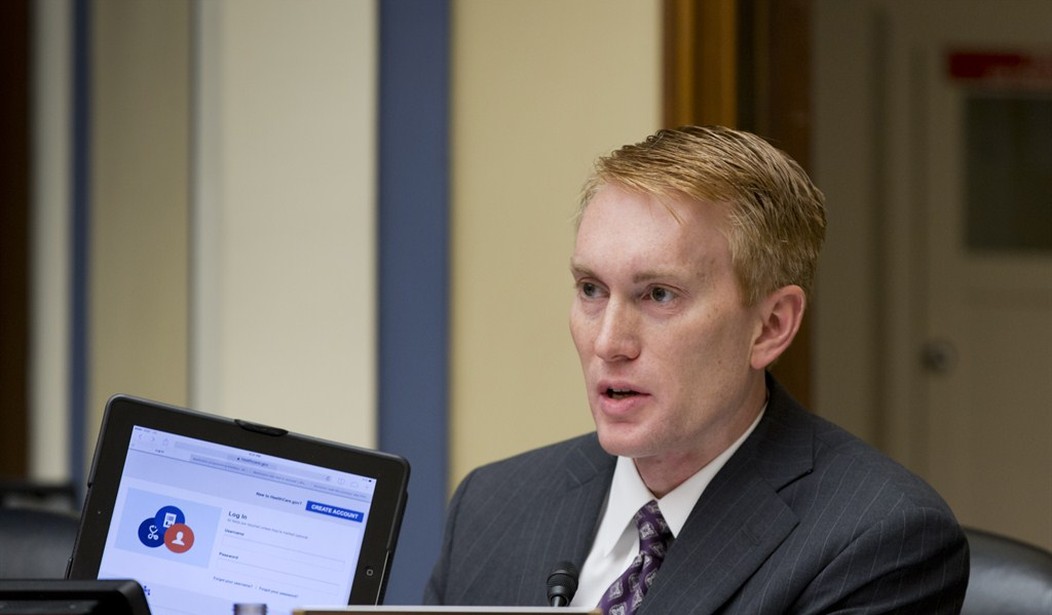
Last week, U.S. Senator James Lankford of Oklahoma released his first annual Federal Fumbles report, a list of 100 examples of government waste at its worst. Following the document’s release, many of the more amusing “fumbles” have made national headlines. Yet, while these problematic programs have garnered the most media attention, to conclude that the study’s greatest attribute is the illumination of questionable spending is to miss the point of the report altogether. These specific samples are only a symptom of a greater problem.
Government programs, like those listed in Lankford’s report, that so clearly violate the trust of American taxpayers, can only exist in a system deprived of meaningful accountability. While the causes of our current state are numerous, one factor is notable, outside of the consistent (and vital) debate concerning the proper size and scope of government: the nature of how America is governed in the modern age.
This element is an important point in the Senator’s report, but has gone unnoticed by many news outlets and commentators. Lankford notes that while President Obama signed 224 bills into law last year, federal agencies published 3,554 final rules. This translates to 16 new rules for every law passed by Congress. These regulations perpetuate the cycle of government waste and abuse that infuriate average citizens by shifting responsibility to unelected bureaucrats.
Today, America is governed, at least in practice, by administrative agencies that are unaccountable to the people. This shift in authority occurs in two primary ways. First, the executive branch avoids congressional decision-making and approval though agency actions. One timely example of this overreaching authority is the EPA’s Clean Power Plan. This rule requires states to cut carbon emissions 32 percent below 2005 levels by 2030. Opponents of the rule argue that the EPA exceeded its legal authority under the Clean Air Act. Ultimately, the Supreme Court will likely decide that question. At the very least, however, the EPA’s plan makes a significant policy decision, to mandate emission reductions and to inflict higher utility costs on millions of Americans without the approval of their elected representatives.
Second, some scholars have observed that Congress consistently concedes its policymaking authority to administrative agencies, essentially legislating through delegation. One example of this practice is the Affordable Care Act (ACA). This law is on the minds of many Oklahomans because of a recent report from the Department of Health & Human Services (HHS) announcing that premiums would increase on average by 7.5 percent among the 37 states using the federal exchange for silver insurance plans, the benchmark for determining premium subsidies. Oklahoma will see the largest premium increase in the nation at 36 percent.
Even beyond the law’s punitive costs, however, the ACA is a classic example of how Washington often legislates in modern times. Since passage, federal agencies have added thousands of pages of Obamacare regulations, growing to many times the length of the original legislation. Thus, the President’s healthcare overhaul is not a result of lawmaking, at least in the way the Framers intended, but instead is, at heart, the product of agency rulemaking and administration.
These practices taken together help create, or at least allow, many of the systemic problems illustrated in Senator Lankford’s report. Even though the examples in Federal Fumbles account for a small percentage of federal spending overall, they are representative of a much larger issue. The point is power – the power of a government so large and unconcerned with the protection of taxpayer dollars that true accountability and fiscal responsibility seems unattainable.
Like Senator Tom Coburn, his predecessor, Lankford has taken up the daunting task of confronting some of Washington’s most destructive fiscal behaviors. Oklahomans should be proud that two of our own have led or are leading the congressional effort to watch over the nation’s tax dollars.
Charles de Gaulle once said that “nothing builds authority up like silence.” The public cannot begin to demand reform if they are not first aware of the problem. Thanks to the tireless work of free-market advocates and policymakers, Americans are becoming more aware of the federal government’s debilitating fiscal practices everyday. Soon, the silence will come to an end.



Join the Conversation
VIP members get the ability to comment on articles.