





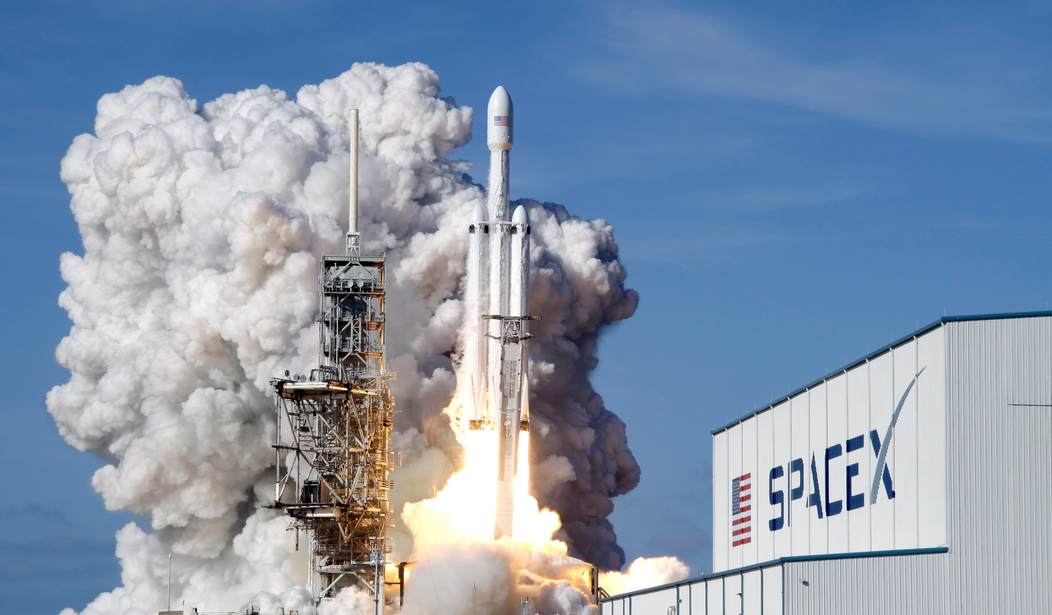
The goal of colonizing our neighboring planet is how Musk intends to transform humanity into a multi-planetary species. He aims to settle one million people on Mars, which will require launching 1,000 Starships, each carrying 100 colonists, to Mars during each launch window, which occur approximately once every 26 months. Musk has repeatedly emphasized that no matter how financially successful SpaceX may be, the company will have failed in his eyes if the primary objective – the colonization of Mars – is not achieved.
Although Musk recently explained on X that he first wanted to build a settlement on the Moon, this does not mean that he has abandoned the goal of colonizing Mars. He has merely postponed his original plans by a few years — and in the current IPO prospectus for the SpaceX IPO, he repeatedly reiterates the goal of settling Mars: “We believe that our current space efforts will catalyze transformative breakthroughs that could reshape terrestrial industries and lead to the emergence of new trillion-dollar markets on the Moon, Mars, and beyond.”
Unfortunately, the prospectus does not explain how all of this is supposed to be financed or how the Martian settlers are expected to earn money one day. This is why critics see his Mars plans as science fiction and fear that SpaceX could burn enormous amounts of money pursuing them.
Robert Zubrin, founder and president of the Mars Society and the man who originally had a major influence on Musk’s Mars ideas, suggests that the first Mars missions would perhaps be state-funded, while the long-term goal of establishing a colony on the planet would require private-sector innovation and investment. In his book "The Case for Mars," he writes: “To be viable, a real Martian civilization must be either completely autarkic (very unlikely until the far future) or be able to produce some kind of export that allows it to pay for the imports it requires. Around this question will hang the future of Mars, and not just human civilization on Mars but the very nature of the planet itself.”
Zubrin believes that the challenging living conditions on Mars and the constant need to find novel solutions to problems would lead to an innovative boost, which would ultimately also benefit the economy on Earth. “In short, Martian civilization will be practical because it will have to be, just as nineteenth century American civilization was. This forced pragmatism will give Mars an enormous advantage in competing with the less-stressed and therefore more tradition-bound society remaining behind on Earth. If necessity is the mother of invention, Mars will provide the cradle.”
Zubrin’s speculations primarily focus on patents because the inhospitable and unfamiliar conditions on Mars will inevitably drive innovation, particularly in areas such as food production. In his book "The New World on Mars", he writes: “In my view, the best, early, large-scale source of cash income that Mars colonists can generate will come from the sale and licensing of intellectual property. This will come naturally from the nature of the Martians themselves and their situation. The Martians will be a group of technically adept people in a frontier environment that will challenge them, indeed force them, to innovate. They will face a terrific labor shortage. This will compel them to innovate in the areas of labor-saving machinery, automation, robotics, and artificial intelligence. Limited to greenhouse agriculture, they will have a shortage of land and livestock. This will force them to innovate in the area of biotechnology, to create ultra-productive and highly nutritious crops. Lacking attractive sources of fossil fuels, wind or water power, or solar energy, they will be impelled to innovate in areas of nuclear power, including advanced fission designs…, and fusion, as the deuterium fuel for fusion reactors is five times as common on the Red Planet as it is on Earth. All these innovations will have tremendous utility on Earth. The Martians therefore will patent them and license the patents for use on the home planet. The revenue from such intellectual property sales could be enormous.”
The Mars colony, Zubrin stresses, would enjoy unique advantages, such as the fact that it is much easier and more cost-effective to access the resource-rich asteroids between Earth and Mars from Mars: “There will be a ‘triangle trade’ with Earth supplying high-technology manufactured goods to Mars, Mars supplying low-technology manufactured goods and food staples to the asteroid belt and possibly to the Moon as well, and the asteroids sending metals (and perhaps the Moon sending helium-3) back to Earth.”
Zubrin has faith in the inventiveness of the colonists and believes that they would be able to establish a thriving economy and society on Mars, much like the early European settlers who paved the way for the United States to become the most successful nation in history.
However, it may take decades or even centuries before all these plans become a reality. But how is the Mars mission supposed to be financed during the first years? I believe this is only possible through a real estate project. Historically, squatters in America occupied land that was later recognized as theirs. The situation on Mars is at the same time similar to, but also different from, those historical examples. It is different because Mars does not belong to anyone today. The Outer Space Treaty prohibits countries from owning celestial bodies. However, there is no explicit prohibition against private individuals or companies, because nobody considered this possibility at the time, when the treaty was negotiated and signed in the 1960s. Some space lawyers, therefore, see a legal loophole that allows companies to take possession of land on Mars.
So, who should have the right to acquire property in space? My answer is in the book “New Space Capitalism." Those who have the financial means to get there, develop, and use the land. For instance, if SpaceX succeeds in reaching Mars and starts to build permanent settlements on the Red Planet, then the ownership of land should go to SpaceX first. Not of the entire planet, of course, but of a practicable area, for example, the size of Singapore. The surface area of Mars is 200,000 times that of Singapore, so SpaceX would initially only own 0.0005 percent of Mars. That would be enough to develop multiple settlements, but not so much that others would no longer have a chance.
SpaceX could fund its flight and development costs by listing the land on Mars in a real estate investment trust (REIT). In this way, the ambitious Mars project could initially be financed.
Rainer Zitelmann is the author of the book “New Space Capitalism."
Editor’s Note: Do you enjoy Townhall’s conservative reporting that takes on the radical Left and woke media? Support our work so that we can continue to bring you the truth.
Join Townhall VIP and use promo code FIGHT to receive 60% off your membership.



Join the Conversation
VIP members get the ability to comment on articles.