





In 2021 and 2022, a representative survey on attitudes toward the market economy and capitalism was conducted in 34 countries. Among other things, respondents were presented with 18 positive and negative statements about capitalism. The result shows what particularly bothers people about capitalism – and what bothers them less. In 33 out of 34 countries (the only exception being Vietnam), the critical statement that “Capitalism is dominated by the rich, they set the political agenda” is among the five most frequently selected statements.
This is also the subject of John O. McGinnis's book, “Why Democracy Needs the Rich” (Encounter Books, New York, London, 2026). Unlike other books, it is not primarily about the – depending on the author’s perspective – positive or negative contribution of the rich to the economy. The main topic, as the book’s title suggests, is why the rich are important for the functioning of a democratic society. Democracy is often simply understood as rule by the majority, where each citizen has equal influence. McGinnis, by contrast, emphasizes the difference between direct and representative democracy. “The notion that everyone can wield anything approaching equal influence in our democracy is fundamentally unrealistic.”
In reality, there are groups that have far greater influence, such as journalists, intellectuals, and entertainers. According to McGinnis, these groups in particular hold fairly homogeneous political views. Studies have shown, for example, that at American universities the ratio between professors with left-leaning and conservative views is 13:1. Left-leaning opinions also strongly dominate the media and the entertainment industry (Hollywood). These groups shape public opinion and have far more influence than the average citizen.
When wealthy individuals finance think tanks, this provides a counterbalance, especially since the rich are by no means as politically homogeneous as intellectuals. Campaign donations show that the ratio between wealthy individuals who support Democrats and Republicans is relatively balanced. A central thesis of the book: “While everyone has an equal vote, certain groups – those likely possessing a deeper understanding of the issues – naturally exert more influence. Critics of the wealthy’s influence often accept the additional sway of the intelligentsia because of their claims to greater knowledge, despite that group’s unrepresentative ideology and insularity from the broader citizenry and the political workings of the world. The impact of the wealthy thus provides a crucial counterweight, especially in a commercial republic where the flourishing of the market not only drives prosperity but also strengthens democracy.”
When journalists and intellectuals polemicize against the allegedly large influence of the rich, their primary aim is to preserve their own dominance in shaping public opinion. One of the problems, according to McGinnis, is that intellectuals are usually far removed from economic realities and possess little economic expertise.
Democratic societies tend toward conformity, and this conformity is particularly pronounced among academics and bureaucrats. Academics depend heavily on the opinions of their peers for their stature. “The pressures for conformity within academia have intensified over the years and ideological homogeneity has increased.” Among the rich, there are more nonconformists—people who are willing to go against the grain and advocate unorthodox views. Their economic independence sometimes allows the rich greater intellectual independence – I would add: it would be desirable if they made more active use of this.
Democracy also has its weaknesses, and the influence of the rich can sometimes help to mitigate them: “First, the rich, with their independent means, are better positioned to resist democracy’s proclivity to embrace conformity. Second, many wealthy people support excellence, particularly in the arts, arresting democracy’s slide toward mediocrity. Because they are less dependent on the state, they have both the means and the interest to question the expansion of government power, counteracting democracy’s tendency to create a paternalistic and fiscally unsustainable government. Their influence, in short, serves as a constraint on the natural excesses of majoritarian rule.”
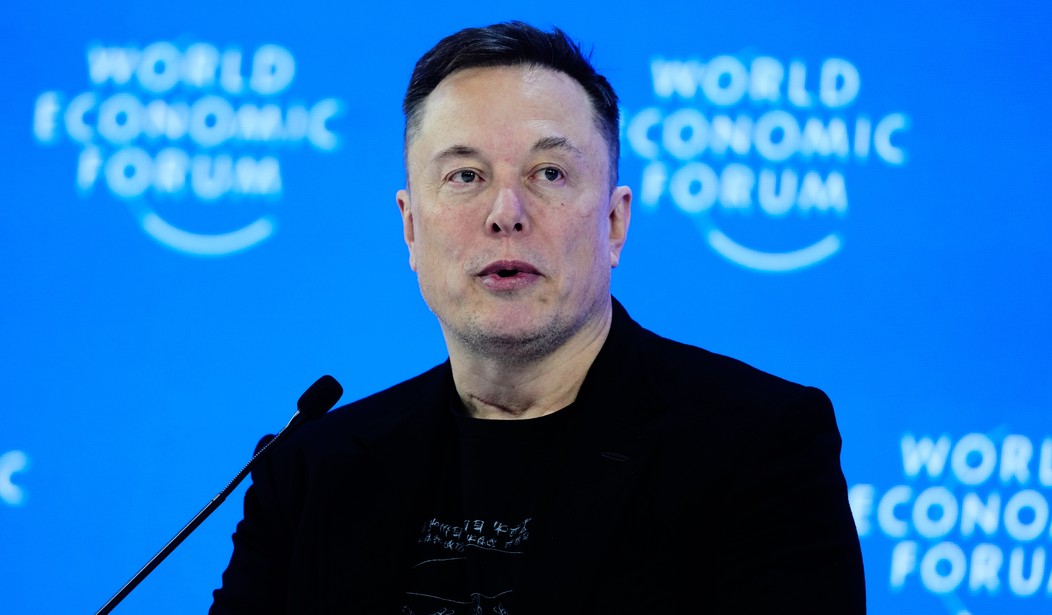
Montesquieu argued that political liberty is best preserved when government power is divided into three separate branches: legislative, executive, and judicial. Each branch should operate independently and be able to check the others, preventing any single authority from becoming tyrannical. But today, alongside these three branches, the media in particular play a decisive role. McGinnis, therefore, views it positively when, for example, Elon Musk creates a counterweight to traditional media with his platform X and gives a voice to people who otherwise would not have one.
My own conclusion from the book – not that of the author – is: the rich should have more, not less, influence in democratic societies. If one criticizes them, it should rather be for being too conformist, even though they do not necessarily have to be, and for withdrawing too much from political discourse. For a long time, this was true of wealthy individuals in the United States who held non-leftist views. People like Elon Musk and Peter Thiel are exceptions. Most wealthy individuals who are not on the Left remained silent too often.
If the rich in Western countries can be reproached, it is not for being excessively involved in politics, but for not being involved enough. At any rate, this is true for those rich people who are also advocates of capitalism. While the voices of critics of capitalism, such as George Soros or Tom Steyer, who vehemently argue for higher taxes on the rich, can be heard loudly, supporters of capitalism rarely speak out in public.
The American political scientists Benjamin I. Page and Martin Gilens speak in their book “Democracy in America” of the “public silence of most billionaires.” David Koch, who provides financial support for libertarian viewpoints, made only one public comment on tax policy over a 10-year period; his brother Charles Koch made no public comments on these issues. “The public silence of most billionaires,” report Page and Gilens, “contrasts markedly with the willingness of a small, unusual group of billionaires – including Michael Bloomberg, Warren Buffett, and Bill Gates – to speak out about specific public policies … All three have favored a substantial social safety net, progressive taxes, and moderate regulation of the economy. An ordinary American who tried to judge what U.S. billionaires think and do about politics by listening to Bloomberg, Buffett, or Gates would be badly misled.” This was written in 2020; in the meantime, this has fortunately changed somewhat in the United States.
I recall an event organized by Students for Liberty in Miami in October 2022, at which the successful entrepreneur and Whole Foods founder John Mackey was a guest. He triggered a backlash when he published an article against Obamacare in the Wall Street Journal in August 2009. Left-wing groups called for a boycott of his stores. The CEO of Students for Liberty, Wolf von Laer, publicly expressed respect for the entrepreneur’s courage in taking political positions. But Mackey himself said that after this experience, he would not write such an article again, because the damage to his business had been too great. That is regrettable.
But for a long time, this was the situation in the United States—and it still is in most democratic countries: political statements by people from the business world are only tolerated if they present themselves as critical of capitalism or “woke.” Otherwise, they risk a backlash and boycott campaigns, as happened at the time with Whole Foods. If this has changed somewhat in the United States, then that is positive, not negative. As McGinnis’s book shows, the rich have great potential to enrich democratic societies. In my view, they should make use of this far more often and far more confidently.
A remarkable book that one wishes a wide readership.
Editor’s Note: Do you enjoy Townhall’s conservative reporting that takes on the radical Left and woke media? Support our work so that we can continue to bring you the truth.
Join Townhall VIP and use promo code FIGHT to receive 60% off your membership.


Join the Conversation
VIP members get the ability to comment on articles.